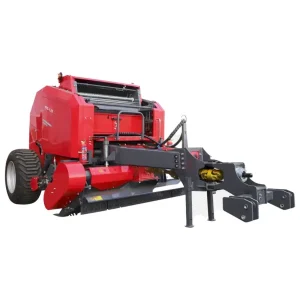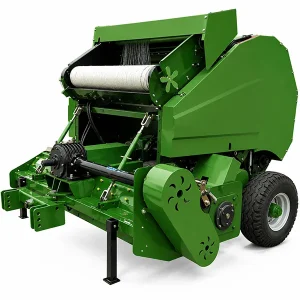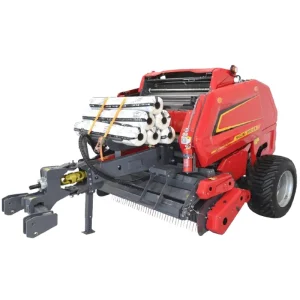
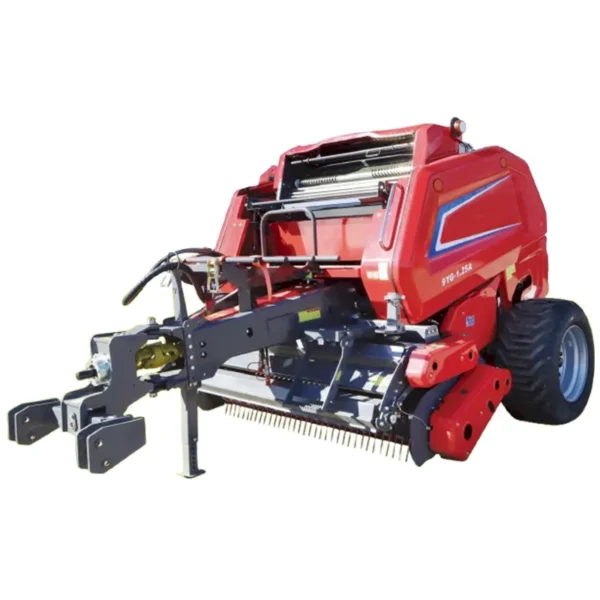
Description
Silage bale quality is almost entirely a function of how quickly the bale is wrapped after ejection. Every minute between bale ejection and first film layer is time during which the outer surface is aerobically respiring — consuming dry matter and reducing fermentation quality before the anaerobic environment is established. Operations using a separate baler and wrapper manage this window by minimizing the gap between the two machines in the field, but in practice that requires either two operators or careful coordination between baling and wrapping passes.
The 9YCM-850 eliminates the interval entirely. The bale completes in the chamber, transfers directly onto the integrated wrapping table, receives film, and ejects — all within one machine cycle, without the bale touching the ground between baling and wrapping. The aerobic exposure window is reduced to the seconds the bale spends transferring from the chamber to the table. For operations producing baleage or pre-wilted silage, this has a direct effect on dry matter recovery and fermentation end-product quality.
The machine also simplifies operations by collapsing two equipment assets, two fuel loads, and two operator requirements into one. For smaller silage operations — one or two cuts per year, up to a few hundred bales — the economics of a combination unit are generally more favorable than maintaining both a baler and a standalone wrapper on the equipment list. For the full lineup, see Brazil Ever-Power Farm Balers’ product catalog.
How the 9YCM-850 Works — One-Pass Silage Production
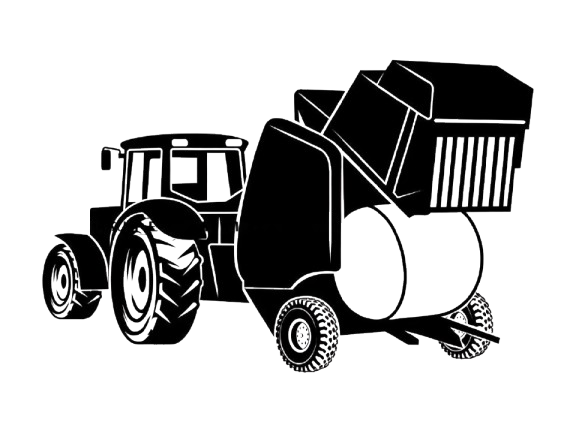
Conventional two-machine silage chain vs. integrated single-pass operation
Conventional Two-Machine Method
Issues: 2 machines · 2 fuel loads · 2 operators needed · aerobic exposure window between baling and wrapping · higher DM loss risk
9YCM-850 — Single Pass
hopper
compresses
to wrap table
automatically
discharges
Result: 1 machine · 1 fuel load · 1 operator · no aerobic exposure window · minimum DM loss · 30–40 wrapped bales/hour
9YCM-850 — Integrated Baling & Wrapping
Φ85–90 cm × 85 cm bales · 30–40 bales/hr · 540 RPM · ≥120 HP
Technical Specifications
| # | Parameter | Unit | Value |
|---|---|---|---|
| 1 | Model Name | — | 9YCM-850 Baler Wrapper Combination |
| 2 | Bale Size (Dia. × Length) | cm | Φ 85–90 × 85 cm |
| 3 | Bale Volume | m³ | 0.48–0.54 |
| 4 | Hopper / Feed Volume | m³ | 2.5 |
| 5 | Tractor Power Required | kW / HP | ≥88.2 kW (≥120 HP) |
| 6 | Machine Dimensions (L×W×H) | m | 7.00 × 2.19 × 3.03 |
| 7 | Tire Specification | — | 295/60-15 |
| 8 | PTO Speed | RPM | 540 |
| 9 | Hydraulic Requirements | — | 1 × ½ in + 1 × ¾ in (two circuits) |
| 10 | Electrical System | — | 12V DC |
| 11 | Control System | — | Electronic (integrated baling + wrap sequence) |
| 12 | Productivity | bales/hr | 30–40 |
Engineering Features
2.5 m³ Hopper with Integrated Feed Mechanism
The 9YCM-850’s 2.5 m³ feed hopper accepts pre-chopped or direct-cut silage material from the tractor’s rear discharge. The hopper volume allows the operator to drive alongside the forage harvester or follow it through the field, accumulating material in the hopper before each bale cycle begins. The integrated feed mechanism meters material from the hopper into the compression chamber at a consistent rate, independent of how fast the operator drives.
This is a fundamentally different operating mode from a conventional pickup-type round baler. The 9YCM-850 does not pick up material from the ground — it receives material loaded into the hopper, either from a forage harvester discharge or from manual loading of pre-cut material. The hopper approach decouples baling productivity from windrow availability, which is useful for wet or short-chop material that does not windrow cleanly.
Integrated Film Application — No Ground Contact Between Baling and Wrapping
The wrapping table is mechanically integrated into the same machine frame as the baling chamber. When the bale completes in the chamber, it transfers directly to the table under machine-controlled movement — it does not touch the field surface before wrapping begins. The film carousel rotates around the rotating bale on the table, applying stretch film in the operator-set number of layers. Layer count is adjustable; 4–6 layers is the standard recommendation for most baleage applications.
After wrapping completes, the discharge mechanism places the wrapped bale onto the field surface — still without damage to the film from ground contact during the wrap cycle. The entire sequence is managed by the electronic control system without requiring the operator to stop the tractor or initiate any manual steps.
Electronic Sequence Control — Baling, Transfer, Wrap, Discharge
The 9YCM-850’s electronic control system manages the full operating sequence — monitoring chamber fill, triggering bale transfer, controlling the film carousel rotation speed and layer count, and sequencing the discharge mechanism — in response to operator-set parameters and machine-state sensors. The operator sets the target bale density, desired film layer count, and wrapping speed from a cab-mounted control panel; the system executes each phase automatically.
The 12V DC electrical system connects to the tractor’s auxiliary power supply. Two hydraulic circuits (½ in and ¾ in) serve the chamber discharge and wrapping table drive respectively. Tractors providing two independent auxiliary hydraulic outputs are required; confirm your tractor’s hydraulic circuit count before purchasing.
Φ85–90 × 85 cm — Compact Silage Bale
The 9YCM-850 produces bales in the compact Φ85–90 × 85 cm format — approximately 34 × 33 inches. This is smaller than the bales produced by standalone round balers in this lineup. Smaller bale dimensions have specific advantages in intensive livestock feeding operations: each bale represents a smaller daily feed quantity, reducing the frequency with which an open bale is left exposed to aerobic deterioration. For dairy operations feeding 200–400 head, a smaller bale can be fully consumed in 1–2 feedings, maintaining silage freshness through the feeding period.
The compact format also produces lighter bales — typical wrapped silage bale weight in the 0.48–0.54 m³ volume range runs 500–850 lb depending on moisture and material type — manageable with standard front loaders and silage grab attachments on most 120+ HP tractors.
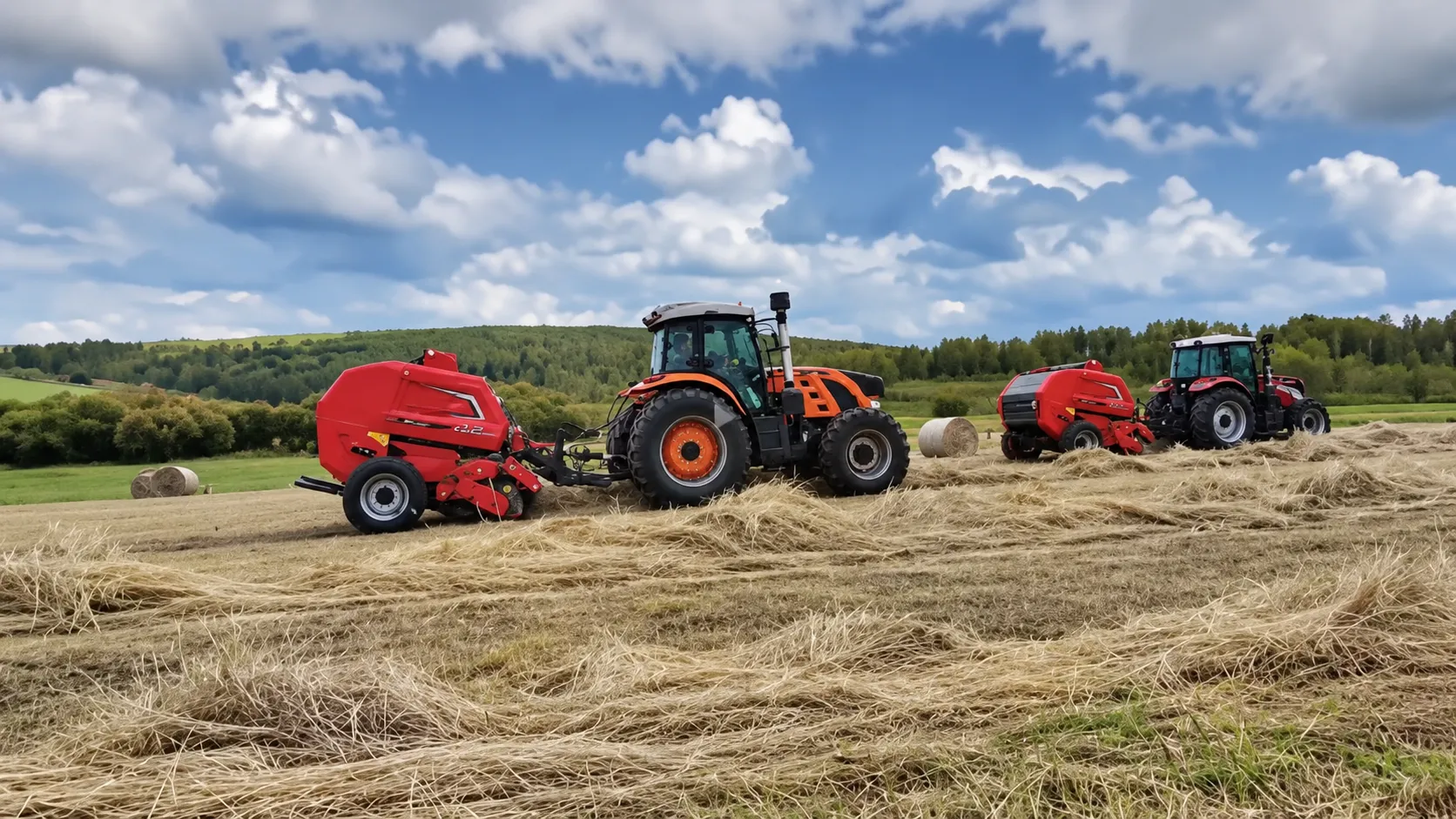
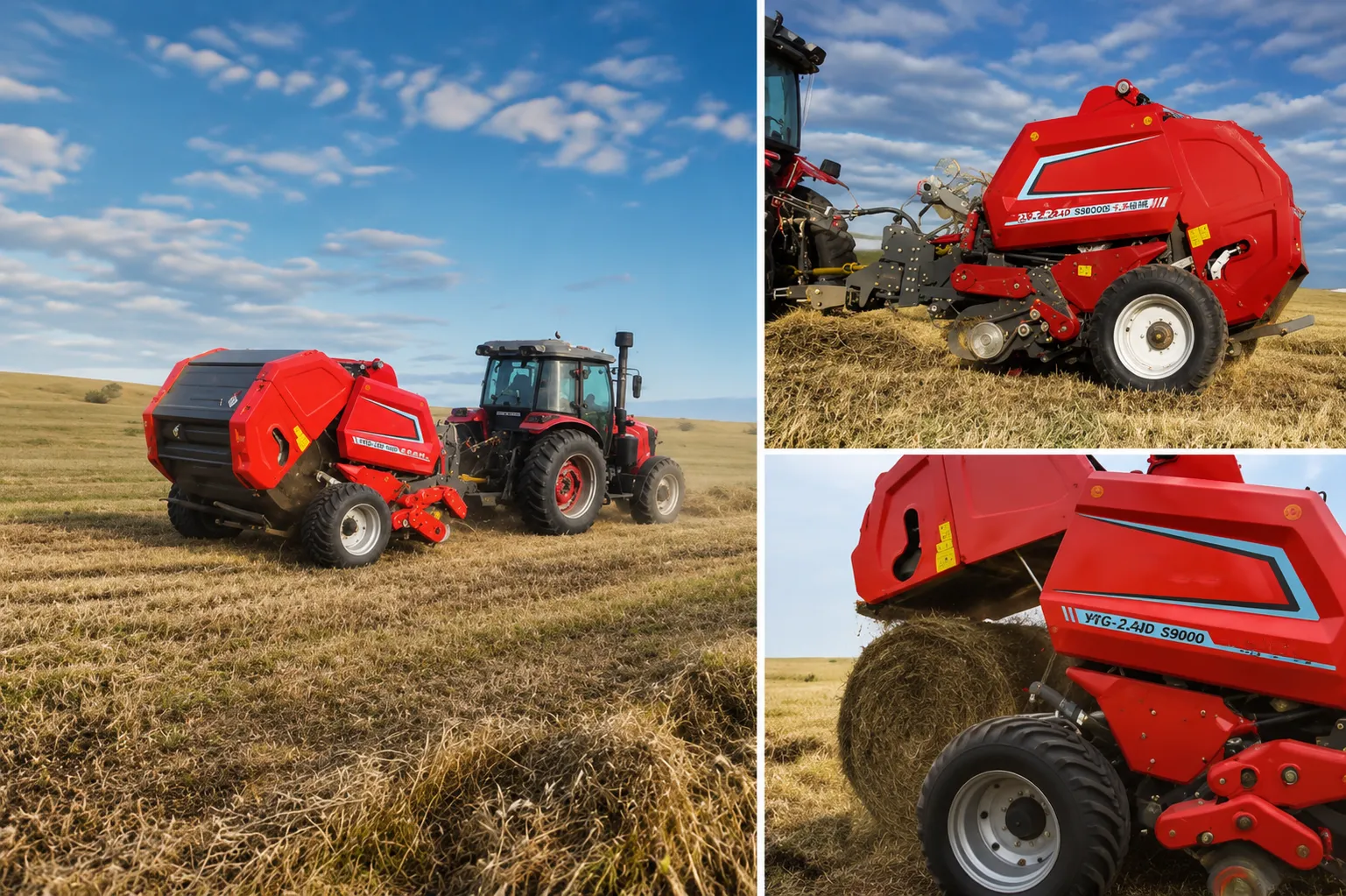
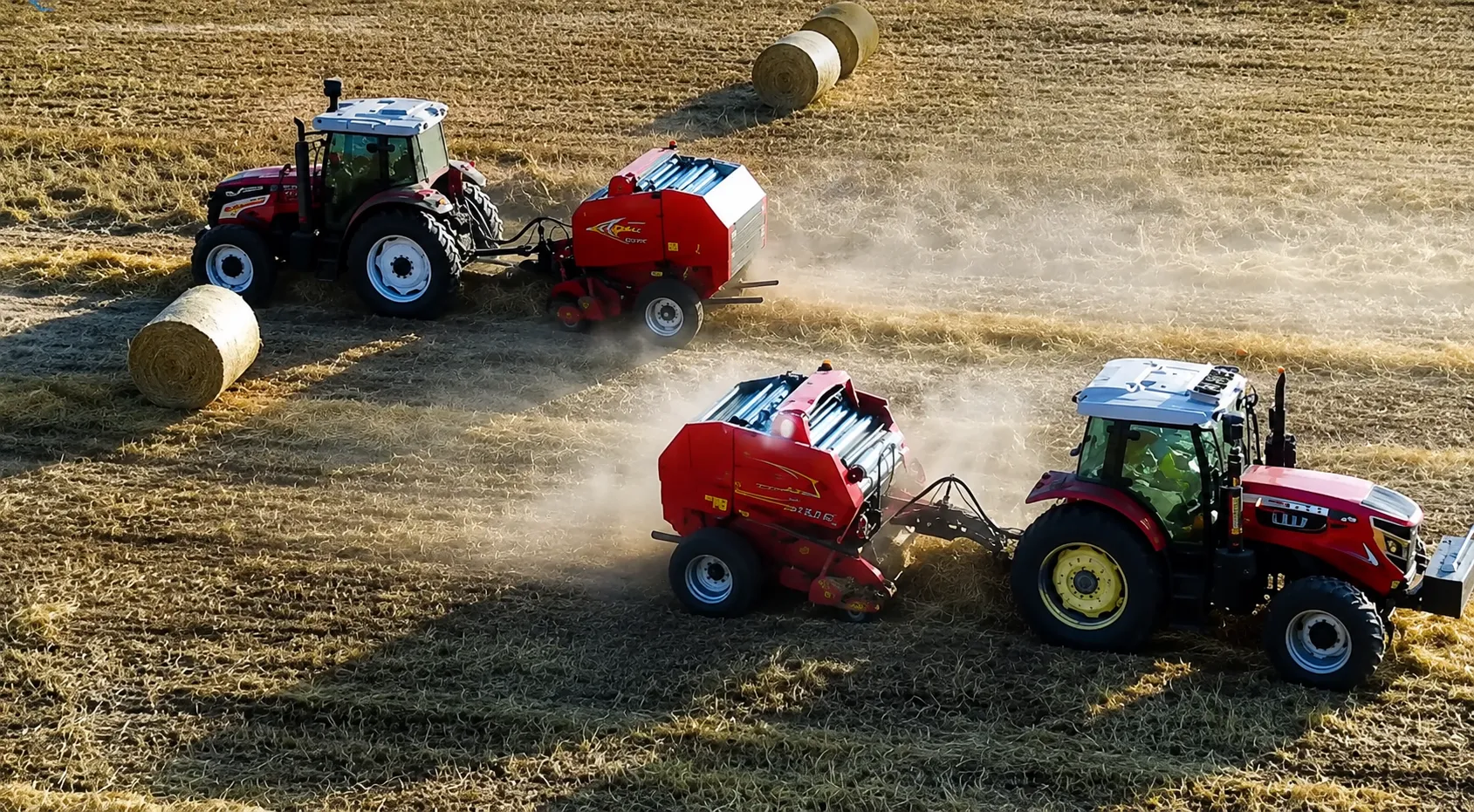
9YCM-850 vs Traditional Baler + Wrapper Setup
Traditional: Separate Baler + Wrapper
- Two separate machines to purchase, insure, and maintain
- Two fuel loads — tractor on baler, second tractor or self-propelled wrapper
- Two operators required during peak silage window
- Bale sits on field surface between ejection and wrapping — aerobic exposure typically 10–30 minutes in two-machine operations
- Bale handling between machines risks film puncture during transfer
- Larger bale formats (51 × 49 in or 51 × 55 in) require heavy wrapping equipment
- Higher capital cost if purchasing new equipment for both functions
9YCM-850: Integrated Combination
- One machine — one annual license, insurance premium, maintenance budget
- One tractor, one fuel load, one operator
- Bale never touches the ground between baling and wrapping — aerobic exposure window is seconds, not minutes
- No bale-to-wrapper transfer step — no film damage risk from handling
- Compact bale format (34 × 33 in) suits intensive dairy and beef feeding programs where smaller daily volumes maintain freshness
- Lower total capital cost vs buying two machines separately
- Reduced complexity for small to mid-scale silage operations (50–400 bales/season)
The traditional setup retains advantages at very high silage volumes where two-machine throughput exceeds the combination unit’s 30–40 bale/hr output, or where specific large-format bales are required for existing feeding infrastructure.
Field Operation
Connect 540 RPM PTO and two hydraulic circuits (½ in and ¾ in) from the tractor to the machine. Connect the 12V DC electrical cable. Load stretch film rolls — confirm the film gauge and stretch ratio match your target silage application (typically 25–50 µm, 70% pre-stretch). Set bale density and film layer count on the control panel. Test the full bale-transfer-wrap-discharge sequence with an empty chamber before entering the field.
Position the machine alongside the forage harvester to receive direct-discharge material into the 2.5 m³ hopper. The hopper volume allows approximately one to two bale-loads of material to accumulate before the chamber fill cycle begins. Maintain a consistent material supply rate — avoid letting the hopper run completely empty mid-cycle, as an empty hopper between bales produces variable chamber fill and uneven bale density.
The feed mechanism moves material from the hopper into the chamber. Monitor the bale density indicator on the control panel — the electronic system signals when the density target is reached. At that point, the bale automatically transfers to the wrapping table. Total chamber fill-to-transfer time varies with material moisture and density; pre-wilted material at 40–50% DM typically fills faster than high-moisture direct-cut material at 25–30% DM.
The bale rotates on the wrapping table while the film carousel orbits it, applying stretch film in the preset number of layers. The control system counts revolutions and terminates the wrap cycle automatically. Film is cut and the table tips the wrapped bale to the discharge ramp. Total wrap-to-discharge time: approximately 45–90 seconds depending on layer count and film application speed setting.
The discharge ramp places the wrapped bale onto the field surface. Place bales flat-end down on a firm, clean surface away from animal traffic and sharp stubble that could puncture the film. Move wrapped bales to the storage location within 24 hours using a bale grab — never a spike, which will puncture the film and admit air into the bale. Store in rows on a firm pad, seams facing down.
The film carousel accepts standard stretch film rolls. Film consumption per bale depends on bale circumference and layer count. For the Φ85–90 × 85 cm format at 4 layers, expect approximately 1.2–1.6 kg of film per bale. Pre-season: calculate total film consumption based on expected bale count and layer setting, and stock accordingly. Film is a seasonal consumable widely available from agricultural supply sources in the US.
Manufacturing & Quality
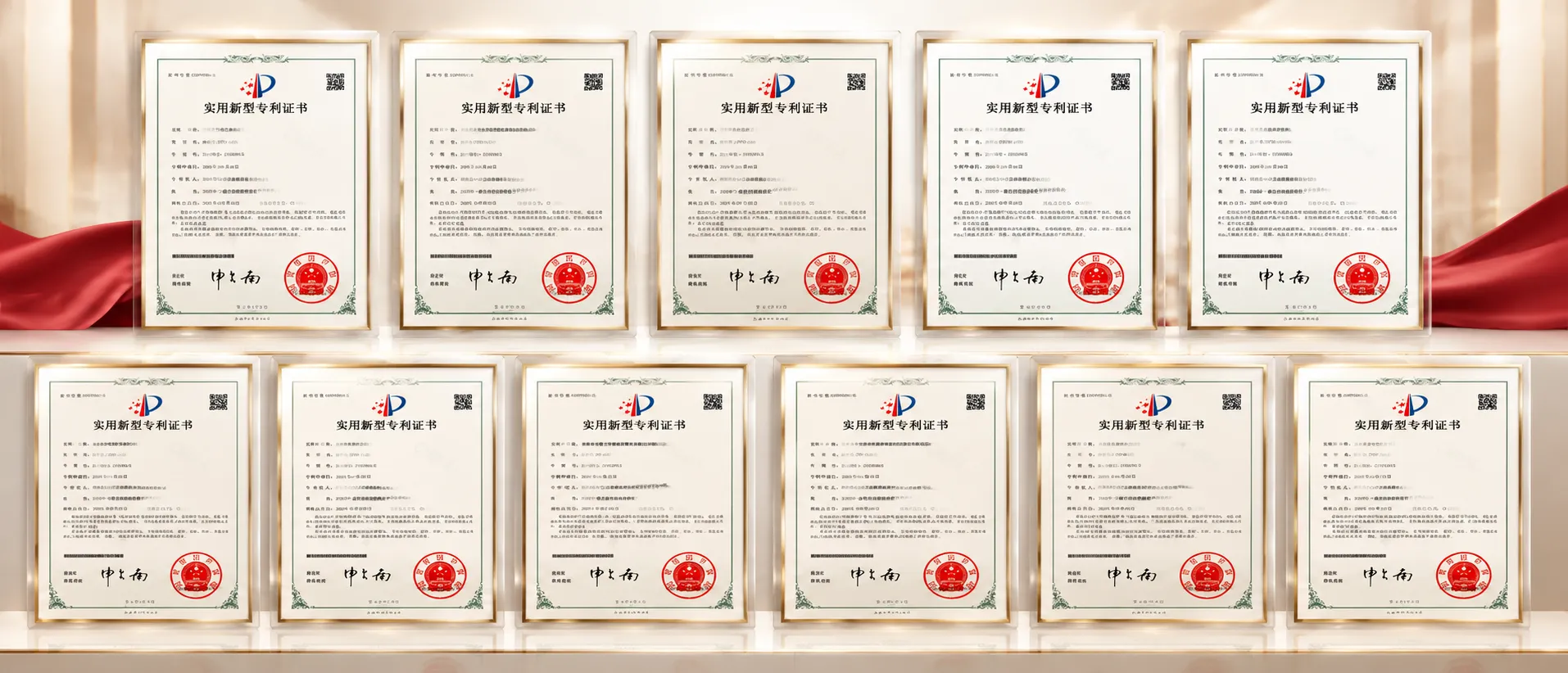
In-House Development — ISO 9001 · ~100 Patents
Brazil Ever-Power Farm Balers Co., Ltd designs all products at its in-house R&D center and manufactures at a 32,000 m² facility using CNC laser cutting, robotic welding, and electrostatic coating. The company holds close to 100 utility patents across its product range. The 9YCM-850’s integrated baling-wrapping control system is developed and supported internally.
Certifications: ISO 9001, Two-Informatization Integration Level A, AAA Credit Enterprise, National High-Technology Enterprise.
Maintenance — Combination Machine Notes
- Grease all baling chamber roller shaft bearings and feed mechanism drive points
- Check hopper feed mechanism for silage build-up — high-moisture material packs against the walls; clean before each session start
- Verify chamber transfer mechanism moves smoothly — a stiff transfer indicates a bearing or guide rail issue that will interrupt the cycle sequence
- Inspect PTO shaft guard; confirm both hydraulic connections are secure and not seeping
- Clean the film carousel arms and rollers — silage juice and crop debris accumulate on all surfaces that contact or pass near the film; contamination causes film tearing and uneven application
- Inspect film cutter blade — a dull or nicked cutter produces ragged film cuts that can admit air at the bale seam
- Check film brake tension — incorrect tension produces loose layers on one side of the bale
- Test the discharge ramp operates smoothly before starting the day’s baling
- Inspect carousel arm bearings for play or roughness — the carousel rotates thousands of revolutions per season and bearing wear is the most common wrapping system service item
- Check all electronic control cable connections for corrosion — silage juice is corrosive; protect connectors with dielectric grease
- Season-end: flush all silage residue from the hopper and feed mechanism with water; allow to dry before storage; silage residue left over winter corrodes steel components aggressively
- Replace film cutter blade annually regardless of visible condition
Fermentation Note
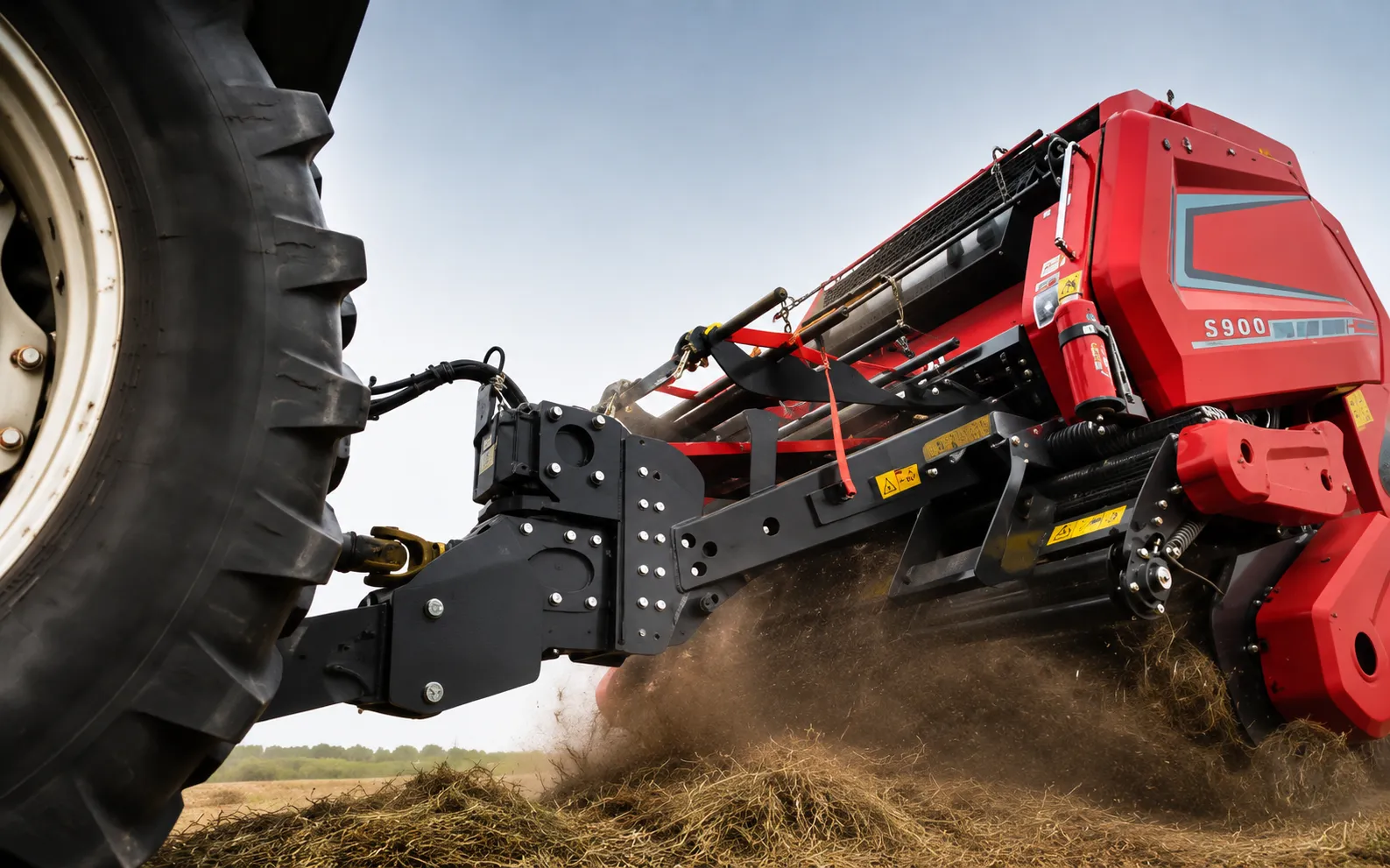
Silage quality depends on excluding oxygen as quickly as possible after harvest. The 9YCM-850’s zero-ground-contact wrapping sequence is specifically valuable here — the wrapped bale exits the machine with film applied before the bale surface has been exposed to field-level oxygen for any meaningful duration.
Target minimum 4 layers of stretch film; 6 layers for high-risk (low DM, high buffering capacity) crops such as direct-cut grass or legumes above 70% moisture.
Operator Reviews
Northern Vermont — 240-Head Dairy, 180 acres alfalfa & grass silage
★★★★★
We switched to the 9YCM-850 from a two-machine setup — baler plus a towed wrapper — because coordinating two tractors and two operators during the three-week silage window was becoming our biggest labor bottleneck. With the combination unit, one operator covers the full job. Silage quality has also improved — our nutritionist measured pH and DM recovery on bales from the 9YCM-850 versus our previous process and saw measurably better fermentation endpoints, which I attribute to the elimination of the aerobic window between baling and wrapping. We’ve run about 420 bales through it across two cuts of alfalfa-grass mix. The main maintenance demand is keeping the carousel arms clean — silage juice gets into everything and the carousel needs cleaning every session. That’s manageable. Very satisfied overall.
Southern Kansas — 350-Head Cow-Calf, 220 acres sorghum-sudan silage
★★★★☆
We use the 9YCM-850 for sorghum-sudan silage — high-moisture material that’s notoriously difficult to manage between baling and wrapping because it starts fermenting fast. The integrated unit has been the right solution: wrap happens immediately and the bales have been fermenting cleanly based on smell, pH strips, and cattle intake. Output at 30–35 bales per hour suits our scale — we’re not a commercial silage operation, just feeding our own herd. The compact bale size suits our feeding program; we open two bales every 2–3 days for the herd, which keeps the cut face fresh. Four stars because the machine requires more hydraulic ports than I initially checked on my tractor — we needed to add an auxiliary coupler before we could connect both circuits. Check your tractor’s hydraulic port configuration carefully before purchase.
Central Minnesota — Sheep & Goat Farm, 90 acres alfalfa, first time silage baling
★★★★★
This was our first year producing baleage instead of dry hay — we switched because of weather uncertainty in our cutting windows. The 9YCM-850 was attractive because it meant we didn’t have to buy a baler and then also a wrapper; one machine does both. The learning curve was real — the electronic control panel took a day to understand and the film carousel setup on the first load was time-consuming. Once we got it dialed in, the operation became routine. We produced 280 bales of alfalfa-grass baleage at 45–50% DM and the fermentation has been excellent — our sheep and goats are eating it well with no refusals. For a first-time silage operation with limited capital to invest in two separate machines, the combination unit was the right choice.
Eastern Iowa — Custom Silage Operation, 500 acres/year
★★★★☆
I run custom silage work for livestock farms in eastern Iowa. The 9YCM-850 simplified my operation considerably — one machine, one tractor, one operator day rate to charge, versus two machines and the coordination overhead. The bale quality from my customers’ perspective has been good — they’re seeing better fermentation endpoints and cattle performance on the product from this machine than from the previous two-machine process. My throughput at 30–35 bales per hour is the practical constraint; at my largest accounts (80–100 acres), I’m sometimes in the field for longer than I’d like during the narrow ideal-harvest window. If my volume grows above 500 acres/year, I’d look at a second unit rather than a faster machine. Four stars for the throughput ceiling; five stars for simplicity and silage quality.
Western Wisconsin — Large Dairy, 400 acres silage, high-volume operation
★★★☆☆
I want to be direct: at 400 acres of silage production for a large dairy herd, the 9YCM-850’s 30–40 bales per hour throughput and compact bale format are constraining factors. Our operation requires fast throughput during narrow harvest windows, and larger bale formats that match our TMR mixer capacity. The 9YCM-850 we tested was well-built and the integrated wrapping concept is sound — silage quality was excellent. But we produce 800+ bales per cutting, and at 30–35 bales per hour that’s a 25-hour minimum per cut with one machine, which is too slow for our weather window risk. We ended up staying with our two-machine high-speed setup. Three stars is not a quality complaint — it’s a scale signal. For operations below 200–250 bales per cut in favorable harvest windows, the 9YCM-850 is a strong choice. Above that, the throughput ceiling becomes an operational constraint.
Frequently Asked Questions
Does the 9YCM-850 pick material up from the ground, or does it need a forage harvester?
The 9YCM-850 receives material through its hopper — it does not have a ground pickup like a conventional round baler. Material must be loaded into the hopper, either by direct discharge from a forage harvester, by a loading wagon, or by manual pitching of pre-cut material. It cannot pick up windrowed or swathed material from the ground on its own. If your silage operation relies on windrowed material, a conventional round baler combined with a separate wrapper is the appropriate configuration.
How many hydraulic outputs does my tractor need?
The 9YCM-850 requires two independent hydraulic circuits — one ½-inch and one ¾-inch connection. This means your tractor must provide two separate rear auxiliary hydraulic outputs. Many mid-range tractors in the 120–160 HP class provide 2–3 rear auxiliaries as standard; verify your specific tractor before purchase. If your tractor provides only one rear auxiliary output, an additional hydraulic coupler assembly or tractor-mounted flow divider may be needed — this is an extra cost to plan for.
How many layers of film should I apply?
The minimum recommended for most baleage applications is 4 layers of stretch film. For high-risk material — high moisture (above 65–70%), high buffering capacity crops like legumes, or bales produced in areas with significant rodent or bird pressure — 6 layers is advisable. More layers increase film cost per bale but reduce the risk of aerobic spoilage from film puncture. The 9YCM-850’s control panel allows layer count adjustment between bale cycles; you can switch settings if moving between crop types with different risk profiles.
What is the bale weight and how do I move wrapped bales?
Wrapped silage bale weight in the Φ85–90 × 85 cm format varies by crop and moisture: pre-wilted alfalfa-grass at 40% DM: 600–800 lb; direct-cut grass at 25% DM: 700–950 lb; sorghum-sudan at 30% DM: 650–900 lb. These bales must be moved using a round bale grab or silage bale clamp — never a bale spike, which punctures the film and causes aerobic deterioration. A standard front-loader equipped with a silage grab on a 120+ HP tractor handles these weights comfortably.
How long before the silage is ready to feed?
Fermentation is substantially complete within 3–6 weeks for most well-made baleage, though the process continues at a slower rate for several months. The initial pH drop to below 4.5–5.0 happens within the first 2–3 weeks in properly fermented material. It is generally advisable to wait a minimum of 6–8 weeks before opening bales for feeding to allow fermentation to stabilize. Bales can be stored for 12–18 months without significant quality loss if the film remains intact and undamaged.
Can the 9YCM-850 bale dry hay or straw?
The 9YCM-850 is designed for silage and baleage production using the hopper-fed system. It is not suited for dry hay or straw baling — it lacks a ground pickup, and wrapping dry hay in stretch film is generally not a recommended practice as it traps any residual moisture and promotes mould development. For dry hay and straw, any of the standard round baler models in the farmbalers.com range are the appropriate choice.
How do I get parts and technical support?
Parts and technical support are provided by Brazil Ever-Power Farm Balers Co., Ltd’s international sales and after-sales team. Standard in-stock parts ship to US destinations with 10–18 business day estimated lead time. For the 9YCM-850, the most frequently replaced components are the film cutter blade (annual), carousel arm bearings (seasonal inspection), and film brake pads. Stock these before each silage season. The electronic control unit carries a warranty; any fault codes generated by the control system should be documented with the control panel’s error display and reported to the technical team with a description of operating conditions at the time. Additional documentation at Brazil Ever-Power Farm Balers’ product catalog.
Manufacturer
Brazil Ever-Power Farm Balers Co., Ltd
National high-technology enterprise with a 32,000 m² integrated production facility, two assembly lines at 2,000-unit annual capacity, and close to 100 utility patents. All design and production in-house using CNC laser cutting, robotic welding, and electrostatic coating. Certifications: ISO 9001, Two-Informatization Integration Level A, AAA Credit Enterprise. Independent import and export rights. Markets: US, Mongolia, Russia, Belarus, Kazakhstan.
Full product range at Brazil Ever-Power Farm Balers’ product catalog.
Need a Round Baler Instead?
If your operation is better served by a conventional baler — with or without a separate wrapper — these models may fit: