Description
Brazil Ever-Power Farm Balers Co., Ltd
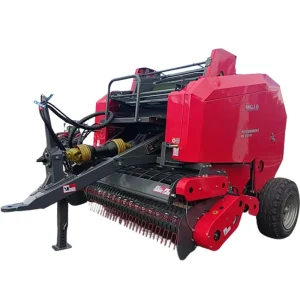
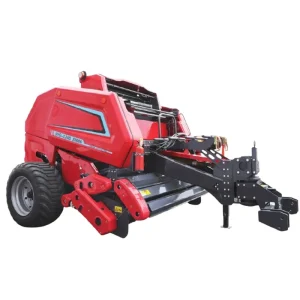
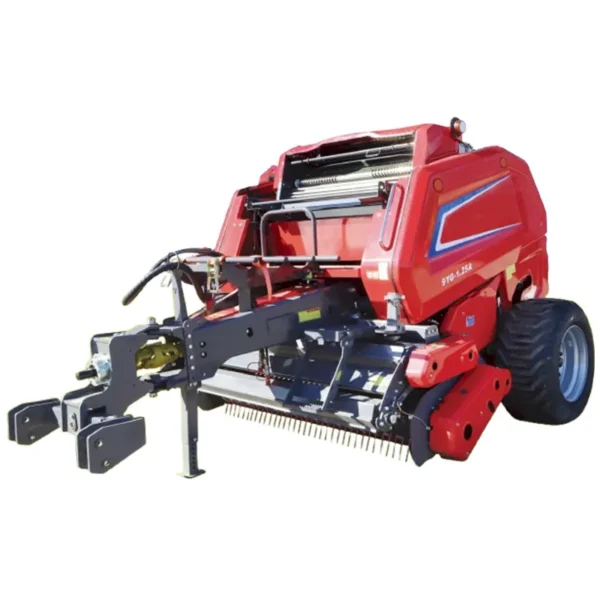
9YG-1.25A Round Baler
540 · 720 · 1000 RPM — Mid-Range Versatility, No Adapter Required
The 9YG-1.25A occupies the same performance tier as the standard 9YG-1.25 — same bale size, same chamber, same 88.2-inch pickup, same 40–100 bales-per-hour output — with one functional addition: its input gearbox accepts 540, 720, and 1000 RPM PTO, where the standard 9YG-1.25 accepts only 720 RPM.
That single specification difference has a practical implication that goes beyond a number in a table. In US agriculture, tractor PTO speed is not standardized across the fleet. A farm that has acquired equipment over 20–30 years likely operates tractors spanning multiple PTO standards — older 540-only units that were the norm through the 1990s, newer tractors with 720 RPM economy PTO settings, and potentially modern high-HP machines at 1000 RPM. A baler that accepts only one speed can create a scheduling conflict: the right tractor for the day may not match the baler’s PTO requirement.
The 9YG-1.25A removes that constraint. No adapter, no gearbox conversion, no speed mismatch — connect any compatible tractor from 100 HP upward, set the PTO speed selector on the tractor, and begin baling. The internal gearbox handles the conversion transparently. For the complete lineup, see Brazil Ever-Power Farm Balers’ product catalog.
How the 9YG-1.25A Rates for Common US Operation Types
Based on machine specifications — not individual operator results
How 540 / 720 / 1000 RPM Works
The 9YG-1.25A’s input gearbox contains selectable internal gear ratios corresponding to each of the three PTO speed standards. The ratio is engaged through the tractor’s own PTO speed selector — no lever or switch adjustment on the baler is needed. The gearbox converts the selected input speed to the correct drive speed for the 18-roller chamber and the spring-tooth pickup assembly, then delivers identical bale size, density range, and productivity output regardless of which speed is selected.
The gearbox is engineered for the torque profile at each input speed and tested across the full power range (75–100+ kW) to confirm consistent performance in field conditions. It adds approximately 412 kg (910 lb) to the machine weight compared to the single-speed 9YG-1.25 — the additional weight is the multi-speed gearbox assembly itself.
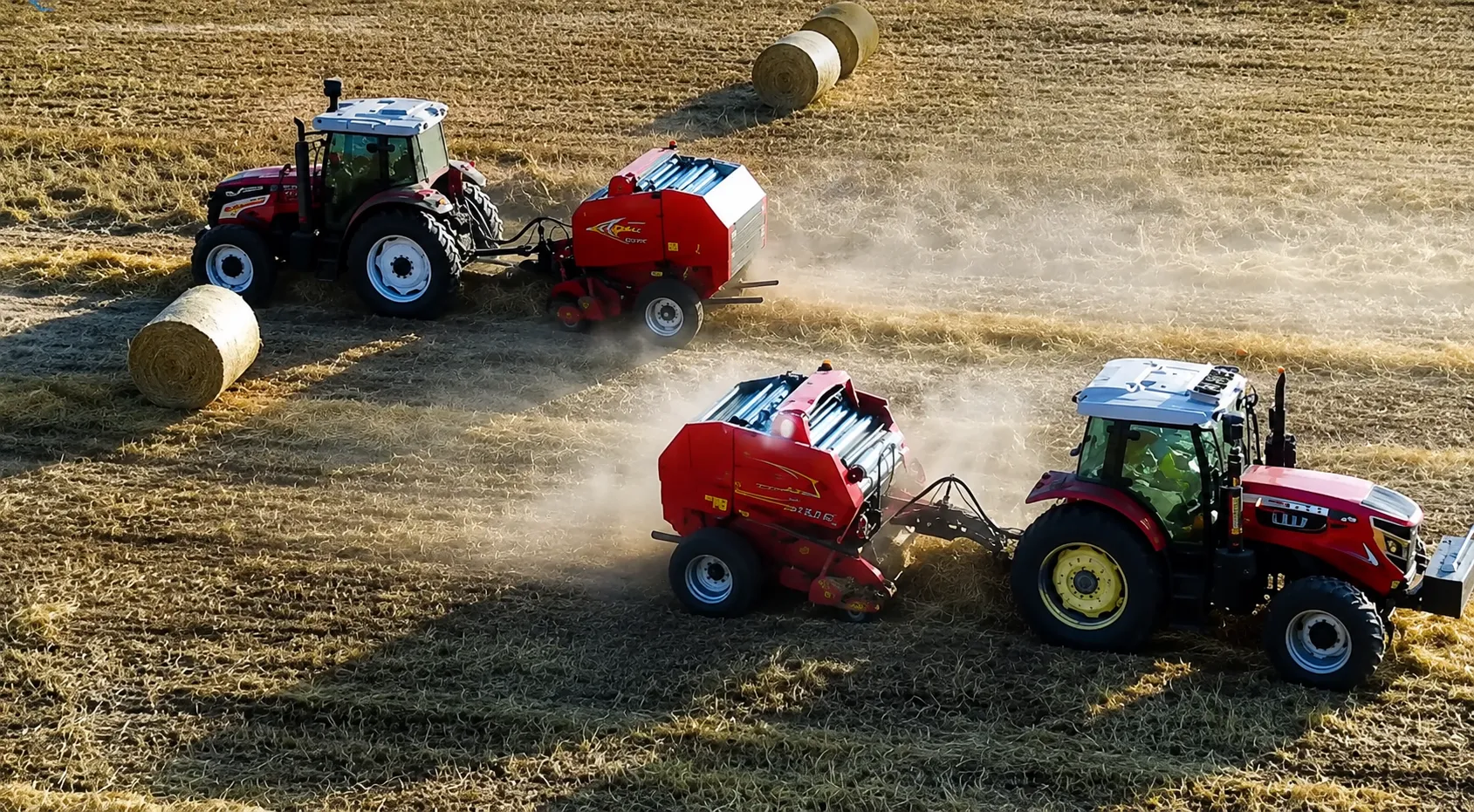
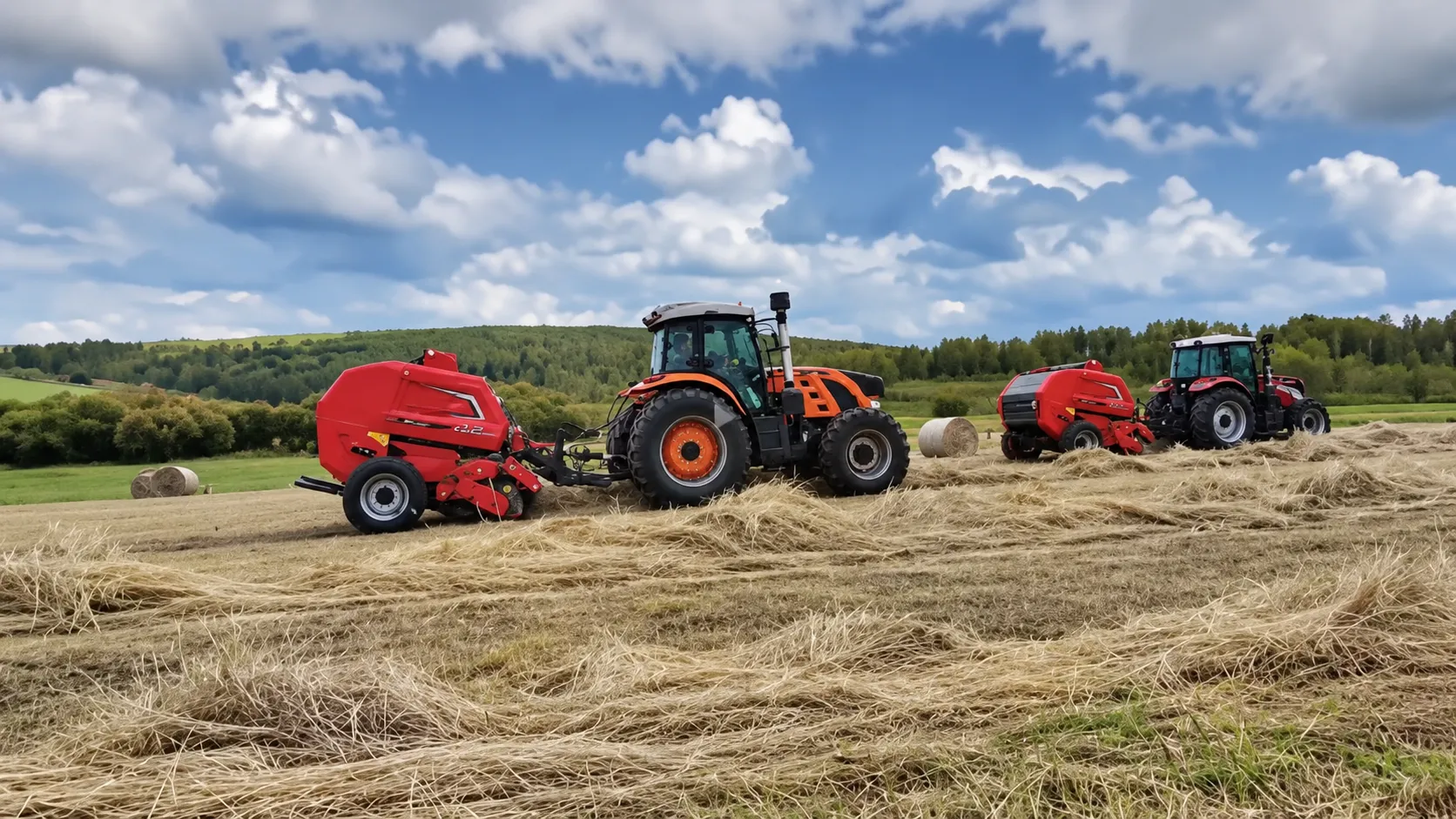
18 Rollers · 51 × 49-Inch Bale · 88.2-Inch Pickup
The chamber uses 18 steel rollers at Φ222 mm in a fixed ring producing the Φ1,300 mm diameter × 1,250 mm wide bale — the 51 × 49-inch format common across US mid-scale hay operations. Fixed-chamber roller designs apply consistent radial compression throughout bale formation, producing tighter bale cores and more uniform density bale-to-bale than variable-chamber belt machines, which must manage belt tension as the bale grows.
The 88.2-inch spring-tooth pickup handles merged windrows at full forward speed without overflow at the pickup edges. Gauge wheels maintain consistent tine clearance over uneven stubble, minimizing soil contamination in dry hay conditions where any ground-contact debris reduces feeding quality and bale cleanliness.
Sensor-Triggered Net Wrap — Consistent Across All PTO Speeds
The electronic density sensor reads chamber pressure continuously and triggers the automatic net wrap cycle when the operator-set target is reached — regardless of which PTO speed the tractor is providing. The baler’s internal control system compensates for the different input speeds to maintain consistent wrap timing and revolution count. A bale produced at 540 RPM input and a bale produced at 1000 RPM input will carry the same density and the same net wrap coverage if the setpoints have not changed between them.
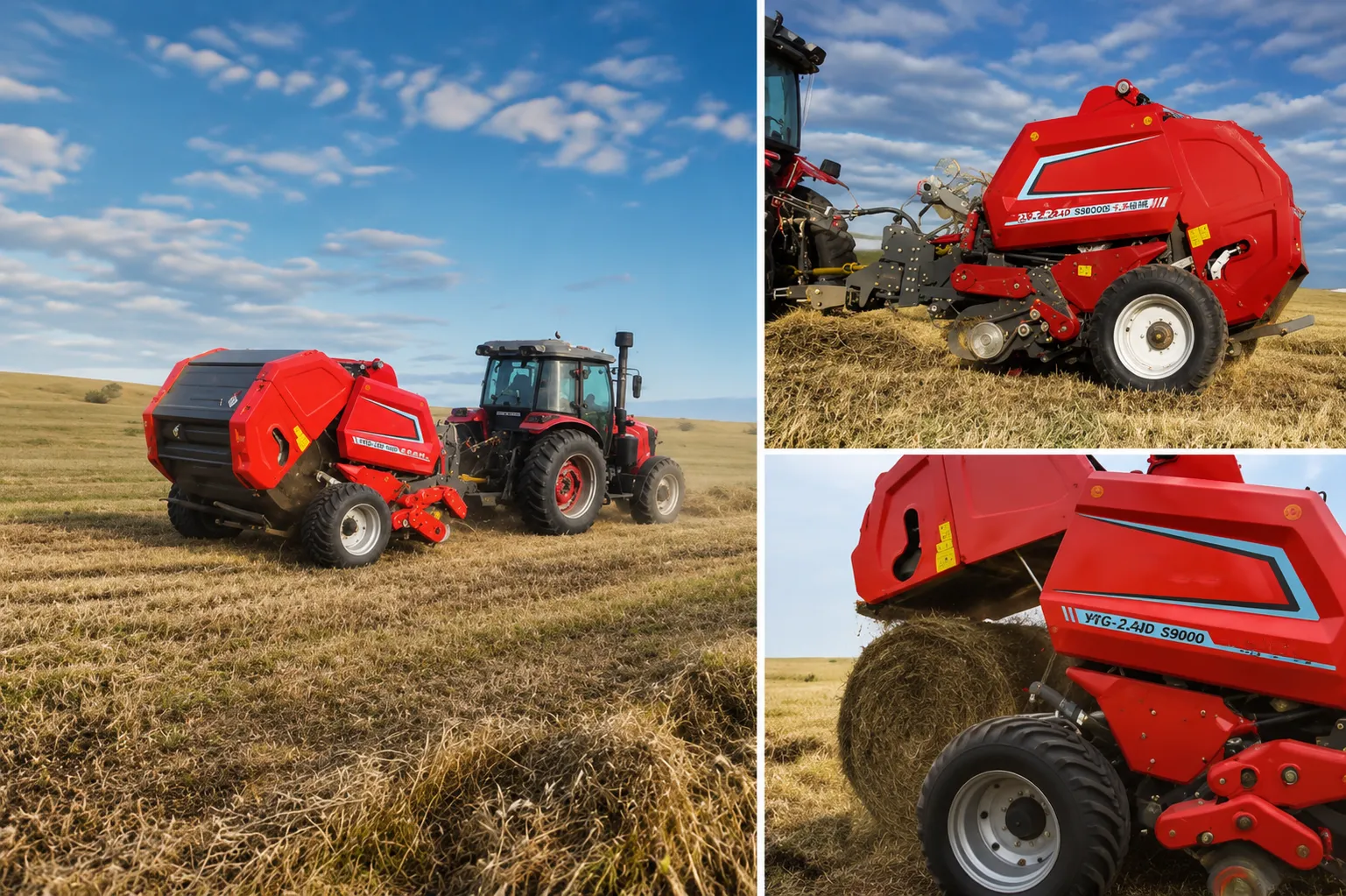
Net wrap is cut automatically after the preset revolution count. The tailgate opens under hydraulic pressure, the bale ejects, and the gate closes without manual latching. Cycle time net-wrap-to-gate-closed: 15–20 seconds.
Technical Specifications
| # | Parameter | Unit | Value |
|---|---|---|---|
| 1 | Model Name | — | 9YG-1.25A Round Baler |
| 2 | Hitch Type | — | Towed (Drawbar) |
| 3 | PTO Input Speed | RPM | 540 / 720 / 1000 (all accepted) |
| 4 | Pickup Width | mm / in | 2,240 mm (88.2 in) |
| 5 | Pickup Type | — | Spring Tooth |
| 6 | Feed System | — | Tooth Bar + Roller |
| 7 | Chamber Type | — | Fixed-Chamber Roller |
| 8 | Chamber Width | mm / in | 1,250 mm (49.2 in) |
| 9 | Chamber Diameter | mm / in | Φ 1,200 mm (47.2 in) |
| 10 | Number of Rollers | pcs | 18 |
| 11 | Roller Diameter | mm | 222 mm (8.7 in) |
| 12 | Wrapping System | — | Automatic Net Wrap (Standard) |
| 13 | Tractor Power Required | kW / HP | ≥75 kW (≥100 HP) |
| 14 | Machine Weight | kg / lb | 4,472 kg (9,859 lb) |
| 15 | Overall Dimensions (L×W×H) | mm | 4,400 × 2,850 × 2,400 (working) |
| 16 | Bale Density Control | — | Electronic Sensor |
| 17 | Bale Size (Dia. × Width) | mm / in | Φ 1,300 × 1,250 mm (51 × 49 in) |
| 18 | Bale Density | kg/m³ | 100–200 |
| 19 | Productivity | bales/hr | 40–100 |
| 20 | Track Width | mm | 2,450 |
| 21 | Operating Speed | km/h / mph | 5–35 km/h (3–22 mph) |
| 22 | Net Wrap Specification | — | 2,000 × 1.25 m per bale |
Suitable Crops & Conditions
Alfalfa, brome, orchardgrass, fescue, bermudagrass, timothy, mixed pasture below 18% moisture. Spring-tooth pickup minimizes leaf shatter in dry alfalfa; sensor-density automation produces consistent bale weights for feeding ration management.
Second- and third-cut at 30–45% moisture for wrapped baleage. Fixed-chamber roller avoids belt-slip issues in wet material. Use 720 or 1000 RPM for heavier-moisture cuts; use 540 RPM in lighter, drier conditions on compatible tractors.
Wheat, barley, oat, and rye straw. The 88.2-inch pickup handles full combine-header swath widths cleanly. In high-volume straw, use 720 or 1000 RPM to maintain intake flow through the tooth bar and roller system.
Post-combine corn stover from windrows at 720–1000 RPM. For standing-stalk direct harvest, see the 9YH-1.25B Hammer Claw or 9YG-1.0C.
Cereal rye, triticale, hairy vetch, sorghum-sudan in windrows. In dense, heavy cover crop terminations, the 1000 RPM setting provides the most consistent intake throughput through tangled, high-resistance material.
Flat to gently rolling. Standard drawbar hitch. For regular side slopes above 10–12°, see the S9000 Superior with adjustable hitch.
IP & Manufacturing
~100 Utility Patents — Fully In-House Production
Brazil Ever-Power Farm Balers Co., Ltd holds close to 100 utility patents developed through its in-house R&D center, covering intake mechanisms, chamber design, and driveline components. All production at the 32,000 m² facility uses CNC laser cutting, robotic welding, and electrostatic coating — no primary structural or mechanical outsourcing. ISO 9001, Two-Informatization Integration Level A, AAA Credit Enterprise, National High-Technology Enterprise.

Field Operation
Select the PTO speed on the tractor — no adjustment on the baler required. Engage PTO at low throttle before entering the field. General guidance: use 540 RPM for light, dry material in moderate windrows; use 720 RPM for standard hay and straw; use 1000 RPM for heavy, dense, or high-moisture material where maximum intake throughput is needed.
Advance at steady forward speed for the windrow weight and selected PTO speed. The tooth bar and roller distribute material laterally before chamber entry. Monitor intake flow visually — consistent, uninterrupted material flow at the pickup edge indicates correct forward speed. The 18 rollers compress the bale core progressively; the sensor triggers wrap at the density setpoint.
Slow to near-idle at the density alarm. Net applies automatically across the 1,250 mm bale face, cuts, and the gate opens. Bale ejects; gate closes under hydraulic pressure without manual latching. Resume forward travel on gate close signal. Cycle time 15–20 seconds — consistent across all three PTO speed settings.
If you need to switch PTO speed during a session — for example, moving from light dry straw to heavier haylage windrows in the same field — disengage the PTO, allow it to come to a stop, then re-engage at the new speed setting on the tractor. Never switch speed settings while the PTO shaft is rotating.
Some Case IH tractors provide a 750 RPM economy PTO setting rather than 720 RPM. The 9YG-1.25A accepts 540, 720, and 1000 RPM. At 750 RPM — 4% above the 720 RPM rated input — the machine will operate but runs slightly above the 720 RPM gearbox design point. For sustained heavy-load operation, use the 540 or 1000 RPM setting on Case IH tractors rather than the 750 RPM economy setting. Confirm with our technical team before purchase if this applies to your primary tractor.
The multi-speed input gearbox requires daily oil level checks during the first season — a slow seal seep at the input shaft is possible during break-in and should be caught early. Monitor the gearbox oil level each morning in the first 200 operating hours; after break-in, the 50-hour check interval applies. The oil grade specification is in the operator manual; do not substitute a generic gear oil without confirming viscosity compatibility.
Maintenance
- Grease all pickup tine pivots, roller shaft ends, and chain idler bearings
- Check multi-speed gearbox oil level — critical in first 200 hours; daily thereafter for first season
- Verify net wrap roll and brake tension — inspect wrap application on first bale of each session
- Confirm PTO engages smoothly at the selected speed before entering the field
- Inspect and adjust drive chain tension — 15–20 mm maximum sag mid-span
- Check pickup tines for wear or bending; replace tines with cracks at the base
- Inspect roller bearings for roughness or operating heat
- Check multi-speed gearbox selector engagement — any stiffness in speed selection should be investigated before it becomes a field problem
- Drain and replace multi-speed gearbox oil — use operator manual grade specification
- Inspect gearbox speed selector mechanism; address any binding or play before storage
- Replace pickup tine set if overall wear exceeds 20%
- Clean machine, release chain tension, apply anti-corrosion spray, remove net wrap roll for dry storage
Operator Reviews
West-Central Iowa — Dairy Farm, 3 tractors (2× 540, 1× 720 RPM), 720 acres hay
We run three tractors for our hay operation — two older Magnums that are 540-only and one newer 6R that provides 720 RPM. Before the 9YG-1.25A, we were limited to running the newer tractor on the baler and using the older tractors only for raking and transport. The 9YG-1.25A changed that. All three tractors can pull the baler, which gave us back scheduling flexibility during peak season — we can put whoever is available in the seat and get baling done without matching tractor to implement. We’ve put 4,200 bales on it across two seasons of alfalfa and orchardgrass. Bale quality has been consistently good; our nutritionist commented that the density consistency is better than what we were getting from the belt baler we replaced. The daily gearbox oil check is a real task, not optional — I want to flag that to other buyers. Otherwise, satisfied.
Southern Minnesota — Custom Hay Baling, 2,800 acres/season
Custom work means I use whatever tractor the client has available. On most farms I visit that’s a 720 RPM modern tractor, but I’ve had three clients this season with older 540-only equipment and the 9YG-1.25A handled all of them without me needing to drag my own tractor along. That’s the real value for custom operators — being the person who shows up and says “yes, your tractor works” is a competitive advantage over operators who need to dictate which tractor the farmer brings. I put 2,800 acres on the machine this season across mixed grass and alfalfa, and it ran reliably throughout. One pickup tine replacement at about 2,200 bales from wear — normal for that volume. Parts came in 11 days from order. Four rather than five stars because I’d prefer the gate cycle to be a little faster on tight headlands, but that’s a minor point.
Northern Ohio — Horse Farm, Mixed Hay & Straw, 105 HP 540-RPM Tractor, 400 acres
My main tractor is a 105 HP unit from 2003 — it’s 540 RPM only and in excellent condition. I wasn’t about to replace it just to run a new baler. The 9YG-1.25A runs perfectly behind it in 540 RPM mode. I bale mixed grass hay and wheat straw for my horse operation. Bale quality has been good enough that my hay customers are happy — consistent density, clean net wrap, no loose ends. The spring-tooth pickup is gentle on dry orchardgrass and timothy, which matters because leaf loss at the pickup directly affects the hay quality my horses eat. I’m 1,600 bales into the machine with no mechanical problems beyond routine greasing. Very satisfied — I wish more balers supported 540 RPM without requiring a separate gearbox adapter.
Central Kansas — Wheat Straw & Cover Crop, 720 RPM Tractor, 600 acres
We run all 720 RPM equipment and bought the 9YG-1.25A because it was in stock when we needed a baler, and the multi-speed gearbox seemed like useful insurance for future equipment changes. In practice we’ve run it exclusively at 720 RPM across 600 acres of wheat straw and cereal rye. Machine performance has been solid — the wheat straw baling is clean at around 65 bales per hour, and the cereal rye at 1000 RPM handled the heavy termination windrows without blockage. I give four stars rather than five because I’m paying for a multi-speed gearbox I mostly use at one speed. That’s not the machine’s fault — it’s an honest reflection that if I knew I’d only ever run 720 RPM, the standard 9YG-1.25 would have been a slightly better economic fit. The machine itself is well-built and I have no performance complaints.
Western Nebraska — Large Alfalfa Operation, 120 HP Modern Tractor, 1,800 acres
At 1,800 acres of alfalfa, the 9YG-1.25A produced more bales than I could handle efficiently with the 49-inch bale format. Each bale holds about 12% less hay than a 55-inch bale at the same diameter, which means more loader cycles, more flatbed positions per ton, and more feeding events per ton consumed by the cattle. The multi-speed gearbox is useful insurance but I run a single modern tractor at 720 RPM — I don’t need it. Three stars reflects that this was the wrong model for my scale and bale format requirements; the 9YH-1400 or S9000 with a 55-inch chamber would have suited me better. The machine is solid quality — no mechanical issues in 1,800 acres. But the 49-inch bale ceiling is a real operational constraint above roughly 1,000 acres of hay per season where handling efficiency matters.
Frequently Asked Questions
What is the difference between the 9YG-1.25A and the 9YH-1.25A6?
Both models accept 540, 720, and 1000 RPM PTO and produce the same 51 × 49-inch bale. The 9YG-1.25A uses a tooth bar + roller 2-stage feed system. The 9YH-1.25A6 uses the same multi-speed gearbox and is the A6-designated version — an updated release with engineering refinements to the input gearbox assembly. Machine weight and bale output are identical. If both are available, confirm with our sales team which version is current production.
Does bale quality change between 540, 720, and 1000 RPM operation?
Bale size is fixed by chamber geometry regardless of PTO speed — the bale is always Φ1,300 × 1,250 mm. Bale density is set by the sensor threshold and is consistent across all three input speeds because the gearbox normalizes internal drive speed. The practical difference between 540 and 1000 RPM operation is in how the machine handles windrow variability. At 1000 RPM, the intake system has more momentum to push through density spikes without stalling. At 540 RPM, operators should reduce forward speed in heavy patches to stay within the tractor’s PTO capacity.
Should I choose the 9YG-1.25A or the standard 9YG-1.25?
Choose the 9YG-1.25A if: your fleet includes any 540-RPM-only tractors; you do custom baling at farms with unknown tractor configurations; or you plan to replace your current tractor and want compatibility with a range of future options. Choose the standard 9YG-1.25 if you run a single modern tractor with 720 RPM and that situation is unlikely to change — the 9YG-1.25 is lighter and simpler, at the same bale performance, for a fleet with stable 720 RPM configuration.
Is this machine compatible with Case IH tractors that use a 750 RPM economy PTO?
The 9YG-1.25A is rated for 540, 720, and 1000 RPM. Some Case IH models use a 750 RPM economy PTO — 4% above the 720 RPM rating. At 750 RPM the machine will operate, but runs slightly above the design point for the 720 RPM gearbox ratio. For sustained heavy-crop operation on a 750 RPM economy PTO Case IH tractor, use the 540 or 1000 RPM setting rather than the 750 RPM economy setting. Contact us before purchase if this is your primary tractor configuration.
What are the approximate bale weights I can expect?
At 100–200 kg/m³ density with a Φ1,300 × 1,250 mm bale volume of approximately 1.57 m³: dry alfalfa (12% moisture) 750–950 lb; brome or grass hay (10–14%) 640–800 lb; wheat straw (10%) 500–700 lb; corn stover (15%) 620–820 lb; baleage/haylage alfalfa (35%) 950–1,200 lb. These are typical ranges — actual weights vary by crop density, moisture, and sensor setpoint.
Where can I order parts and what is the lead time to the US?
Parts are ordered directly through Brazil Ever-Power Farm Balers Co., Ltd’s spare parts program. Standard in-stock parts ship with 10–18 business day lead time to US customers. Pre-season planning is essential — order a spare parts kit (pickup tines, drive chain, roller bearings, net wrap brake pads) before each baling season. More product documentation at Brazil Ever-Power Farm Balers’ product catalog.
Manufacturer
Brazil Ever-Power Farm Balers Co., Ltd
National high-technology enterprise. 32,000 m² integrated manufacturing facility. Two round baler and harvesting equipment assembly lines at 2,000-unit annual capacity. ~100 utility patents. ISO 9001, Two-Informatization Integration Level A, AAA Credit Enterprise certifications. All production in-house — CNC laser cutting, robotic welding, electrostatic coating. Independent import/export rights. US, Mongolia, Russia, Belarus, Kazakhstan markets.
Full product range at Brazil Ever-Power Farm Balers’ product catalog.
Compare with Other Models
Single-speed 720 RPM. Same bale format and output. Lighter at 8,950 lb. Better value if your fleet is stable at 720 RPM.
A6 version of the multi-speed mid-range. Same 540/720/1000 RPM input, same bale, engineering refinements to the gearbox. Confirm availability with sales.
Spring-tooth and hammer claw pickups both included. Bales hay AND harvests standing corn stover. 720 RPM, 120 HP minimum.
Produces the 51 × 55-inch bale format — 12% more volume per bale. Lower handling cycles per ton. OEM-compatible format for wrappers and feeders.
55-inch bale, patented axial-flow intake, terrain variants available. For high-volume or complex field operations above 1,000+ acres.
Bales and wraps silage in a single machine pass. 30–40 bales/hr, 120 HP minimum. Eliminates the separate wrapper step entirely.