
Farm Baler Knowledge Center
A side-by-side explanation of fixed-chamber and variable-chamber round balers to help farmers choose based on bale size, crops, tractor capacity and workflow.
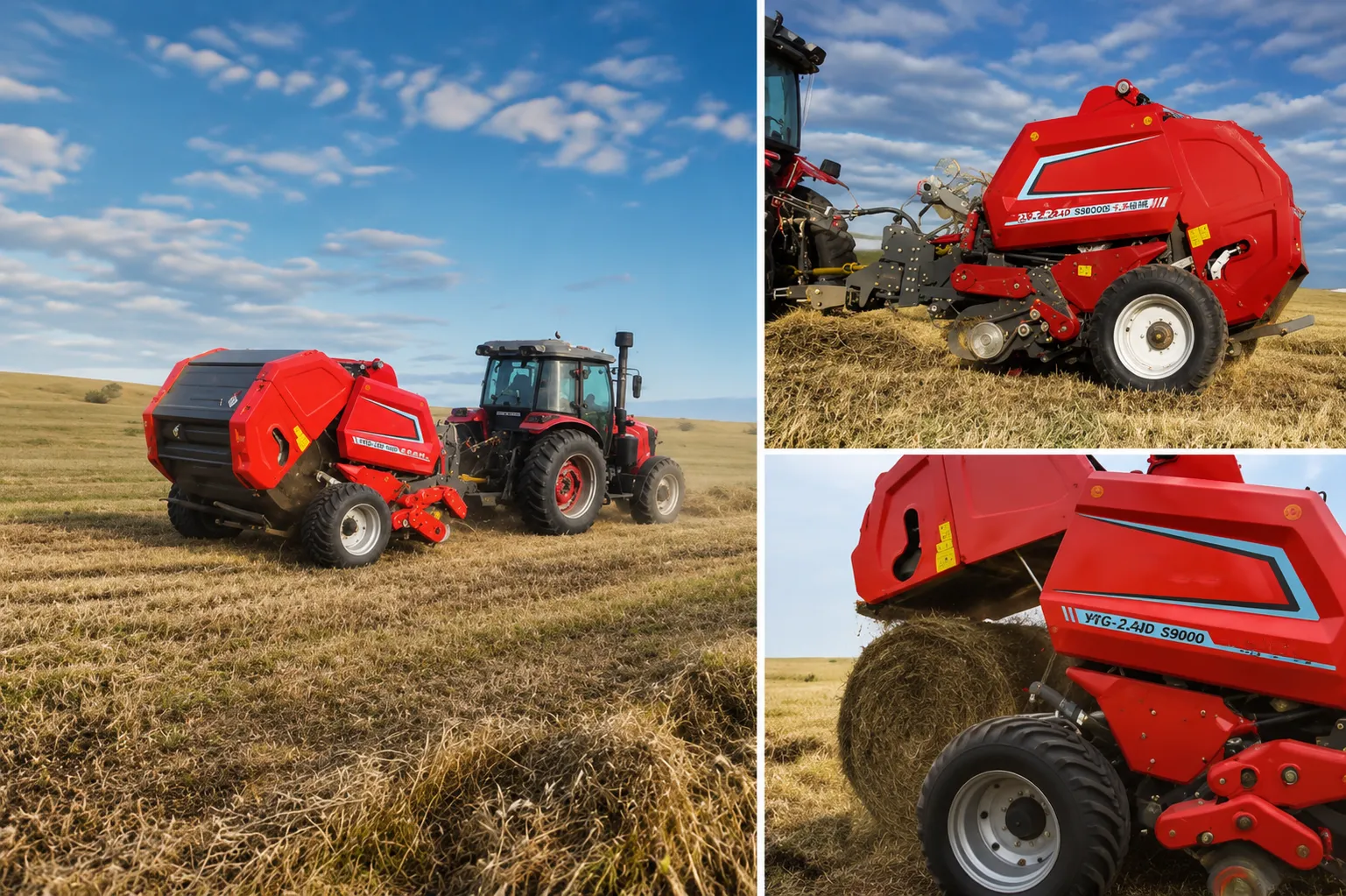
A fixed-chamber round baler forms the bale in a chamber with a largely fixed final diameter, while a variable-chamber baler expands as the bale grows within its adjustable size range. The best results come from matching the machine to tractor power, crop conditions, desired bale size, field layout and the way finished bales will be handled.
- The Core Difference
- Bale Size Flexibility
- How the Bale Core Forms
- Crop Moisture and Material Range
- Bale Density Control
- Tractor Power Requirements
- Throughput and Field Productivity
- Maintenance Differences
- Twine, Net Wrap and Downstream Wrapping
- Cost and Resale Considerations
- Which Design Fits a Small Farm?
- Decision Checklist
The Core Difference
A fixed-chamber round baler forms the bale in a chamber with a largely fixed final diameter, while a variable-chamber baler expands as the bale grows within its adjustable size range. For a buyer or operator, the practical step is to verify the relevant specification in the baler manual and then compare it with the tractor, crop and handling equipment already on the farm. That approach reduces guesswork and makes the the core difference decision easier to defend.
Fixed chambers commonly use rollers, chains and slats or combinations of these elements, whereas variable chambers commonly use belts and tensioning systems. A useful way to evaluate this point is to observe several complete bale cycles, not only one demonstration bale. Consistency across changing windrows usually tells more about real-world suitability than a best-case result in ideal crop.
The names describe chamber behavior, not overall quality, because modern machines in both categories can include advanced pickups, density control and automatic wrapping. This also affects operating cost. Small mismatches can appear harmless at first but create slower cycles, extra fuel use, premature wear or additional handling later in the process. Matching equipment correctly is therefore both a productivity and ownership-cost issue.
The right choice depends on the bale system the farm needs rather than a universal ranking of one design over the other. The exact setting or limit is model-specific, so avoid copying a number from another baler simply because the machines look similar. Use manufacturer documentation as the final reference and change only one operating variable at a time when fine-tuning performance.
Bale Size Flexibility
Variable-chamber balers are attractive where operators need different bale diameters for different customers, storage spaces or feeding systems. A useful way to evaluate this point is to observe several complete bale cycles, not only one demonstration bale. Consistency across changing windrows usually tells more about real-world suitability than a best-case result in ideal crop.
Fixed-chamber balers generally emphasize a repeatable final diameter, which can simplify handling where all bales are intended for the same equipment. This also affects operating cost. Small mismatches can appear harmless at first but create slower cycles, extra fuel use, premature wear or additional handling later in the process. Matching equipment correctly is therefore both a productivity and ownership-cost issue.
Some fixed-chamber models may offer limited size options through design variants, but they do not provide the same continuous diameter flexibility associated with variable chambers. The exact setting or limit is model-specific, so avoid copying a number from another baler simply because the machines look similar. Use manufacturer documentation as the final reference and change only one operating variable at a time when fine-tuning performance.
Before choosing, list the bale diameters your loader, wrapper, trailer and feeders can actually use. In practice, this matters because field conditions change quickly during haymaking, and a setup that works in a light windrow can behave differently when crop volume rises. Treat the fixed chamber vs variable chamber round baler decision as part of the whole harvesting system rather than as an isolated machine setting.
How the Bale Core Forms
Chamber geometry influences how crop begins rotating and how density develops from the center toward the outside of the bale. This also affects operating cost. Small mismatches can appear harmless at first but create slower cycles, extra fuel use, premature wear or additional handling later in the process. Matching equipment correctly is therefore both a productivity and ownership-cost issue.
Different designs can produce different core characteristics, but actual results also depend on crop moisture, feed rate and density settings. The exact setting or limit is model-specific, so avoid copying a number from another baler simply because the machines look similar. Use manufacturer documentation as the final reference and change only one operating variable at a time when fine-tuning performance.
A farm handling dry hay and straw may value a different density profile from one making wrapped high-moisture forage. In practice, this matters because field conditions change quickly during haymaking, and a setup that works in a light windrow can behave differently when crop volume rises. Treat the fixed chamber vs variable chamber round baler decision as part of the whole harvesting system rather than as an isolated machine setting.
Ask the supplier how core density is controlled and whether the system is adjustable for your intended crops. For a buyer or operator, the practical step is to verify the relevant specification in the baler manual and then compare it with the tractor, crop and handling equipment already on the farm. That approach reduces guesswork and makes the how the bale core forms decision easier to defend.
Crop Moisture and Material Range
Wet, heavy forage places different demands on chamber surfaces and crop rotation than dry straw or leafy hay. The exact setting or limit is model-specific, so avoid copying a number from another baler simply because the machines look similar. Use manufacturer documentation as the final reference and change only one operating variable at a time when fine-tuning performance.
Some fixed-chamber designs are well suited to wet forage applications, while many variable-chamber models offer broad versatility across hay and straw. In practice, this matters because field conditions change quickly during haymaking, and a setup that works in a light windrow can behave differently when crop volume rises. Treat the fixed chamber vs variable chamber round baler decision as part of the whole harvesting system rather than as an isolated machine setting.
That generalization should never replace model-specific specifications because both chamber families include machines intended for diverse crops. For a buyer or operator, the practical step is to verify the relevant specification in the baler manual and then compare it with the tractor, crop and handling equipment already on the farm. That approach reduces guesswork and makes the crop moisture and material range decision easier to defend.
Choose from the crop range stated for the exact model and the moisture conditions typical on your farm. A useful way to evaluate this point is to observe several complete bale cycles, not only one demonstration bale. Consistency across changing windrows usually tells more about real-world suitability than a best-case result in ideal crop.
Bale Density Control
Variable chambers typically use hydraulic or spring tension on belts as the bale grows, allowing operators to influence density across the bale profile. In practice, this matters because field conditions change quickly during haymaking, and a setup that works in a light windrow can behave differently when crop volume rises. Treat the fixed chamber vs variable chamber round baler decision as part of the whole harvesting system rather than as an isolated machine setting.
Fixed chambers apply pressure through the chamber geometry and resistance system as material fills the available volume. For a buyer or operator, the practical step is to verify the relevant specification in the baler manual and then compare it with the tractor, crop and handling equipment already on the farm. That approach reduces guesswork and makes the bale density control decision easier to defend.
Both designs can produce dense, well-shaped bales when correctly adjusted and evenly fed. A useful way to evaluate this point is to observe several complete bale cycles, not only one demonstration bale. Consistency across changing windrows usually tells more about real-world suitability than a best-case result in ideal crop.
Density should be evaluated together with bale weight, storage needs, tractor power and crop condition rather than treated as the only performance measure. This also affects operating cost. Small mismatches can appear harmless at first but create slower cycles, extra fuel use, premature wear or additional handling later in the process. Matching equipment correctly is therefore both a productivity and ownership-cost issue.
For a broader comparison of agricultural baler types and configurations, see agricultural baler equipment as an additional reference when building your equipment shortlist.
Tractor Power Requirements
Power requirement depends on pickup width, feeder design, chamber resistance, bale density, machine size and options, not only on whether the chamber is fixed or variable. For a buyer or operator, the practical step is to verify the relevant specification in the baler manual and then compare it with the tractor, crop and handling equipment already on the farm. That approach reduces guesswork and makes the tractor power requirements decision easier to defend.
Large high-capacity machines of either type can require substantial PTO power, while compact models can be designed for smaller tractors. A useful way to evaluate this point is to observe several complete bale cycles, not only one demonstration bale. Consistency across changing windrows usually tells more about real-world suitability than a best-case result in ideal crop.
The manufacturer minimum should be combined with practical reserve for hills and heavy windrows. This also affects operating cost. Small mismatches can appear harmless at first but create slower cycles, extra fuel use, premature wear or additional handling later in the process. Matching equipment correctly is therefore both a productivity and ownership-cost issue.
Comparing exact model specifications is more reliable than assuming one chamber type is always easier to drive. The exact setting or limit is model-specific, so avoid copying a number from another baler simply because the machines look similar. Use manufacturer documentation as the final reference and change only one operating variable at a time when fine-tuning performance.
Throughput and Field Productivity
Daily productivity includes pickup capacity, wrapping time, gate cycle, turning, crop volume and operator efficiency. A useful way to evaluate this point is to observe several complete bale cycles, not only one demonstration bale. Consistency across changing windrows usually tells more about real-world suitability than a best-case result in ideal crop.
A fast chamber design provides little benefit if the wrap system is slow or if the pickup repeatedly plugs in uneven windrows. This also affects operating cost. Small mismatches can appear harmless at first but create slower cycles, extra fuel use, premature wear or additional handling later in the process. Matching equipment correctly is therefore both a productivity and ownership-cost issue.
Variable size can reduce handling count by making larger bales when conditions allow, while fixed size can simplify repetitive logistics. The exact setting or limit is model-specific, so avoid copying a number from another baler simply because the machines look similar. Use manufacturer documentation as the final reference and change only one operating variable at a time when fine-tuning performance.
Evaluate complete bale-cycle time in the crop you grow rather than comparing only theoretical chamber capacity. In practice, this matters because field conditions change quickly during haymaking, and a setup that works in a light windrow can behave differently when crop volume rises. Treat the fixed chamber vs variable chamber round baler decision as part of the whole harvesting system rather than as an isolated machine setting.
Maintenance Differences
Variable-chamber machines may have multiple belts, tensioners, splices and tracking points that require inspection and correct adjustment. This also affects operating cost. Small mismatches can appear harmless at first but create slower cycles, extra fuel use, premature wear or additional handling later in the process. Matching equipment correctly is therefore both a productivity and ownership-cost issue.
Fixed-chamber roller or chain systems have their own bearings, chains, sprockets and drive components that also require regular service. The exact setting or limit is model-specific, so avoid copying a number from another baler simply because the machines look similar. Use manufacturer documentation as the final reference and change only one operating variable at a time when fine-tuning performance.
Neither design is maintenance free, and the practical difference depends heavily on machine construction and service access. In practice, this matters because field conditions change quickly during haymaking, and a setup that works in a light windrow can behave differently when crop volume rises. Treat the fixed chamber vs variable chamber round baler decision as part of the whole harvesting system rather than as an isolated machine setting.
Ask for daily and seasonal maintenance schedules before purchase and price the common wear parts. For a buyer or operator, the practical step is to verify the relevant specification in the baler manual and then compare it with the tractor, crop and handling equipment already on the farm. That approach reduces guesswork and makes the maintenance differences decision easier to defend.
Twine, Net Wrap and Downstream Wrapping
Both chamber types can be equipped with twine or net-wrap systems depending on model, so chamber choice does not automatically determine the binding method. The exact setting or limit is model-specific, so avoid copying a number from another baler simply because the machines look similar. Use manufacturer documentation as the final reference and change only one operating variable at a time when fine-tuning performance.
For silage or baleage, the finished bale may move directly to a separate wrapper or a combination system, making consistent bale dimensions important. In practice, this matters because field conditions change quickly during haymaking, and a setup that works in a light windrow can behave differently when crop volume rises. Treat the fixed chamber vs variable chamber round baler decision as part of the whole harvesting system rather than as an isolated machine setting.
Variable-diameter capability can be useful for customers wanting different bale sizes, while fixed dimensions can simplify wrapper settings. For a buyer or operator, the practical step is to verify the relevant specification in the baler manual and then compare it with the tractor, crop and handling equipment already on the farm. That approach reduces guesswork and makes the twine, net wrap and downstream wrapping decision easier to defend.
Consider the entire chain from baler to wrapper, loader, trailer and storage. A useful way to evaluate this point is to observe several complete bale cycles, not only one demonstration bale. Consistency across changing windrows usually tells more about real-world suitability than a best-case result in ideal crop.
Cost and Resale Considerations
Purchase price reflects more than chamber design because pickup width, automation, cutter systems, tires and electronics can change cost substantially. In practice, this matters because field conditions change quickly during haymaking, and a setup that works in a light windrow can behave differently when crop volume rises. Treat the fixed chamber vs variable chamber round baler decision as part of the whole harvesting system rather than as an isolated machine setting.
A simpler configuration may have lower initial and repair cost, while added flexibility can create value where bale sizes or customers vary. For a buyer or operator, the practical step is to verify the relevant specification in the baler manual and then compare it with the tractor, crop and handling equipment already on the farm. That approach reduces guesswork and makes the cost and resale considerations decision easier to defend.
Resale depends on local demand and brand support, so a technically attractive machine may be difficult to sell in a market where parts are scarce. A useful way to evaluate this point is to observe several complete bale cycles, not only one demonstration bale. Consistency across changing windrows usually tells more about real-world suitability than a best-case result in ideal crop.
Compare expected cost per bale and useful life rather than chamber labels alone. This also affects operating cost. Small mismatches can appear harmless at first but create slower cycles, extra fuel use, premature wear or additional handling later in the process. Matching equipment correctly is therefore both a productivity and ownership-cost issue.
Which Design Fits a Small Farm?
Small farms often value simple operation, manageable bale weight and tractor compatibility, making compact fixed or variable machines both possible choices. For a buyer or operator, the practical step is to verify the relevant specification in the baler manual and then compare it with the tractor, crop and handling equipment already on the farm. That approach reduces guesswork and makes the which design fits a small farm? decision easier to defend.
If one consistent bale size meets all feeding and storage needs, the value of variable diameter may be limited. A useful way to evaluate this point is to observe several complete bale cycles, not only one demonstration bale. Consistency across changing windrows usually tells more about real-world suitability than a best-case result in ideal crop.
If the farm sells hay to different buyers or uses different bale sizes for different livestock groups, variable diameter can be useful. This also affects operating cost. Small mismatches can appear harmless at first but create slower cycles, extra fuel use, premature wear or additional handling later in the process. Matching equipment correctly is therefore both a productivity and ownership-cost issue.
The best small-farm choice is the model with the right power requirement, bale dimensions, serviceability and support. The exact setting or limit is model-specific, so avoid copying a number from another baler simply because the machines look similar. Use manufacturer documentation as the final reference and change only one operating variable at a time when fine-tuning performance.
Decision Checklist
List required bale diameters, crop types, moisture range, tractor PTO power, annual bale count, wrapping method and handling equipment. A useful way to evaluate this point is to observe several complete bale cycles, not only one demonstration bale. Consistency across changing windrows usually tells more about real-world suitability than a best-case result in ideal crop.
Compare pickup and feeder design, chamber system, density adjustment, wrap cycle, maintenance points, machine weight and transport width. This also affects operating cost. Small mismatches can appear harmless at first but create slower cycles, extra fuel use, premature wear or additional handling later in the process. Matching equipment correctly is therefore both a productivity and ownership-cost issue.
Ask for sample bales or field demonstrations in crops similar to yours whenever possible. The exact setting or limit is model-specific, so avoid copying a number from another baler simply because the machines look similar. Use manufacturer documentation as the final reference and change only one operating variable at a time when fine-tuning performance.
Choose the chamber type only after confirming that the complete model fits your farm workflow. In practice, this matters because field conditions change quickly during haymaking, and a setup that works in a light windrow can behave differently when crop volume rises. Treat the fixed chamber vs variable chamber round baler decision as part of the whole harvesting system rather than as an isolated machine setting.
Practical buying and operating checklist
- Confirm tractor PTO horsepower, PTO speed, hydraulic remotes and drawbar requirements for the exact model.
- Match bale diameter and expected bale weight to loader, trailer, storage and feeder capacity.
- Check crop range, pickup width, feeder design, density control and wrapping options.
- Ask for operator and parts manuals, warranty terms and a recommended spare-parts package.
- Plan preseason service and keep a record of bale count, wear parts and recurring faults.
Field Observation Method
Before changing settings, make a short baseline run and record tractor rpm, ground speed, windrow size, bale diameter, wrap setting and any monitor warnings. Change only one variable at a time so you can identify which adjustment actually improves the result. This is especially useful when evaluating fixed chamber vs variable chamber round baler because the decision involves both machine capability and the conditions in which the machine will operate. A written record turns subjective impressions into information that can be compared from field to field and from season to season.
Use the result to guide the next practical step rather than changing several settings at once. If performance remains inconsistent after windrow, maintenance and operating adjustments are checked, compare the observation with the supplier specification and service guidance. That sequence helps separate normal field variation from a genuine compatibility or mechanical problem.
Inspect several finished bales for shoulder shape, surface tightness, loose crop and consistent dimensions. If possible, weigh occasional bales because visual size alone does not reveal density or moisture-related weight changes. This is especially useful when evaluating fixed chamber vs variable chamber round baler because the decision involves both machine capability and the conditions in which the machine will operate. A written record turns subjective impressions into information that can be compared from field to field and from season to season.
Use the result to guide the next practical step rather than changing several settings at once. If performance remains inconsistent after windrow, maintenance and operating adjustments are checked, compare the observation with the supplier specification and service guidance. That sequence helps separate normal field variation from a genuine compatibility or mechanical problem.
Keep notes for different crops and cuttings. A setting that works in dry second-cut grass may not be appropriate in a heavy first-cut windrow or brittle straw, and written records shorten the learning curve next season. This is especially useful when evaluating fixed chamber vs variable chamber round baler because the decision involves both machine capability and the conditions in which the machine will operate. A written record turns subjective impressions into information that can be compared from field to field and from season to season.
Use the result to guide the next practical step rather than changing several settings at once. If performance remains inconsistent after windrow, maintenance and operating adjustments are checked, compare the observation with the supplier specification and service guidance. That sequence helps separate normal field variation from a genuine compatibility or mechanical problem.
Supplier Questions Worth Asking
Ask for the exact PTO horsepower and speed requirement, hydraulic outlets, machine operating weight, pickup width, bale-size range, wrapping options and recommended tractor drawbar setup. This is especially useful when evaluating fixed chamber vs variable chamber round baler because the decision involves both machine capability and the conditions in which the machine will operate. A written record turns subjective impressions into information that can be compared from field to field and from season to season.
Use the result to guide the next practical step rather than changing several settings at once. If performance remains inconsistent after windrow, maintenance and operating adjustments are checked, compare the observation with the supplier specification and service guidance. That sequence helps separate normal field variation from a genuine compatibility or mechanical problem.
Request operator and parts manuals before delivery if possible. Clear part numbers, wiring diagrams and maintenance intervals are useful indicators of how easy the machine will be to support after purchase. This is especially useful when evaluating fixed chamber vs variable chamber round baler because the decision involves both machine capability and the conditions in which the machine will operate. A written record turns subjective impressions into information that can be compared from field to field and from season to season.
Use the result to guide the next practical step rather than changing several settings at once. If performance remains inconsistent after windrow, maintenance and operating adjustments are checked, compare the observation with the supplier specification and service guidance. That sequence helps separate normal field variation from a genuine compatibility or mechanical problem.
For international orders, confirm packing dimensions, Incoterm, spare-parts availability, warranty process and whether fittings, PTO shaft and electrical connectors match the destination market. This is especially useful when evaluating fixed chamber vs variable chamber round baler because the decision involves both machine capability and the conditions in which the machine will operate. A written record turns subjective impressions into information that can be compared from field to field and from season to season.
Use the result to guide the next practical step rather than changing several settings at once. If performance remains inconsistent after windrow, maintenance and operating adjustments are checked, compare the observation with the supplier specification and service guidance. That sequence helps separate normal field variation from a genuine compatibility or mechanical problem.
Ownership Records That Improve Decisions
Track annual bale count, wrap rolls used, fuel consumed, wear parts, repair labor and downtime. These records allow a real cost-per-bale calculation and help determine whether a future upgrade is justified. This is especially useful when evaluating fixed chamber vs variable chamber round baler because the decision involves both machine capability and the conditions in which the machine will operate. A written record turns subjective impressions into information that can be compared from field to field and from season to season.
Use the result to guide the next practical step rather than changing several settings at once. If performance remains inconsistent after windrow, maintenance and operating adjustments are checked, compare the observation with the supplier specification and service guidance. That sequence helps separate normal field variation from a genuine compatibility or mechanical problem.
Record major component replacements and recurring faults. Repeated problems at the same bale interval can indicate a maintenance pattern, a setup issue or a component that should be stocked before the next harvest. This is especially useful when evaluating fixed chamber vs variable chamber round baler because the decision involves both machine capability and the conditions in which the machine will operate. A written record turns subjective impressions into information that can be compared from field to field and from season to season.
Use the result to guide the next practical step rather than changing several settings at once. If performance remains inconsistent after windrow, maintenance and operating adjustments are checked, compare the observation with the supplier specification and service guidance. That sequence helps separate normal field variation from a genuine compatibility or mechanical problem.
Good records also make resale discussions more credible because the next owner can see service history rather than relying on appearance alone. This is especially useful when evaluating fixed chamber vs variable chamber round baler because the decision involves both machine capability and the conditions in which the machine will operate. A written record turns subjective impressions into information that can be compared from field to field and from season to season.
Use the result to guide the next practical step rather than changing several settings at once. If performance remains inconsistent after windrow, maintenance and operating adjustments are checked, compare the observation with the supplier specification and service guidance. That sequence helps separate normal field variation from a genuine compatibility or mechanical problem.
Frequently Asked Questions
What is a fixed chamber round baler?
It forms a round bale in a chamber with a largely fixed final diameter, commonly using rollers or chain-and-slat elements to rotate and compress crop. For model-specific limits, use the manufacturer manual or written supplier specification.
What is a variable chamber round baler?
It uses an expanding chamber, commonly with belts and tensioning systems, so the bale can grow to different diameters within the machine range. For model-specific limits, use the manufacturer manual or written supplier specification.
Which makes denser bales?
Both designs can make dense bales. Density depends on machine design, pressure settings, crop moisture and feed consistency, so model-specific data is more useful than chamber type alone. For model-specific limits, use the manufacturer manual or written supplier specification.
Which is better for silage?
Many fixed-chamber machines are popular for silage, but variable-chamber machines can also be designed for high-moisture forage. Confirm the crop and moisture range of the exact model. For model-specific limits, use the manufacturer manual or written supplier specification.
Which is easier to maintain?
It depends on construction. Variable machines have belts and tension systems; fixed machines may have more rollers, chains or bearings. Service access and parts support are more useful comparison points. For model-specific limits, use the manufacturer manual or written supplier specification.
Continue learning about round balers
Need help choosing a farm baler?
Tell us your tractor horsepower, crop, acreage, preferred bale size and destination. We can help you compare a suitable Round, Square, Mini or Silage Baler configuration.
Editorial note: machine requirements and operating procedures vary by model. Always use the operator manual and applicable local safety rules as the final reference.