
Farm Baler Knowledge Center
A decision-focused round baler buying guide covering tractor compatibility, crop type, bale size, chamber design, wrap system, productivity, maintenance and total cost.
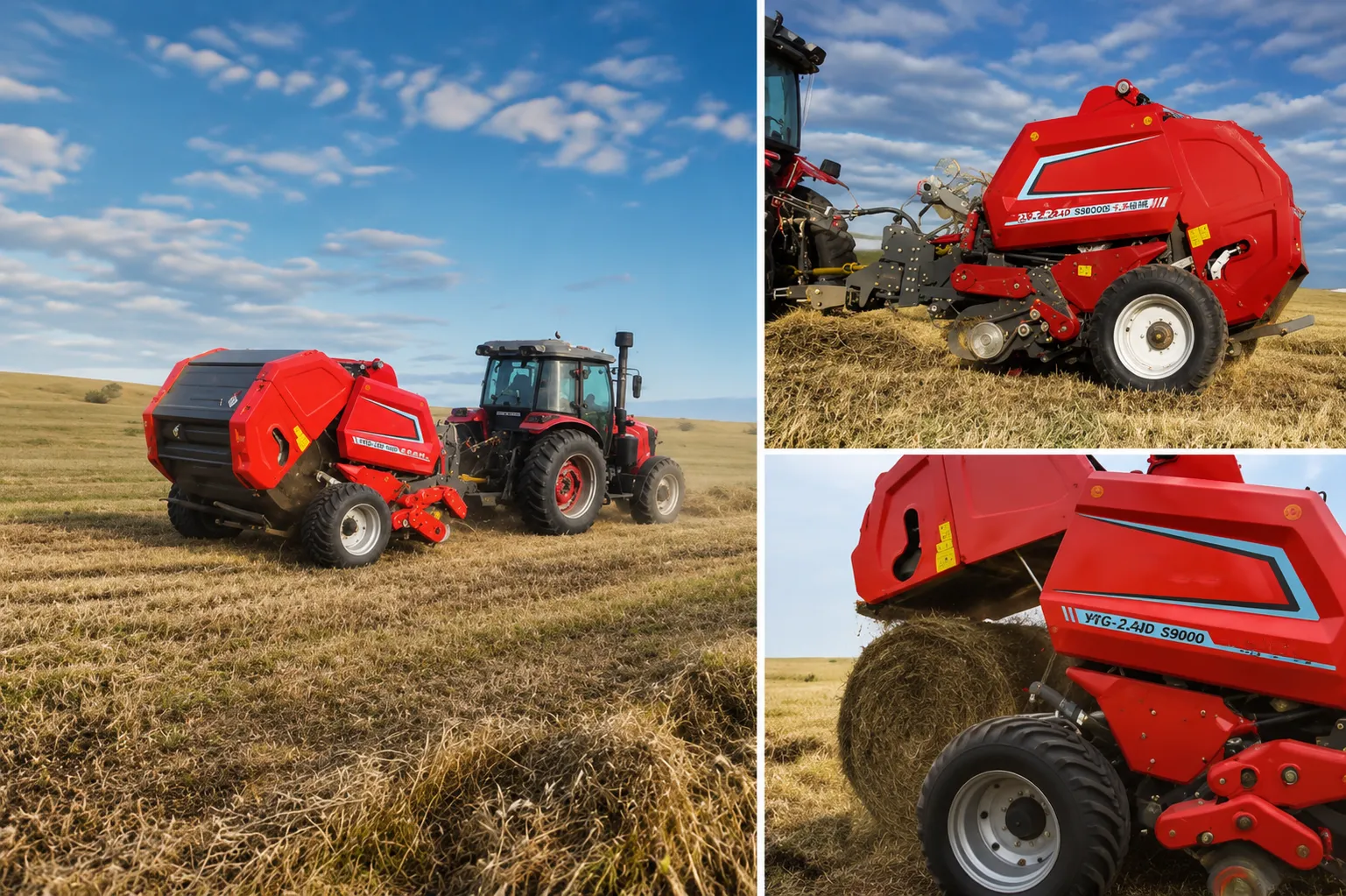
The best round baler is the machine that fits the farm system, not necessarily the model with the highest capacity or the longest option list. The best results come from matching the machine to tractor power, crop conditions, desired bale size, field layout and the way finished bales will be handled.
- Begin With Your Farm, Not the Machine
- 1. Match the Baler to Tractor PTO Power
- 2. Choose Bale Diameter and Width Around Handling
- 3. Decide Between Fixed and Variable Chamber
- 4. Evaluate Pickup and Feeding Capacity
- 5. Select Twine, Net Wrap or Both
- 6. Compare Density Control and Bale Shape Monitoring
- 7. Think About Crop Range
- 8. Estimate Realistic Daily Capacity
- 9. Inspect Maintenance and Service Access
- 10. Check Transport, Storage and Farm Access
- 11. Compare Total Cost of Ownership
- 12. Verify Supplier Support Before Ordering
Begin With Your Farm, Not the Machine
The best round baler is the machine that fits the farm system, not necessarily the model with the highest capacity or the longest option list. For a buyer or operator, the practical step is to verify the relevant specification in the baler manual and then compare it with the tractor, crop and handling equipment already on the farm. That approach reduces guesswork and makes the begin with your farm, not the machine decision easier to defend.
Record annual acres, number of cuttings, crop types, average field size, transport distances, storage method and who will operate the baler. A useful way to evaluate this point is to observe several complete bale cycles, not only one demonstration bale. Consistency across changing windrows usually tells more about real-world suitability than a best-case result in ideal crop.
Decide whether the baler will support a small livestock farm, a commercial hay operation or contract baling because each use pattern places different value on speed, simplicity and automation. This also affects operating cost. Small mismatches can appear harmless at first but create slower cycles, extra fuel use, premature wear or additional handling later in the process. Matching equipment correctly is therefore both a productivity and ownership-cost issue.
A written requirement list prevents attractive specifications from distracting you from the capabilities that actually affect daily work. The exact setting or limit is model-specific, so avoid copying a number from another baler simply because the machines look similar. Use manufacturer documentation as the final reference and change only one operating variable at a time when fine-tuning performance.
1. Match the Baler to Tractor PTO Power
Check the baler manufacturer minimum PTO horsepower rather than comparing only tractor engine horsepower because PTO power is the relevant output at the driveline. A useful way to evaluate this point is to observe several complete bale cycles, not only one demonstration bale. Consistency across changing windrows usually tells more about real-world suitability than a best-case result in ideal crop.
Allow practical reserve for hills, heavy windrows, soft ground and high bale density instead of planning to operate continuously at the tractor limit. This also affects operating cost. Small mismatches can appear harmless at first but create slower cycles, extra fuel use, premature wear or additional handling later in the process. Matching equipment correctly is therefore both a productivity and ownership-cost issue.
Confirm PTO speed, shaft type, drawbar position, hydraulic outlets and electrical monitor requirements at the same time. The exact setting or limit is model-specific, so avoid copying a number from another baler simply because the machines look similar. Use manufacturer documentation as the final reference and change only one operating variable at a time when fine-tuning performance.
If you own several tractors, choose the intended baling tractor first so the baler does not become dependent on a machine that is needed elsewhere during harvest. In practice, this matters because field conditions change quickly during haymaking, and a setup that works in a light windrow can behave differently when crop volume rises. Treat the how to choose a round baler decision as part of the whole harvesting system rather than as an isolated machine setting.
2. Choose Bale Diameter and Width Around Handling
Bale dimensions affect individual bale weight, storage density, loader requirements, trailer capacity and feeding equipment. This also affects operating cost. Small mismatches can appear harmless at first but create slower cycles, extra fuel use, premature wear or additional handling later in the process. Matching equipment correctly is therefore both a productivity and ownership-cost issue.
Smaller bales can be easier for compact loaders and small livestock farms, while larger bales may reduce the number of bales handled per acre. The exact setting or limit is model-specific, so avoid copying a number from another baler simply because the machines look similar. Use manufacturer documentation as the final reference and change only one operating variable at a time when fine-tuning performance.
The heaviest possible bale is not automatically the most economical because equipment limitations and wet field conditions can make large bales inconvenient. In practice, this matters because field conditions change quickly during haymaking, and a setup that works in a light windrow can behave differently when crop volume rises. Treat the how to choose a round baler decision as part of the whole harvesting system rather than as an isolated machine setting.
Work backward from your loader, bale spear, trailer, storage entrance and feeding system before selecting a bale-size range. For a buyer or operator, the practical step is to verify the relevant specification in the baler manual and then compare it with the tractor, crop and handling equipment already on the farm. That approach reduces guesswork and makes the 2. choose bale diameter and width around handling decision easier to defend.
3. Decide Between Fixed and Variable Chamber
Fixed-chamber machines offer a defined bale-diameter concept and can be attractive where operators value simple, repeatable operation. The exact setting or limit is model-specific, so avoid copying a number from another baler simply because the machines look similar. Use manufacturer documentation as the final reference and change only one operating variable at a time when fine-tuning performance.
Variable-chamber machines allow bale diameter to be adjusted within a model-specific range, creating flexibility for different customers, crops or storage systems. In practice, this matters because field conditions change quickly during haymaking, and a setup that works in a light windrow can behave differently when crop volume rises. Treat the how to choose a round baler decision as part of the whole harvesting system rather than as an isolated machine setting.
Chamber design can influence how the core forms, how density is controlled and how the machine responds to different crop moisture levels. For a buyer or operator, the practical step is to verify the relevant specification in the baler manual and then compare it with the tractor, crop and handling equipment already on the farm. That approach reduces guesswork and makes the 3. decide between fixed and variable chamber decision easier to defend.
Compare actual model performance, not stereotypes, because modern fixed and variable machines may both offer sophisticated density and automation features. A useful way to evaluate this point is to observe several complete bale cycles, not only one demonstration bale. Consistency across changing windrows usually tells more about real-world suitability than a best-case result in ideal crop.
4. Evaluate Pickup and Feeding Capacity
Pickup width should suit the windrows produced by your mower and rake so the operator can gather crop cleanly without excessive weaving. In practice, this matters because field conditions change quickly during haymaking, and a setup that works in a light windrow can behave differently when crop volume rises. Treat the how to choose a round baler decision as part of the whole harvesting system rather than as an isolated machine setting.
Closely spaced, well-supported pickup tines can improve crop collection, but they also need convenient replacement and protection from stones or rough ground. For a buyer or operator, the practical step is to verify the relevant specification in the baler manual and then compare it with the tractor, crop and handling equipment already on the farm. That approach reduces guesswork and makes the 4. evaluate pickup and feeding capacity decision easier to defend.
Feeder design affects how smoothly heavy or uneven windrows move into the chamber and how easily plugs can be reversed or cleared. A useful way to evaluate this point is to observe several complete bale cycles, not only one demonstration bale. Consistency across changing windrows usually tells more about real-world suitability than a best-case result in ideal crop.
If your fields produce large first-cut windrows, feeder capacity can matter more than a small increase in maximum travel speed. This also affects operating cost. Small mismatches can appear harmless at first but create slower cycles, extra fuel use, premature wear or additional handling later in the process. Matching equipment correctly is therefore both a productivity and ownership-cost issue.
For a broader comparison of agricultural baler types and configurations, see agricultural baler equipment as an additional reference when building your equipment shortlist.
5. Select Twine, Net Wrap or Both
Twine systems generally use lower-cost consumables but need more revolutions around the bale and therefore more wrapping time. For a buyer or operator, the practical step is to verify the relevant specification in the baler manual and then compare it with the tractor, crop and handling equipment already on the farm. That approach reduces guesswork and makes the 5. select twine, net wrap or both decision easier to defend.
Net wrap can reduce wrap-cycle time and creates broad surface coverage that helps preserve bale shape during handling. A useful way to evaluate this point is to observe several complete bale cycles, not only one demonstration bale. Consistency across changing windrows usually tells more about real-world suitability than a best-case result in ideal crop.
If bales are stored outdoors, wrapping consistency and edge coverage become especially important because loose or damaged surfaces can collect water. This also affects operating cost. Small mismatches can appear harmless at first but create slower cycles, extra fuel use, premature wear or additional handling later in the process. Matching equipment correctly is therefore both a productivity and ownership-cost issue.
Calculate cost per bale using both material price and time rather than comparing roll prices alone. The exact setting or limit is model-specific, so avoid copying a number from another baler simply because the machines look similar. Use manufacturer documentation as the final reference and change only one operating variable at a time when fine-tuning performance.
6. Compare Density Control and Bale Shape Monitoring
Consistent density improves transport planning, storage efficiency and feeding predictability, especially when bales are sold by number rather than by weight. A useful way to evaluate this point is to observe several complete bale cycles, not only one demonstration bale. Consistency across changing windrows usually tells more about real-world suitability than a best-case result in ideal crop.
Operator displays that show chamber filling can help produce square shoulders and reduce misshapen bales when windrows are narrow. This also affects operating cost. Small mismatches can appear harmless at first but create slower cycles, extra fuel use, premature wear or additional handling later in the process. Matching equipment correctly is therefore both a productivity and ownership-cost issue.
Automatic density or wrap functions can reduce workload during long days, but they should be easy to understand and diagnose when a sensor fails. The exact setting or limit is model-specific, so avoid copying a number from another baler simply because the machines look similar. Use manufacturer documentation as the final reference and change only one operating variable at a time when fine-tuning performance.
Ask how the baler maintains left-to-right density and how many settings the operator must change when moving between hay, straw and wetter forage. In practice, this matters because field conditions change quickly during haymaking, and a setup that works in a light windrow can behave differently when crop volume rises. Treat the how to choose a round baler decision as part of the whole harvesting system rather than as an isolated machine setting.
7. Think About Crop Range
A farm that bales only dry grass hay has different needs from one that handles alfalfa, straw and high-moisture forage during the same season. This also affects operating cost. Small mismatches can appear harmless at first but create slower cycles, extra fuel use, premature wear or additional handling later in the process. Matching equipment correctly is therefore both a productivity and ownership-cost issue.
Leafy crops reward gentle pickup and feeding because excessive mechanical loss can reduce feed value, while coarse straw may demand robust feeding capacity. The exact setting or limit is model-specific, so avoid copying a number from another baler simply because the machines look similar. Use manufacturer documentation as the final reference and change only one operating variable at a time when fine-tuning performance.
Silage or baleage applications introduce moisture, higher bale weight and film-wrapping requirements that should be considered in the complete system. In practice, this matters because field conditions change quickly during haymaking, and a setup that works in a light windrow can behave differently when crop volume rises. Treat the how to choose a round baler decision as part of the whole harvesting system rather than as an isolated machine setting.
Ask the supplier which crops are within the intended design range and what adjustments are recommended for each crop. For a buyer or operator, the practical step is to verify the relevant specification in the baler manual and then compare it with the tractor, crop and handling equipment already on the farm. That approach reduces guesswork and makes the 7. think about crop range decision easier to defend.
8. Estimate Realistic Daily Capacity
Published theoretical throughput does not include turning, changing wrap rolls, moving between fields, clearing plugs, maintenance or waiting for crop moisture. The exact setting or limit is model-specific, so avoid copying a number from another baler simply because the machines look similar. Use manufacturer documentation as the final reference and change only one operating variable at a time when fine-tuning performance.
Estimate capacity using your typical windrow size and field layout rather than a best-case demonstration field. In practice, this matters because field conditions change quickly during haymaking, and a setup that works in a light windrow can behave differently when crop volume rises. Treat the how to choose a round baler decision as part of the whole harvesting system rather than as an isolated machine setting.
Contract operators often value faster wrap cycles and automation because minutes saved per bale accumulate across hundreds of bales. For a buyer or operator, the practical step is to verify the relevant specification in the baler manual and then compare it with the tractor, crop and handling equipment already on the farm. That approach reduces guesswork and makes the 8. estimate realistic daily capacity decision easier to defend.
Small farms may gain more from easy setup and dependable starts than from maximum tonnes per hour. A useful way to evaluate this point is to observe several complete bale cycles, not only one demonstration bale. Consistency across changing windrows usually tells more about real-world suitability than a best-case result in ideal crop.
9. Inspect Maintenance and Service Access
Chains, belts, bearings, pickup components and wrapping mechanisms are normal service areas, so inspect how easily they can be reached and adjusted. In practice, this matters because field conditions change quickly during haymaking, and a setup that works in a light windrow can behave differently when crop volume rises. Treat the how to choose a round baler decision as part of the whole harvesting system rather than as an isolated machine setting.
Central lubrication or grouped grease points can reduce daily service time, but they do not eliminate the need for inspection. For a buyer or operator, the practical step is to verify the relevant specification in the baler manual and then compare it with the tractor, crop and handling equipment already on the farm. That approach reduces guesswork and makes the 9. inspect maintenance and service access decision easier to defend.
Ask for the maintenance schedule before purchase so you can estimate labor, lubricant and replacement-part requirements. A useful way to evaluate this point is to observe several complete bale cycles, not only one demonstration bale. Consistency across changing windrows usually tells more about real-world suitability than a best-case result in ideal crop.
Parts availability during hay season can be more valuable than a small difference in purchase price. This also affects operating cost. Small mismatches can appear harmless at first but create slower cycles, extra fuel use, premature wear or additional handling later in the process. Matching equipment correctly is therefore both a productivity and ownership-cost issue.
10. Check Transport, Storage and Farm Access
Overall width, transport lights, tire size and road-speed limitations matter when the baler moves between distant fields. For a buyer or operator, the practical step is to verify the relevant specification in the baler manual and then compare it with the tractor, crop and handling equipment already on the farm. That approach reduces guesswork and makes the 10. check transport, storage and farm access decision easier to defend.
Gate height and building access matter if the machine will be stored indoors, while machine weight matters on soft yards and older bridges. A useful way to evaluate this point is to observe several complete bale cycles, not only one demonstration bale. Consistency across changing windrows usually tells more about real-world suitability than a best-case result in ideal crop.
Wide flotation tires can reduce ground pressure but may increase transport width, so evaluate both field and road conditions. This also affects operating cost. Small mismatches can appear harmless at first but create slower cycles, extra fuel use, premature wear or additional handling later in the process. Matching equipment correctly is therefore both a productivity and ownership-cost issue.
Confirm that the tractor-baler combination can safely negotiate slopes, gateways and turning areas on your actual farm. The exact setting or limit is model-specific, so avoid copying a number from another baler simply because the machines look similar. Use manufacturer documentation as the final reference and change only one operating variable at a time when fine-tuning performance.
11. Compare Total Cost of Ownership
Purchase price is only one part of ownership cost; wrapping material, wear parts, lubrication, fuel, labor and downtime all affect cost per bale. A useful way to evaluate this point is to observe several complete bale cycles, not only one demonstration bale. Consistency across changing windrows usually tells more about real-world suitability than a best-case result in ideal crop.
A lower-cost machine with poor parts support can become expensive if a small failure stops work during a narrow weather window. This also affects operating cost. Small mismatches can appear harmless at first but create slower cycles, extra fuel use, premature wear or additional handling later in the process. Matching equipment correctly is therefore both a productivity and ownership-cost issue.
Resale value matters when farms replace equipment on a fixed cycle, while long-term parts availability matters more for operators who keep machines for many years. The exact setting or limit is model-specific, so avoid copying a number from another baler simply because the machines look similar. Use manufacturer documentation as the final reference and change only one operating variable at a time when fine-tuning performance.
Use an estimated cost-per-bale calculation based on annual bale count so different options can be compared on the same basis. In practice, this matters because field conditions change quickly during haymaking, and a setup that works in a light windrow can behave differently when crop volume rises. Treat the how to choose a round baler decision as part of the whole harvesting system rather than as an isolated machine setting.
12. Verify Supplier Support Before Ordering
A baler purchase should include access to an operator manual, parts catalog, setup guidance and a clear warranty process. This also affects operating cost. Small mismatches can appear harmless at first but create slower cycles, extra fuel use, premature wear or additional handling later in the process. Matching equipment correctly is therefore both a productivity and ownership-cost issue.
Ask how technical questions are handled, which wear parts are normally stocked and how quickly critical components can be shipped. The exact setting or limit is model-specific, so avoid copying a number from another baler simply because the machines look similar. Use manufacturer documentation as the final reference and change only one operating variable at a time when fine-tuning performance.
For imported equipment, confirm PTO standards, hydraulic fittings, documentation language, spare-parts packages and shipping dimensions before payment. In practice, this matters because field conditions change quickly during haymaking, and a setup that works in a light windrow can behave differently when crop volume rises. Treat the how to choose a round baler decision as part of the whole harvesting system rather than as an isolated machine setting.
The final purchase decision should balance machine capability with the support system that keeps the machine working during harvest. For a buyer or operator, the practical step is to verify the relevant specification in the baler manual and then compare it with the tractor, crop and handling equipment already on the farm. That approach reduces guesswork and makes the 12. verify supplier support before ordering decision easier to defend.
Practical buying and operating checklist
- Confirm tractor PTO horsepower, PTO speed, hydraulic remotes and drawbar requirements for the exact model.
- Match bale diameter and expected bale weight to loader, trailer, storage and feeder capacity.
- Check crop range, pickup width, feeder design, density control and wrapping options.
- Ask for operator and parts manuals, warranty terms and a recommended spare-parts package.
- Plan preseason service and keep a record of bale count, wear parts and recurring faults.
Field Observation Method
Before changing settings, make a short baseline run and record tractor rpm, ground speed, windrow size, bale diameter, wrap setting and any monitor warnings. Change only one variable at a time so you can identify which adjustment actually improves the result. This is especially useful when evaluating how to choose a round baler because the decision involves both machine capability and the conditions in which the machine will operate. A written record turns subjective impressions into information that can be compared from field to field and from season to season.
Use the result to guide the next practical step rather than changing several settings at once. If performance remains inconsistent after windrow, maintenance and operating adjustments are checked, compare the observation with the supplier specification and service guidance. That sequence helps separate normal field variation from a genuine compatibility or mechanical problem.
Inspect several finished bales for shoulder shape, surface tightness, loose crop and consistent dimensions. If possible, weigh occasional bales because visual size alone does not reveal density or moisture-related weight changes. This is especially useful when evaluating how to choose a round baler because the decision involves both machine capability and the conditions in which the machine will operate. A written record turns subjective impressions into information that can be compared from field to field and from season to season.
Use the result to guide the next practical step rather than changing several settings at once. If performance remains inconsistent after windrow, maintenance and operating adjustments are checked, compare the observation with the supplier specification and service guidance. That sequence helps separate normal field variation from a genuine compatibility or mechanical problem.
Keep notes for different crops and cuttings. A setting that works in dry second-cut grass may not be appropriate in a heavy first-cut windrow or brittle straw, and written records shorten the learning curve next season. This is especially useful when evaluating how to choose a round baler because the decision involves both machine capability and the conditions in which the machine will operate. A written record turns subjective impressions into information that can be compared from field to field and from season to season.
Use the result to guide the next practical step rather than changing several settings at once. If performance remains inconsistent after windrow, maintenance and operating adjustments are checked, compare the observation with the supplier specification and service guidance. That sequence helps separate normal field variation from a genuine compatibility or mechanical problem.
Supplier Questions Worth Asking
Ask for the exact PTO horsepower and speed requirement, hydraulic outlets, machine operating weight, pickup width, bale-size range, wrapping options and recommended tractor drawbar setup. This is especially useful when evaluating how to choose a round baler because the decision involves both machine capability and the conditions in which the machine will operate. A written record turns subjective impressions into information that can be compared from field to field and from season to season.
Use the result to guide the next practical step rather than changing several settings at once. If performance remains inconsistent after windrow, maintenance and operating adjustments are checked, compare the observation with the supplier specification and service guidance. That sequence helps separate normal field variation from a genuine compatibility or mechanical problem.
Request operator and parts manuals before delivery if possible. Clear part numbers, wiring diagrams and maintenance intervals are useful indicators of how easy the machine will be to support after purchase. This is especially useful when evaluating how to choose a round baler because the decision involves both machine capability and the conditions in which the machine will operate. A written record turns subjective impressions into information that can be compared from field to field and from season to season.
Use the result to guide the next practical step rather than changing several settings at once. If performance remains inconsistent after windrow, maintenance and operating adjustments are checked, compare the observation with the supplier specification and service guidance. That sequence helps separate normal field variation from a genuine compatibility or mechanical problem.
For international orders, confirm packing dimensions, Incoterm, spare-parts availability, warranty process and whether fittings, PTO shaft and electrical connectors match the destination market. This is especially useful when evaluating how to choose a round baler because the decision involves both machine capability and the conditions in which the machine will operate. A written record turns subjective impressions into information that can be compared from field to field and from season to season.
Use the result to guide the next practical step rather than changing several settings at once. If performance remains inconsistent after windrow, maintenance and operating adjustments are checked, compare the observation with the supplier specification and service guidance. That sequence helps separate normal field variation from a genuine compatibility or mechanical problem.
Ownership Records That Improve Decisions
Track annual bale count, wrap rolls used, fuel consumed, wear parts, repair labor and downtime. These records allow a real cost-per-bale calculation and help determine whether a future upgrade is justified. This is especially useful when evaluating how to choose a round baler because the decision involves both machine capability and the conditions in which the machine will operate. A written record turns subjective impressions into information that can be compared from field to field and from season to season.
Use the result to guide the next practical step rather than changing several settings at once. If performance remains inconsistent after windrow, maintenance and operating adjustments are checked, compare the observation with the supplier specification and service guidance. That sequence helps separate normal field variation from a genuine compatibility or mechanical problem.
Record major component replacements and recurring faults. Repeated problems at the same bale interval can indicate a maintenance pattern, a setup issue or a component that should be stocked before the next harvest. This is especially useful when evaluating how to choose a round baler because the decision involves both machine capability and the conditions in which the machine will operate. A written record turns subjective impressions into information that can be compared from field to field and from season to season.
Use the result to guide the next practical step rather than changing several settings at once. If performance remains inconsistent after windrow, maintenance and operating adjustments are checked, compare the observation with the supplier specification and service guidance. That sequence helps separate normal field variation from a genuine compatibility or mechanical problem.
Good records also make resale discussions more credible because the next owner can see service history rather than relying on appearance alone. This is especially useful when evaluating how to choose a round baler because the decision involves both machine capability and the conditions in which the machine will operate. A written record turns subjective impressions into information that can be compared from field to field and from season to season.
Use the result to guide the next practical step rather than changing several settings at once. If performance remains inconsistent after windrow, maintenance and operating adjustments are checked, compare the observation with the supplier specification and service guidance. That sequence helps separate normal field variation from a genuine compatibility or mechanical problem.
Frequently Asked Questions
What is the first thing to check when buying a round baler?
Start with tractor compatibility, especially PTO horsepower, PTO speed, hydraulics and drawbar requirements. A baler that does not match the tractor is not a practical choice regardless of its other features. For model-specific limits, use the manufacturer manual or written supplier specification.
Should a small farm buy a fixed or variable chamber baler?
Either can work. Small farms should compare desired bale size, tractor power, crop type, simplicity, service access and budget rather than selecting only by chamber type. For model-specific limits, use the manufacturer manual or written supplier specification.
How important is pickup width?
Pickup width should match the way your rake builds windrows. A pickup that comfortably gathers the windrow can reduce missed crop and unnecessary weaving. For model-specific limits, use the manufacturer manual or written supplier specification.
Is a more expensive baler always cheaper to own?
No. Total cost depends on productivity, consumables, maintenance, parts, labor, downtime and resale value. Compare expected cost per bale rather than sticker price alone. For model-specific limits, use the manufacturer manual or written supplier specification.
What should I ask a baler supplier before ordering?
Ask for complete specifications, tractor requirements, crop range, bale dimensions, warranty terms, service documents, spare-parts availability, delivery terms and technical support contacts. For model-specific limits, use the manufacturer manual or written supplier specification.
Continue learning about round balers
Need help choosing a farm baler?
Tell us your tractor horsepower, crop, acreage, preferred bale size and destination. We can help you compare a suitable Round, Square, Mini or Silage Baler configuration.
Editorial note: machine requirements and operating procedures vary by model. Always use the operator manual and applicable local safety rules as the final reference.