Farm Baler Knowledge Center
A practical explanation of round baler components, working sequence, tractor requirements, bale formation, tying systems, field setup and buying considerations.
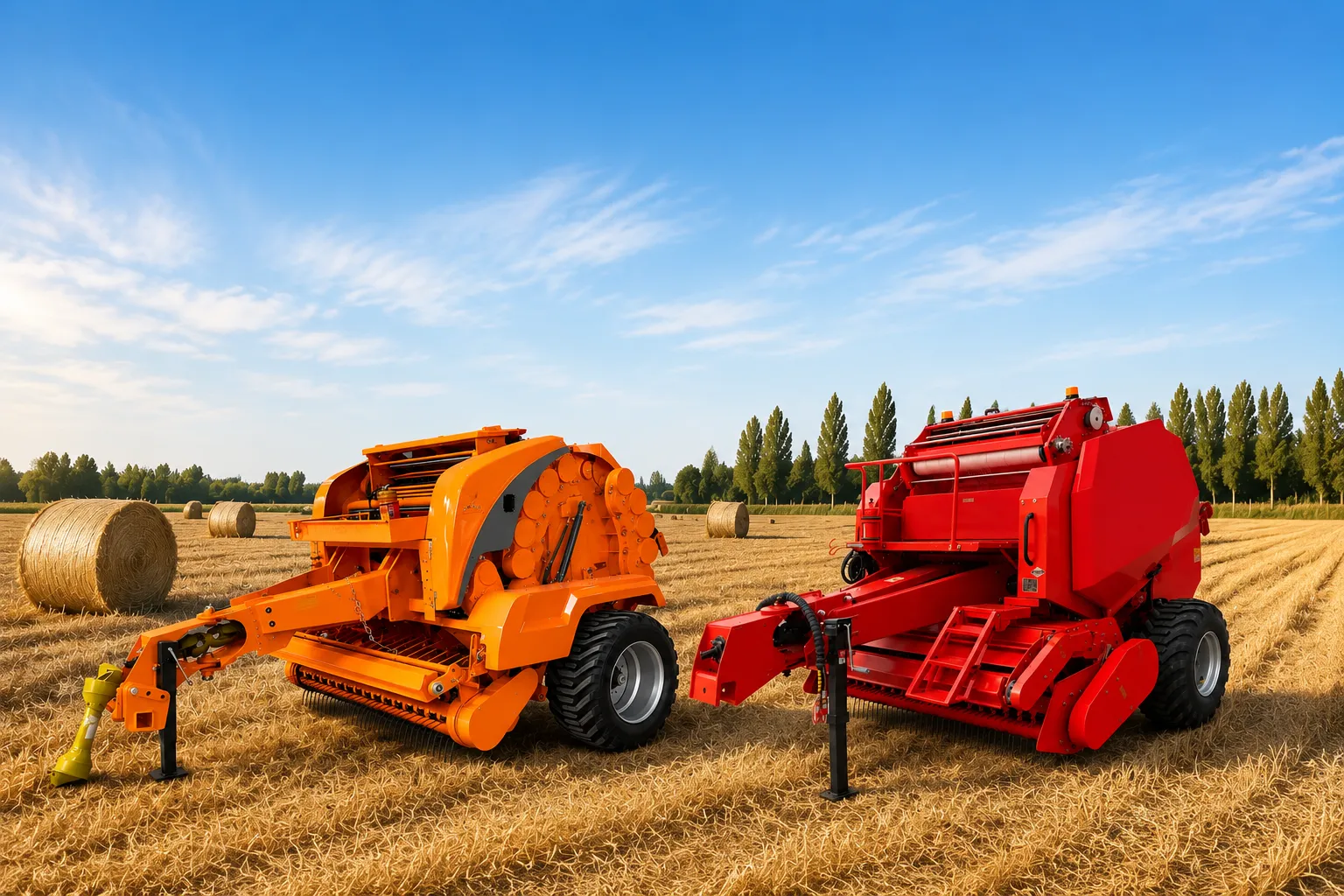
A round baler collects a windrow of cut forage or straw and compresses it inside a cylindrical chamber until a dense round bale is formed. The best results come from matching the machine to tractor power, crop conditions, desired bale size, field layout and the way finished bales will be handled.
- Round Baler Basics
- Main Components of a Round Baler
- Step-by-Step Baling Process
- Fixed-Chamber and Variable-Chamber Designs
- Twine and Net-Wrap Systems
- Tractor and PTO Compatibility
- Windrow Quality and Driving Technique
- Moisture, Density and Bale Quality
- Safety and Daily Checks
- How to Choose the Right Round Baler
- Common Mistakes to Avoid
Round Baler Basics
A round baler collects a windrow of cut forage or straw and compresses it inside a cylindrical chamber until a dense round bale is formed. For a buyer or operator, the practical step is to verify the relevant specification in the baler manual and then compare it with the tractor, crop and handling equipment already on the farm. That approach reduces guesswork and makes the round baler basics decision easier to defend.
The machine is normally powered from the tractor PTO and pulled through the field behind the tractor, so tractor power, PTO speed and hydraulic connections must be compatible. A useful way to evaluate this point is to observe several complete bale cycles, not only one demonstration bale. Consistency across changing windrows usually tells more about real-world suitability than a best-case result in ideal crop.
Round bales are popular because the shape sheds rain better than an exposed flat surface and can be handled efficiently with loaders, spears and bale trailers. This also affects operating cost. Small mismatches can appear harmless at first but create slower cycles, extra fuel use, premature wear or additional handling later in the process. Matching equipment correctly is therefore both a productivity and ownership-cost issue.
The exact bale diameter, width and density depend on the baler design, chamber type and operator settings rather than on one universal round-bale standard. The exact setting or limit is model-specific, so avoid copying a number from another baler simply because the machines look similar. Use manufacturer documentation as the final reference and change only one operating variable at a time when fine-tuning performance.
Main Components of a Round Baler
The pickup gathers the windrow from the ground; tine condition, pickup height and ground speed strongly influence how evenly material enters the machine. A useful way to evaluate this point is to observe several complete bale cycles, not only one demonstration bale. Consistency across changing windrows usually tells more about real-world suitability than a best-case result in ideal crop.
A feeder rotor or converging system moves crop from the pickup into the bale chamber while trying to maintain an even flow across the chamber width. This also affects operating cost. Small mismatches can appear harmless at first but create slower cycles, extra fuel use, premature wear or additional handling later in the process. Matching equipment correctly is therefore both a productivity and ownership-cost issue.
The bale chamber uses belts, rollers, chains or a combination of these elements to rotate and compress the crop as the bale grows. The exact setting or limit is model-specific, so avoid copying a number from another baler simply because the machines look similar. Use manufacturer documentation as the final reference and change only one operating variable at a time when fine-tuning performance.
A density-control system applies resistance to the growing bale, while sensors or mechanical indicators help the operator keep left-to-right bale shape balanced. In practice, this matters because field conditions change quickly during haymaking, and a setup that works in a light windrow can behave differently when crop volume rises. Treat the what is a round baler decision as part of the whole harvesting system rather than as an isolated machine setting.
When target size is reached, a twine or net-wrap system secures the bale before the rear gate opens and the finished bale is ejected. For a buyer or operator, the practical step is to verify the relevant specification in the baler manual and then compare it with the tractor, crop and handling equipment already on the farm. That approach reduces guesswork and makes the main components of a round baler decision easier to defend.
Step-by-Step Baling Process
The process begins with a uniform windrow that fits the pickup width and has moisture appropriate for the crop and storage method. This also affects operating cost. Small mismatches can appear harmless at first but create slower cycles, extra fuel use, premature wear or additional handling later in the process. Matching equipment correctly is therefore both a productivity and ownership-cost issue.
As the tractor advances, pickup tines lift the crop and the feeding system carries it into the chamber without excessive bunching or plugging. The exact setting or limit is model-specific, so avoid copying a number from another baler simply because the machines look similar. Use manufacturer documentation as the final reference and change only one operating variable at a time when fine-tuning performance.
Material begins rotating inside the chamber; continued feeding builds layers and increases pressure until the selected bale size and density are reached. In practice, this matters because field conditions change quickly during haymaking, and a setup that works in a light windrow can behave differently when crop volume rises. Treat the what is a round baler decision as part of the whole harvesting system rather than as an isolated machine setting.
The operator or automatic control starts the wrapping cycle, waits for twine or net to be applied, then stops forward movement for bale ejection if the machine requires it. For a buyer or operator, the practical step is to verify the relevant specification in the baler manual and then compare it with the tractor, crop and handling equipment already on the farm. That approach reduces guesswork and makes the step-by-step baling process decision easier to defend.
The tailgate opens, the bale rolls clear, the gate closes and locks, and the next bale cycle begins. A useful way to evaluate this point is to observe several complete bale cycles, not only one demonstration bale. Consistency across changing windrows usually tells more about real-world suitability than a best-case result in ideal crop.
Fixed-Chamber and Variable-Chamber Designs
Fixed-chamber balers form bales inside a chamber with a largely fixed final diameter, often using rollers or chain-and-slat systems to rotate the crop. The exact setting or limit is model-specific, so avoid copying a number from another baler simply because the machines look similar. Use manufacturer documentation as the final reference and change only one operating variable at a time when fine-tuning performance.
Variable-chamber balers use movable belts and tensioning mechanisms so the chamber expands as the bale grows, allowing more flexibility in final bale diameter. In practice, this matters because field conditions change quickly during haymaking, and a setup that works in a light windrow can behave differently when crop volume rises. Treat the what is a round baler decision as part of the whole harvesting system rather than as an isolated machine setting.
Neither chamber type is automatically best for every farm; crop moisture, desired bale size, tractor capacity, annual bale count and service conditions all matter. For a buyer or operator, the practical step is to verify the relevant specification in the baler manual and then compare it with the tractor, crop and handling equipment already on the farm. That approach reduces guesswork and makes the fixed-chamber and variable-chamber designs decision easier to defend.
Operators should compare the actual crop range and bale-density capability of the specific model rather than relying only on the chamber label. A useful way to evaluate this point is to observe several complete bale cycles, not only one demonstration bale. Consistency across changing windrows usually tells more about real-world suitability than a best-case result in ideal crop.
Twine and Net-Wrap Systems
Twine is inexpensive and familiar but normally takes more time to apply because multiple turns are needed to secure the bale. In practice, this matters because field conditions change quickly during haymaking, and a setup that works in a light windrow can behave differently when crop volume rises. Treat the what is a round baler decision as part of the whole harvesting system rather than as an isolated machine setting.
Net wrap covers more of the bale surface in fewer revolutions, which can shorten tying time and can improve surface integrity during handling. For a buyer or operator, the practical step is to verify the relevant specification in the baler manual and then compare it with the tractor, crop and handling equipment already on the farm. That approach reduces guesswork and makes the twine and net-wrap systems decision easier to defend.
Consumable cost should be evaluated per finished bale, including wrapping material, cycle time and potential reduction in field losses. A useful way to evaluate this point is to observe several complete bale cycles, not only one demonstration bale. Consistency across changing windrows usually tells more about real-world suitability than a best-case result in ideal crop.
A clean, correctly adjusted cutting and feeding path is essential because poor wrap feeding can cause missed ties, loose edges or material buildup. This also affects operating cost. Small mismatches can appear harmless at first but create slower cycles, extra fuel use, premature wear or additional handling later in the process. Matching equipment correctly is therefore both a productivity and ownership-cost issue.
For a broader comparison of agricultural baler types and configurations, see agricultural baler equipment as an additional reference when building your equipment shortlist.
Tractor and PTO Compatibility
A buyer should confirm minimum PTO horsepower, PTO speed, hydraulic remote requirements, electrical connections and drawbar specifications for the exact baler model. For a buyer or operator, the practical step is to verify the relevant specification in the baler manual and then compare it with the tractor, crop and handling equipment already on the farm. That approach reduces guesswork and makes the tractor and pto compatibility decision easier to defend.
Tractor weight and braking capacity matter as much as engine power when baling on slopes or transporting heavy bales. A useful way to evaluate this point is to observe several complete bale cycles, not only one demonstration bale. Consistency across changing windrows usually tells more about real-world suitability than a best-case result in ideal crop.
Running a baler at the wrong PTO speed can change pickup, feeder and chamber behavior and may reduce capacity or increase wear. This also affects operating cost. Small mismatches can appear harmless at first but create slower cycles, extra fuel use, premature wear or additional handling later in the process. Matching equipment correctly is therefore both a productivity and ownership-cost issue.
A compact tractor can run some small round balers, but the match must be based on the manufacturer requirement and real field conditions rather than tractor horsepower alone. The exact setting or limit is model-specific, so avoid copying a number from another baler simply because the machines look similar. Use manufacturer documentation as the final reference and change only one operating variable at a time when fine-tuning performance.
Windrow Quality and Driving Technique
Uniform windrows produce more consistent bale density because the pickup receives a steadier crop flow instead of alternating between heavy piles and empty spaces. A useful way to evaluate this point is to observe several complete bale cycles, not only one demonstration bale. Consistency across changing windrows usually tells more about real-world suitability than a best-case result in ideal crop.
When the windrow is narrower than the chamber, controlled side-to-side driving can help fill both shoulders and avoid barrel-shaped or cone-shaped bales. This also affects operating cost. Small mismatches can appear harmless at first but create slower cycles, extra fuel use, premature wear or additional handling later in the process. Matching equipment correctly is therefore both a productivity and ownership-cost issue.
Ground speed should be matched to crop volume; pushing too fast can overload the pickup or feeder while moving too slowly can reduce productivity without improving bale quality. The exact setting or limit is model-specific, so avoid copying a number from another baler simply because the machines look similar. Use manufacturer documentation as the final reference and change only one operating variable at a time when fine-tuning performance.
The operator should watch bale-shape indicators, pickup loading and driveline sound continuously instead of waiting for a plug or misshapen bale. In practice, this matters because field conditions change quickly during haymaking, and a setup that works in a light windrow can behave differently when crop volume rises. Treat the what is a round baler decision as part of the whole harvesting system rather than as an isolated machine setting.
Moisture, Density and Bale Quality
Baling moisture has a direct effect on storage safety, dry-matter preservation and the risk of heating or mold, so moisture should be measured rather than guessed. This also affects operating cost. Small mismatches can appear harmless at first but create slower cycles, extra fuel use, premature wear or additional handling later in the process. Matching equipment correctly is therefore both a productivity and ownership-cost issue.
Higher density can reduce handling and transport volume, but excessive compression may be unsuitable for wet material or for a tractor operating near its power limit. The exact setting or limit is model-specific, so avoid copying a number from another baler simply because the machines look similar. Use manufacturer documentation as the final reference and change only one operating variable at a time when fine-tuning performance.
Different crops such as grass hay, alfalfa, straw and silage have different handling behavior, so pickup, pressure and wrapping settings should be adjusted accordingly. In practice, this matters because field conditions change quickly during haymaking, and a setup that works in a light windrow can behave differently when crop volume rises. Treat the what is a round baler decision as part of the whole harvesting system rather than as an isolated machine setting.
The best bale is not simply the heaviest bale; it is a stable, well-shaped bale with suitable density and moisture for the intended storage and feeding system. For a buyer or operator, the practical step is to verify the relevant specification in the baler manual and then compare it with the tractor, crop and handling equipment already on the farm. That approach reduces guesswork and makes the moisture, density and bale quality decision easier to defend.
Safety and Daily Checks
Before servicing, the tractor engine should be stopped, the key removed and stored energy in hydraulics or tension systems secured according to the machine manual. The exact setting or limit is model-specific, so avoid copying a number from another baler simply because the machines look similar. Use manufacturer documentation as the final reference and change only one operating variable at a time when fine-tuning performance.
Never enter the pickup, feeder or chamber area to clear crop while the driveline can move, because rotating components can restart unexpectedly. In practice, this matters because field conditions change quickly during haymaking, and a setup that works in a light windrow can behave differently when crop volume rises. Treat the what is a round baler decision as part of the whole harvesting system rather than as an isolated machine setting.
Daily checks should include guards, PTO shaft, chains, belts, pickup tines, bearings, lubrication points, wrap supply and hydraulic hoses. For a buyer or operator, the practical step is to verify the relevant specification in the baler manual and then compare it with the tractor, crop and handling equipment already on the farm. That approach reduces guesswork and makes the safety and daily checks decision easier to defend.
A clean machine makes faults easier to see and reduces the buildup of dry crop around hot bearings or friction points. A useful way to evaluate this point is to observe several complete bale cycles, not only one demonstration bale. Consistency across changing windrows usually tells more about real-world suitability than a best-case result in ideal crop.
How to Choose the Right Round Baler
Start with the tractor you already own, the crops you bale, annual acreage, desired bale dimensions and the way finished bales will be stored and handled. In practice, this matters because field conditions change quickly during haymaking, and a setup that works in a light windrow can behave differently when crop volume rises. Treat the what is a round baler decision as part of the whole harvesting system rather than as an isolated machine setting.
Then compare pickup width, chamber design, bale-size range, density control, wrapping options, monitor functions, service access and local parts support. For a buyer or operator, the practical step is to verify the relevant specification in the baler manual and then compare it with the tractor, crop and handling equipment already on the farm. That approach reduces guesswork and makes the how to choose the right round baler decision easier to defend.
For small farms, simplicity and tractor compatibility can be more valuable than maximum throughput, while contractors may prioritize capacity and automation. A useful way to evaluate this point is to observe several complete bale cycles, not only one demonstration bale. Consistency across changing windrows usually tells more about real-world suitability than a best-case result in ideal crop.
A good buying decision considers lifetime operating cost, parts availability and operator workload in addition to purchase price. This also affects operating cost. Small mismatches can appear harmless at first but create slower cycles, extra fuel use, premature wear or additional handling later in the process. Matching equipment correctly is therefore both a productivity and ownership-cost issue.
Common Mistakes to Avoid
Choosing a baler only by advertised price can create expensive compatibility or service problems after purchase. For a buyer or operator, the practical step is to verify the relevant specification in the baler manual and then compare it with the tractor, crop and handling equipment already on the farm. That approach reduces guesswork and makes the common mistakes to avoid decision easier to defend.
Ignoring windrow preparation often leads operators to blame the baler for uneven bales that actually begin with inconsistent crop feeding. A useful way to evaluate this point is to observe several complete bale cycles, not only one demonstration bale. Consistency across changing windrows usually tells more about real-world suitability than a best-case result in ideal crop.
Using one density and speed setting for every crop and moisture condition reduces bale quality and can increase plugging or wear. This also affects operating cost. Small mismatches can appear harmless at first but create slower cycles, extra fuel use, premature wear or additional handling later in the process. Matching equipment correctly is therefore both a productivity and ownership-cost issue.
Skipping preseason inspection allows small problems such as worn pickup tines, loose chains or damaged wrap components to become harvest-time downtime. The exact setting or limit is model-specific, so avoid copying a number from another baler simply because the machines look similar. Use manufacturer documentation as the final reference and change only one operating variable at a time when fine-tuning performance.
Practical buying and operating checklist
- Confirm tractor PTO horsepower, PTO speed, hydraulic remotes and drawbar requirements for the exact model.
- Match bale diameter and expected bale weight to loader, trailer, storage and feeder capacity.
- Check crop range, pickup width, feeder design, density control and wrapping options.
- Ask for operator and parts manuals, warranty terms and a recommended spare-parts package.
- Plan preseason service and keep a record of bale count, wear parts and recurring faults.
Field Observation Method
Before changing settings, make a short baseline run and record tractor rpm, ground speed, windrow size, bale diameter, wrap setting and any monitor warnings. Change only one variable at a time so you can identify which adjustment actually improves the result. This is especially useful when evaluating what is a round baler because the decision involves both machine capability and the conditions in which the machine will operate. A written record turns subjective impressions into information that can be compared from field to field and from season to season.
Use the result to guide the next practical step rather than changing several settings at once. If performance remains inconsistent after windrow, maintenance and operating adjustments are checked, compare the observation with the supplier specification and service guidance. That sequence helps separate normal field variation from a genuine compatibility or mechanical problem.
Inspect several finished bales for shoulder shape, surface tightness, loose crop and consistent dimensions. If possible, weigh occasional bales because visual size alone does not reveal density or moisture-related weight changes. This is especially useful when evaluating what is a round baler because the decision involves both machine capability and the conditions in which the machine will operate. A written record turns subjective impressions into information that can be compared from field to field and from season to season.
Use the result to guide the next practical step rather than changing several settings at once. If performance remains inconsistent after windrow, maintenance and operating adjustments are checked, compare the observation with the supplier specification and service guidance. That sequence helps separate normal field variation from a genuine compatibility or mechanical problem.
Keep notes for different crops and cuttings. A setting that works in dry second-cut grass may not be appropriate in a heavy first-cut windrow or brittle straw, and written records shorten the learning curve next season. This is especially useful when evaluating what is a round baler because the decision involves both machine capability and the conditions in which the machine will operate. A written record turns subjective impressions into information that can be compared from field to field and from season to season.
Use the result to guide the next practical step rather than changing several settings at once. If performance remains inconsistent after windrow, maintenance and operating adjustments are checked, compare the observation with the supplier specification and service guidance. That sequence helps separate normal field variation from a genuine compatibility or mechanical problem.
Supplier Questions Worth Asking
Ask for the exact PTO horsepower and speed requirement, hydraulic outlets, machine operating weight, pickup width, bale-size range, wrapping options and recommended tractor drawbar setup. This is especially useful when evaluating what is a round baler because the decision involves both machine capability and the conditions in which the machine will operate. A written record turns subjective impressions into information that can be compared from field to field and from season to season.
Use the result to guide the next practical step rather than changing several settings at once. If performance remains inconsistent after windrow, maintenance and operating adjustments are checked, compare the observation with the supplier specification and service guidance. That sequence helps separate normal field variation from a genuine compatibility or mechanical problem.
Request operator and parts manuals before delivery if possible. Clear part numbers, wiring diagrams and maintenance intervals are useful indicators of how easy the machine will be to support after purchase. This is especially useful when evaluating what is a round baler because the decision involves both machine capability and the conditions in which the machine will operate. A written record turns subjective impressions into information that can be compared from field to field and from season to season.
Use the result to guide the next practical step rather than changing several settings at once. If performance remains inconsistent after windrow, maintenance and operating adjustments are checked, compare the observation with the supplier specification and service guidance. That sequence helps separate normal field variation from a genuine compatibility or mechanical problem.
For international orders, confirm packing dimensions, Incoterm, spare-parts availability, warranty process and whether fittings, PTO shaft and electrical connectors match the destination market. This is especially useful when evaluating what is a round baler because the decision involves both machine capability and the conditions in which the machine will operate. A written record turns subjective impressions into information that can be compared from field to field and from season to season.
Use the result to guide the next practical step rather than changing several settings at once. If performance remains inconsistent after windrow, maintenance and operating adjustments are checked, compare the observation with the supplier specification and service guidance. That sequence helps separate normal field variation from a genuine compatibility or mechanical problem.
Ownership Records That Improve Decisions
Track annual bale count, wrap rolls used, fuel consumed, wear parts, repair labor and downtime. These records allow a real cost-per-bale calculation and help determine whether a future upgrade is justified. This is especially useful when evaluating what is a round baler because the decision involves both machine capability and the conditions in which the machine will operate. A written record turns subjective impressions into information that can be compared from field to field and from season to season.
Use the result to guide the next practical step rather than changing several settings at once. If performance remains inconsistent after windrow, maintenance and operating adjustments are checked, compare the observation with the supplier specification and service guidance. That sequence helps separate normal field variation from a genuine compatibility or mechanical problem.
Record major component replacements and recurring faults. Repeated problems at the same bale interval can indicate a maintenance pattern, a setup issue or a component that should be stocked before the next harvest. This is especially useful when evaluating what is a round baler because the decision involves both machine capability and the conditions in which the machine will operate. A written record turns subjective impressions into information that can be compared from field to field and from season to season.
Use the result to guide the next practical step rather than changing several settings at once. If performance remains inconsistent after windrow, maintenance and operating adjustments are checked, compare the observation with the supplier specification and service guidance. That sequence helps separate normal field variation from a genuine compatibility or mechanical problem.
Good records also make resale discussions more credible because the next owner can see service history rather than relying on appearance alone. This is especially useful when evaluating what is a round baler because the decision involves both machine capability and the conditions in which the machine will operate. A written record turns subjective impressions into information that can be compared from field to field and from season to season.
Use the result to guide the next practical step rather than changing several settings at once. If performance remains inconsistent after windrow, maintenance and operating adjustments are checked, compare the observation with the supplier specification and service guidance. That sequence helps separate normal field variation from a genuine compatibility or mechanical problem.
Frequently Asked Questions
What does a round baler do?
It picks up a windrow, feeds the crop into a bale chamber, rotates and compresses the material into a cylindrical bale, applies twine or net wrap, and ejects the finished bale. For model-specific limits, use the manufacturer manual or written supplier specification.
Does a round baler need a tractor?
Most agricultural round balers are PTO-driven implements designed to work behind a tractor. The required PTO horsepower, hydraulic outlets and drawbar setup depend on the model. For model-specific limits, use the manufacturer manual or written supplier specification.
Can a round baler bale straw as well as hay?
Many models can handle hay and straw, and some are also designed for higher-moisture forage or silage. Always confirm the crop range and settings for the specific baler. For model-specific limits, use the manufacturer manual or written supplier specification.
Is net wrap better than twine?
Net wrap is often faster and covers more bale surface, while twine can have a lower material cost. The better choice depends on bale handling, weather exposure, cost and baler configuration. For model-specific limits, use the manufacturer manual or written supplier specification.
What makes a good round bale?
A good bale is well shaped, evenly filled, securely wrapped, and has density and moisture appropriate for transport, storage and feeding. For model-specific limits, use the manufacturer manual or written supplier specification.
Continue learning about round balers
Need help choosing a farm baler?
Tell us your tractor horsepower, crop, acreage, preferred bale size and destination. We can help you compare a suitable Round, Square, Mini or Silage Baler configuration.
Editorial note: machine requirements and operating procedures vary by model. Always use the operator manual and applicable local safety rules as the final reference.