Описание
Brazil Ever-Power Farm Balers Co., Ltd
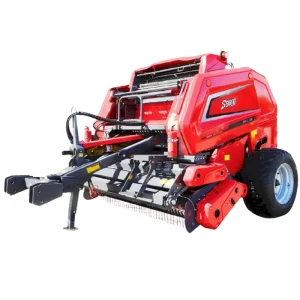
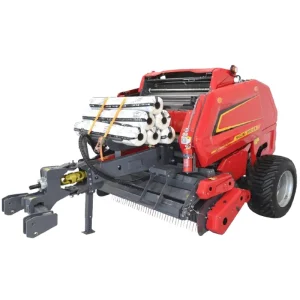
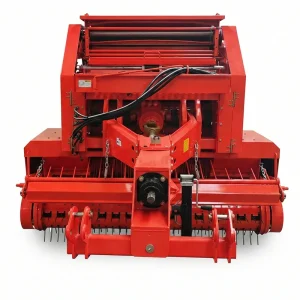
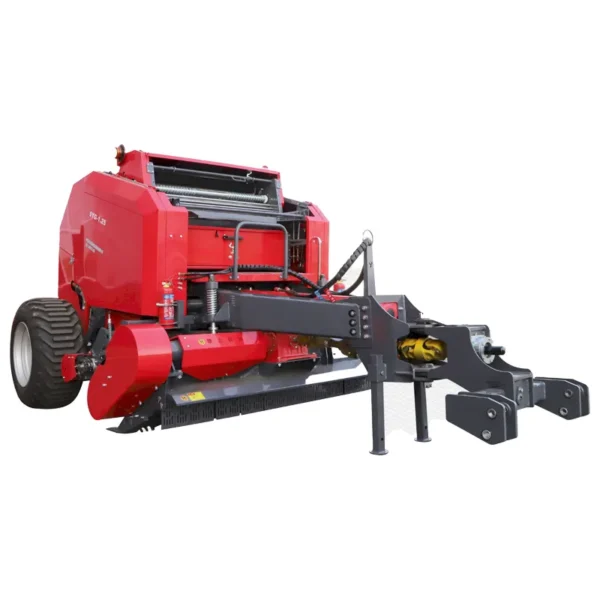
9YG-1.25 Round Baler
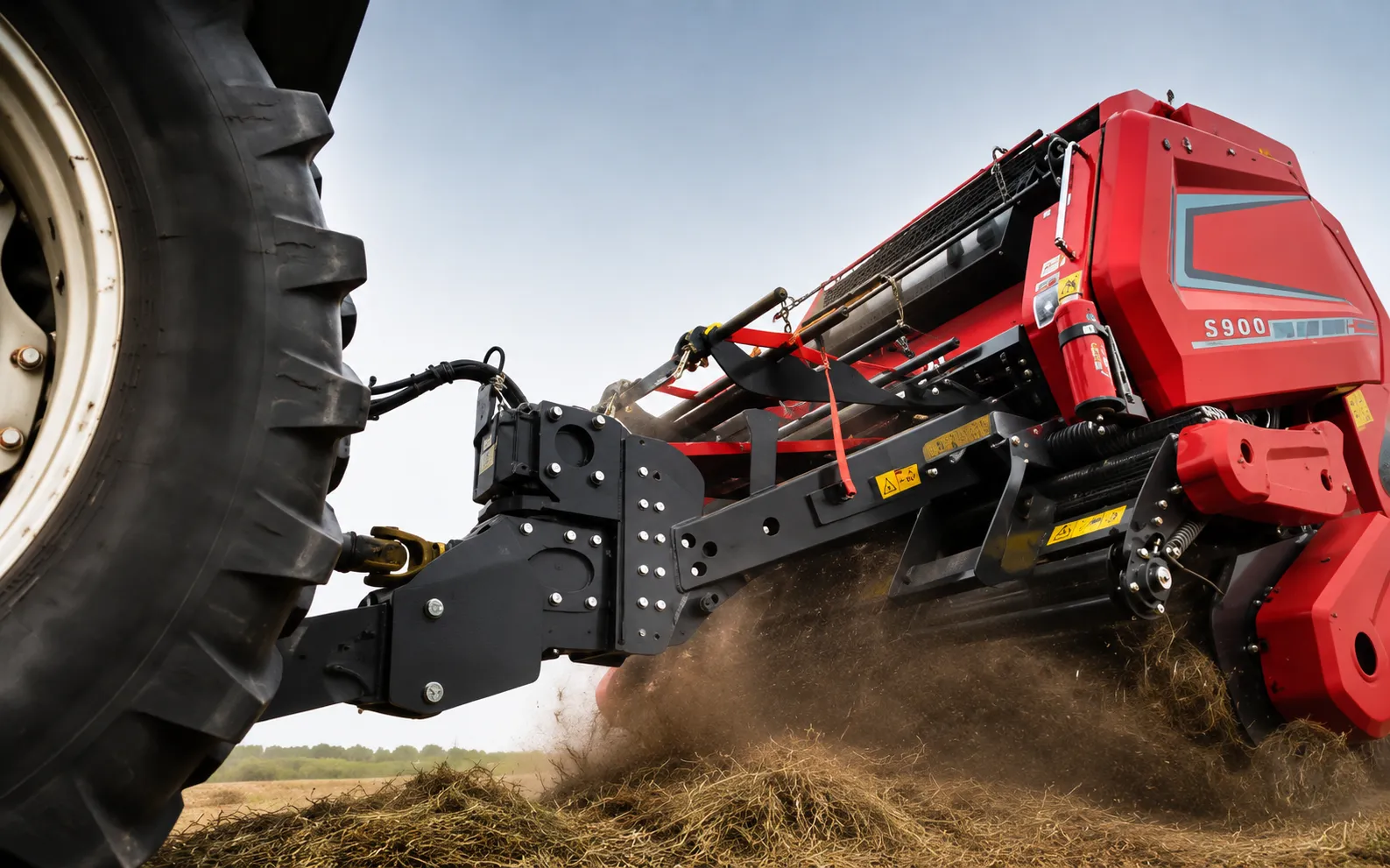
A mid-size fixed-chamber roller baler designed for US hay and straw operations running tractors from 100 HP up. Spring-tooth pickup, auger + roller + drum feed, 18-roller chamber, automatic net wrap. Produces consistent 4×5-inch format round bales at 40–100 bales per hour with minimal operator intervention.
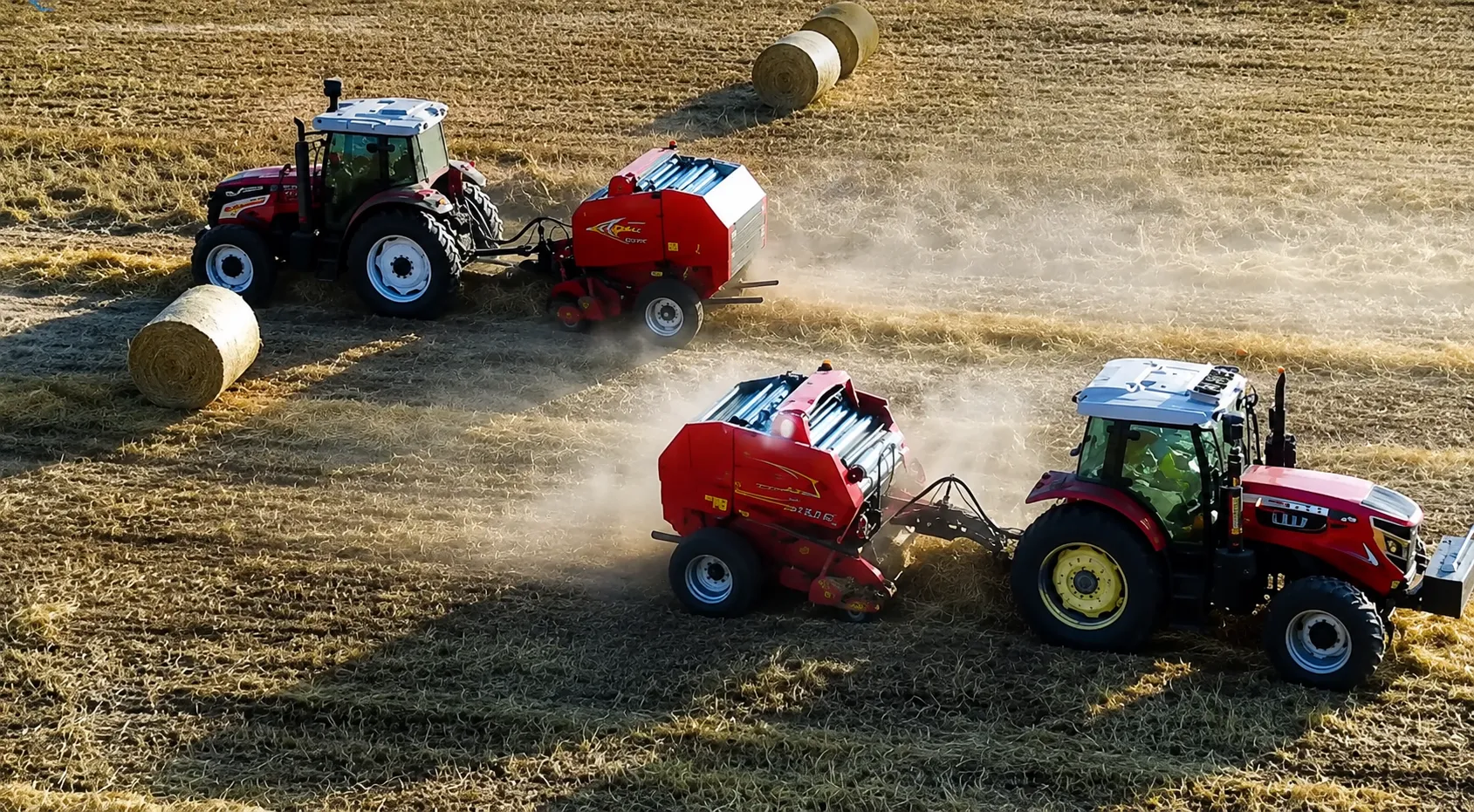
Most round baler buying decisions come down to a straightforward question: what is the smallest, lightest, most fuel-efficient machine that can reliably handle the volume and crop type you’re working with? For operations running 100–130 HP tractors on standard US hay fields — alfalfa, grass mix, wheat straw, or moderate-volume corn stover — the answer is usually a mid-size fixed-chamber baler in the 1.25-meter width class.
The 9YG-1.25 fits that profile. Its 18-roller fixed chamber produces Φ1,300 mm diameter × 1,250 mm wide bales — the 51 × 49 inch format that loads efficiently on most US flatbed trailers and handles well with a standard bale spike. The three-stage feed system (auger, tooth roller, drum) pre-compresses and laterally distributes crop before it enters the compression zone, reducing blockage frequency in heavy or uneven windrows compared to single-stage feed arrangements. Automatic net wrap triggers at a sensor-set density threshold, and the hydraulic tailgate opens and closes without manual latching.
At 4,060 kg (8,950 lb) in the standard spring-tooth configuration, the 9YG-1.25 is the lighter sibling to the 9YG-2.24D S9000 series while sharing the same manufacturer infrastructure, quality controls, and spare parts support network. For operations where the S9000’s 88-inch pickup and higher machine weight are not necessary, the 9YG-1.25 delivers comparable bale quality at a more suitable scale for 100–130 HP tractors and smaller daily volumes. The full product range is available through Brazil Ever-Power Farm Balers’ product catalog.
Technical Specifications
| # | Parameter | Unit | Ценить |
|---|---|---|---|
| 1 | Model Name | — | 9YG-1.25 Round Baler |
| 2 | Hitch Type | — | Towed (Drawbar) |
| 3 | Ширина звукоснимателя | mm / in | 2,240 mm (88.2 in) |
| 4 | Pickup Type | — | Spring Tooth |
| 5 | Feed System | — | Auger + Tooth Roller + Drum (3-Stage) |
| 6 | Chamber Type | — | Fixed-Chamber Roller |
| 7 | Chamber Width | mm / in | 1,250 mm (49.2 in) |
| 8 | Chamber Diameter | mm / in | 1,200 mm (47.2 in) |
| 9 | Number of Rollers | pcs | 18 |
| 10 | Roller Diameter | mm | 222 mm (8.7 in) |
| 11 | Wrapping System | — | Automatic Net Wrap (Standard) |
| 12 | Tractor Power Required | kW / HP | ≥75 kW (≥100 HP) |
| 13 | Machine Weight | kg / lb | 4,060 kg (8,950 lb) |
| 14 | PTO Speed | RPM | 720 |
| 15 | Overall Dimensions (L×W×H) | mm | 4,400 × 2,850 × 2,400 (working) |
| 16 | Bale Density Control | — | Electronic Sensor |
| 17 | Bale Size (Dia. × Width) | mm / in | Φ 1,300 × 1,250 mm (51 × 49 in) |
| 18 | Плотность тюков | kg/m³ | 100–200 |
| 19 | Productivity | bales/hr | 40–100 |
| 20 | Track Width | mm | 2,450 |
| 21 | Operating Speed | km/h / mph | 5–35 km/h (3–22 mph) |
| 22 | Net Wrap Specification | — | 2,000 × 1.25 m per bale |
What Makes It Work
Four mechanical choices behind the 9YG-1.25’s reliability record
Feature 01
Three-Stage Feed System
Most round baler intakes use a single pickup-to-chamber transition. The 9YG-1.25 uses three components in sequence: a cross-chamber auger, a tooth roller, and a feed drum. The auger moves material laterally so it reaches the full 1,250 mm chamber width evenly. The tooth roller accelerates the crop inward while metering its flow rate. The drum delivers it into the compression zone in a steady, distributed stream. Each stage serves a distinct function; none of the three can be eliminated without changing how the other two work. In practice, this means the 9YG-1.25 handles uneven, lumpy, or wide windrows without the intake overfeed that causes a sudden full-chamber jam — the kind that stops the day and costs time.
Feature 02
Fixed-Chamber Roller Compression
Eighteen 222 mm diameter steel rollers arranged in a fixed ring apply radial compression pressure throughout the bale’s formation. Because the chamber geometry does not change as the bale grows — unlike belt-type variable-chamber machines — the pressure profile remains consistent from core to surface. This is why roller-type fixed-chamber balers consistently outperform belt machines in bale weight repeatability across a full day’s run: the operator sets one density threshold, and every bale that comes out meets it, regardless of where in the windrow the material came from or what moisture variation existed between rows.
Feature 03
Electronic Density Sensor Control
The bale density sensor reads chamber pressure continuously and compares it against the operator-set target. When the target is reached, the control system triggers the automatic net wrap cycle without any cab input from the operator. Net wrap is applied, cut, and secured; the tailgate opens and the bale rolls out. The operator’s only job at that point is to confirm the gate closed before driving forward. For farms where the tractor operator is also managing other tasks — monitoring field conditions, communicating with a second crew, assessing windrow quality — removing the manual wrap-trigger step reduces the mental load significantly and lowers the risk of short-wrapping bales in distracted moments.
Feature 04
88-Inch Spring-Tooth Pickup
The 9YG-1.25’s pickup is 2,240 mm wide — identical to the S9000 series — which means it can handle the merged windrows that disc mower or merger units produce in US hay operations without reducing forward speed. Spring-tooth construction offers gentler material handling than aggressive cam-guided tine systems, which matters in dry alfalfa where leaf shatter at the pickup reduces forage quality. The gauge wheels maintain consistent tine clearance over uneven ground, minimizing soil pickup in dry, friable conditions where any ground-contact debris degrades bale quality and hay feeding value.
Field Operation
Hitch & Pre-Start
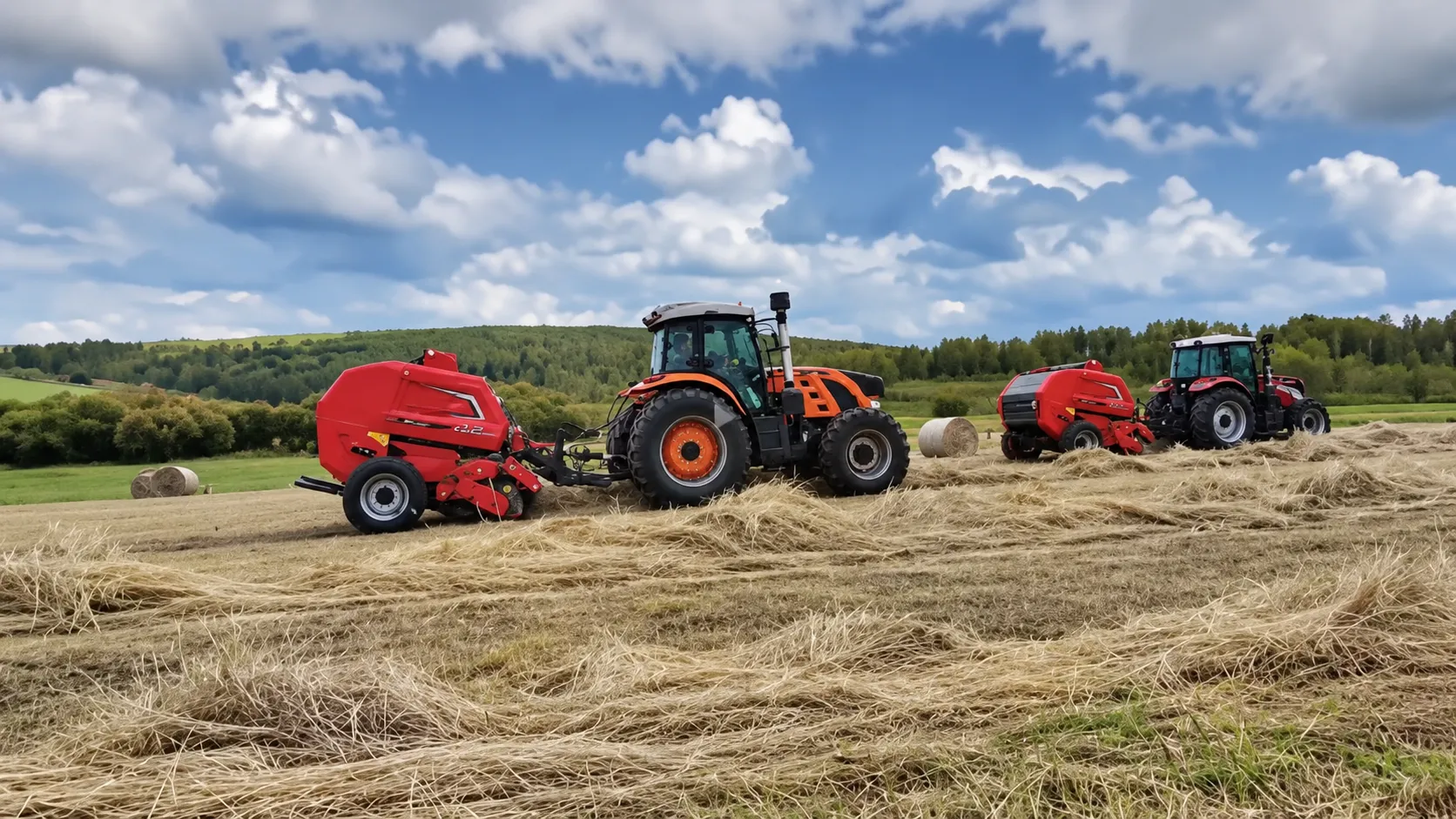
Connect drawbar hitch and 720 RPM PTO shaft. Check pickup tine clearance using gauge wheels — set for the crop type and stubble height. Load net wrap roll and thread per the manual’s routing diagram. Verify hydraulic tailgate circuit is pressurized and the gate latches and opens cleanly before entering the field.
Pickup & Intake
Drive forward along the windrow at a steady 5–15 km/h (3–9 mph) depending on windrow weight. The spring-tooth pickup lifts material and the auger-roller-drum system distributes it evenly across the chamber width. In the first 5–10 bales of a new crop type, observe the intake for any lateral imbalance and adjust approach speed accordingly.
Bale Formation
Inside the fixed chamber, 18 rollers compress the rotating material core. Monitor the bale size indicator on the control panel. Forward travel speed is the primary control variable — maintain a steady pace that keeps the intake flowing continuously rather than surging, which produces more uniform core density than stop-start feeding.
Density Signal
The electronic pressure sensor signals when the bale reaches the preset density. An audible alarm sounds in the cab. Stop forward movement briefly — continuing at full speed during wrap risks net wrap misapplication on the still-moving intake. Most operators stop or slow to near-idle during the wrap cycle to ensure clean net application and cut.
Net Wrap & Eject
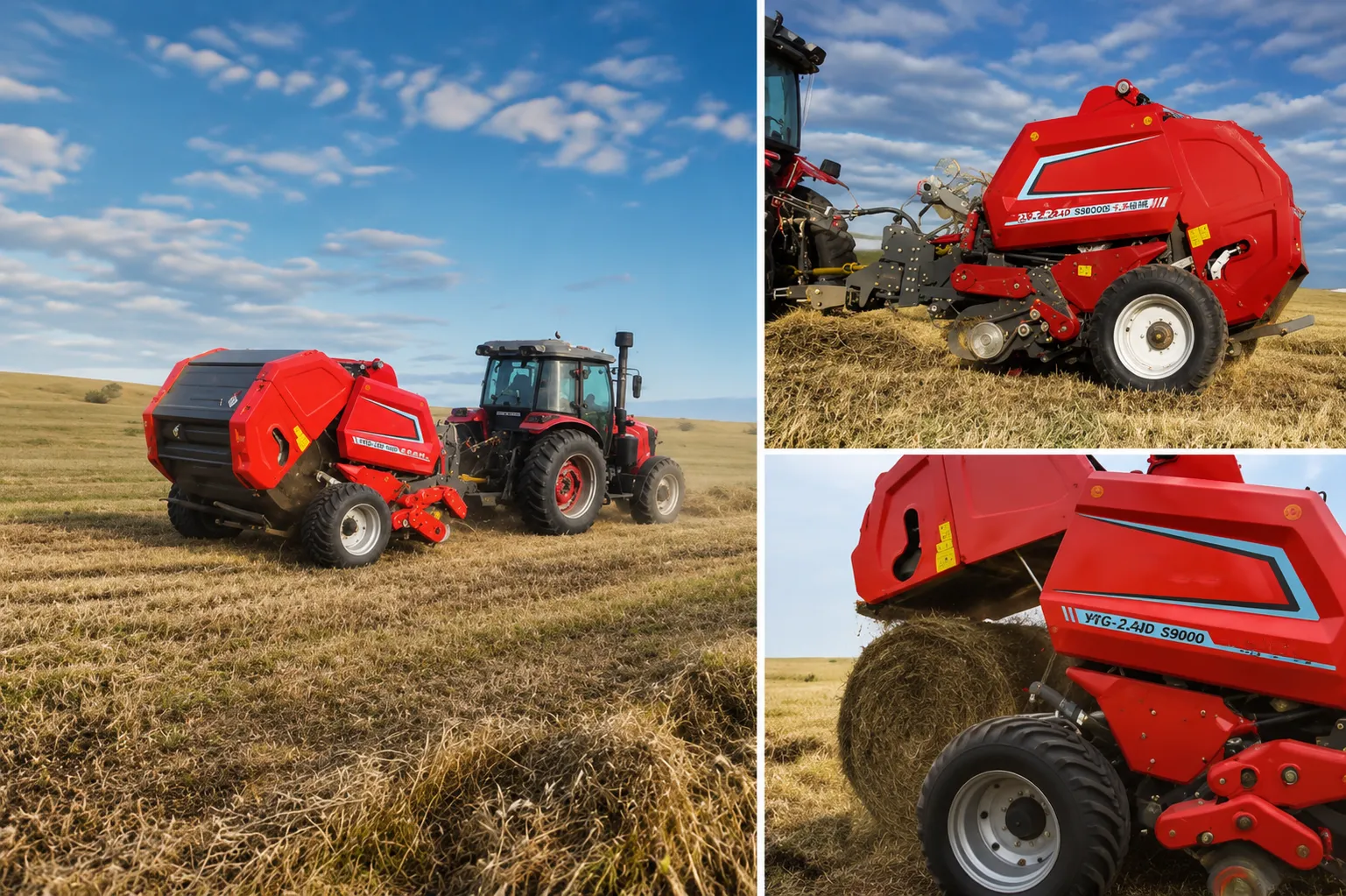
The automatic net wrap system applies wrap across the bale width in the preset number of revolutions, then cuts cleanly. The hydraulic tailgate opens and the finished bale rolls out. Tailgate close is automatic under hydraulic pressure — no manual latching. Typical net-wrap-to-gate-closed time is 15–20 seconds.
Next Cycle
Once the gate closes and latches, drive forward immediately to continue pickup. Most operators return to field speed within 5–8 seconds of the gate close signal. In well-maintained windrows with consistent material flow, the transition from bale eject to active pickup on the next cycle is typically under 25 seconds total, including gate cycle time.
Patents & R&D
In-House Development — ~100 Utility Patents
Brazil Ever-Power Farm Balers Co., Ltd operates an autonomous regional R&D center and holds close to 100 utility patents across its baler and harvesting equipment product range. Core mechanical features — including intake system designs and chamber compression mechanisms — are developed and owned in-house. All production takes place at the company’s 32,000 m² facility using CNC laser cutting, automated welding lines, and electrostatic coating. No primary structural or mechanical components are outsourced to third-party fabricators.
The company holds ISO 9001 quality management certification, Two-Informatization Integration Level A status, and AAA credit enterprise rating. It has been the domestic market round baler sales leader for multiple consecutive years and exports to Mongolia, Russia, Belarus, Kazakhstan, and the United States.

Suitable Crops & Conditions
Alfalfa, brome, orchardgrass, fescue, timothy, bermudagrass, and mixed pasture at below 18% moisture. The spring-tooth pickup minimizes leaf shatter in dry alfalfa — a material concern when feeding dairy cattle where leaf fraction drives protein content.
Second- and third-cut alfalfa or grass at 30–45% moisture for wrapped baleage. The fixed-chamber roller design handles wet material without belt-slip, and bale density is consistent enough for reliable anaerobic fermentation when bales are film-wrapped promptly after ejection.
Wheat, oat, barley, and rye straw for bedding or biomass. The three-stage feed system handles the high-volume, low-density nature of large straw windrows without the intake overflow that causes jam conditions in single-stage pickup-to-chamber systems.
Post-combine corn stover from windrows. The auger pre-distributes the material before it reaches the feed drum, reducing the lateral density variation that produces irregular bale shapes in wide stover windrows. For standing-stalk direct pickup, see the 9YG-1.25 Hammer Claw model.
Cereal rye, triticale, hairy vetch, and mixed cover crop terminations. Tangled, fibrous covers that mat on the ground challenge single-tine pickup systems; the three-stage feed’s auger action breaks up the mat before it reaches the chamber, reducing the “plug and stop” problem common in dense rye terminations.
Flat to gently rolling fields. The standard fixed drawbar works well up to moderate grades. For regular side-slope or contoured terrain work above about 10–12°, the S9000 Superior‘s adjustable hitch is the appropriate choice.
Where the 9YG-1.25 Fits the Range
Brazil Ever-Power Farm Balers Co., Ltd offers five distinct round baler platforms for different scale and crop requirements. The 9YG-1.25 sits in the mid-range — lighter and narrower than the S9000 series, heavier and wider than the compact 9YG-1.0 platform.
| Model | Bale Size | Min HP | Weight | Best For |
|---|---|---|---|---|
| 9YG-1.0 | 43 × 39 in | 65 HP | 5,820 lb | Small farms, compact tractors |
| 9YG-1.0C | 39 × 49 in | 95 HP | 7,050 lb | Corn stover direct pickup (hammer claw) |
| 9YG-1.25 ← Here | 51 × 49 in | 100 HP | 8,950 lb | Mid-scale hay, straw, haylage |
| 9YG-1.25A | 51 × 49 in | 100 HP | 9,859 lb | Same as 1.25; adds 540–1000 RPM PTO compatibility |
| S9000 Series | 51 × 55 in | 74 HP | 8,647–10,076 lb | High volume, wide windrows, varied terrain |
Maintenance Schedule
- Grease all marked fittings — pickup tine pivots, auger bearings, feed roller shaft ends, roller chain idlers
- Check PTO shaft guard and telescoping section for free movement
- Verify net wrap roll is fully loaded and brake tension set correctly — uneven brake tension produces irregular wrap coverage
- Confirm hydraulic tailgate opens and closes cleanly at low pressure before first bale
- Check ground drive and chain tension visually
- Adjust drive chain tension if sag exceeds 15–20 mm at mid-span
- Inspect pickup tines for bent or fatigued teeth — replace any showing cracks at the base
- Check auger flights for wear or crop build-up — clean with compressed air or scraper
- Inspect roller bearing condition; check for roughness or heat during operation as an early warning
- Verify sensor cable connections are secure and free from chafing against moving parts
- Change gearbox oil — check manufacturer specification for grade and fill volume
- Remove and inspect all roller bearings — replace any with detectable play rather than waiting for failure
- Replace pickup tine set if more than 20% of tines show measurable length loss
- Clean and apply rust-inhibiting spray to all unpainted metal surfaces before storage
- Release chain tension — chains stored under load stretch faster during off-season storage
- Remove the net wrap roll from storage to prevent moisture absorption over winter
Operator Reviews
Central Missouri — Alfalfa & Mixed Grass, 600 acres
★★★★★
We run a 120 HP John Deere 6M and needed a baler that wouldn’t overpower the tractor on flat ground but could still handle alfalfa at higher moisture in our second cut. The 9YG-1.25 has been exactly right for that situation. The three-stage feed handles second-cut alfalfa at around 38% moisture without any of the intake issues we had with a belt-type machine previously — the auger distributes the wet material across the full chamber width so we don’t get the off-center cores that cause problems with wrapping later. Bales have been consistent across six months of use. We run about 60–70 bales per hour in normal conditions. The net wrap automation works reliably; in our 3,200 bales this season we’ve had two wrap misfeeds, both resolved in a minute. No significant mechanical issues. For a mid-size farm at this price point, it’s been a strong performer.
Northern Ohio — Wheat Straw & Hay Mix, 850 acres
★★★★☆
Wheat straw is challenging because the windrows off a wide combine header are loose, bulky, and uneven — they tend to pile in the center. The three-stage feed on the 9YG-1.25 spreads it out better than I expected; I was getting good bale shape early in the first season without much trial and error on speed. For hay, the spring-tooth pickup is clean in dry conditions without soil contamination. The machine is sized well for my 110 HP tractor — doesn’t bog it down, doesn’t feel undermatched. My rating is four rather than five because I did have a chain sprocket wear faster than expected on the right side of the chamber — replaced it at about 3,800 bales. Could be related to how I load the chamber on one of my fields that has an offset windrow. Parts took about two weeks to arrive which is fine if you plan ahead, but I’d want a spare on hand next season to avoid downtime risk.
Western Maryland — Hay & Haylage for Equine Operation, 320 acres
★★★★★
We’re a horse operation so forage quality is paramount — bale weight consistency and minimal leaf shatter matter directly to our horses’ feed value. The 9YG-1.25 has delivered on both. The spring-tooth pickup is notably gentle in dry first-cut orchardgrass, which is our most leaf-sensitive crop — we measured leaf loss at the pickup visually and it’s comparable to what we were getting on a much more expensive domestic brand baler we rented previously. Bale weights across a day’s run vary less than 5% from the mean, which is all we can ask for. The density sensor and automatic wrap have also eliminated the “forgot to wrap” problem we had when operating manually. For a farm our size with a 105 HP tractor, this machine is correctly matched and has been reliable through two full seasons.
Central Kansas — Mixed Hay & Sorghum-Sudan, 700 acres
★★★★☆
Good machine for the price. I use it for brome hay in the spring and sorghum-sudan later in the summer. The brome work is clean and efficient — 65–70 bales per hour on average with my 115 HP tractor. Sorghum-sudan is a bit more work because of the stem diameter; the feed system handles it but I have to run slower, around 5–6 km/h, or I get the occasional intake hesitation. That’s not unique to this machine — sorghum challenges most balers at standard speeds. The roller chamber makes noticeably firmer bales than the belt baler I used before, which helps during transport since my fields are some distance from the stack site. Four stars because the auger required adjustment after about 2,000 bales — it had shifted slightly on its shaft. Not a major repair, took about 45 minutes, but worth being aware of during your 50-hour checks.
Southern Minnesota — High-Volume Custom Baling, 3,500+ acres/season
★★★☆☆
My honest take: the 9YG-1.25 is a solid machine at a farm-scale volume but shows its limitations in a high-volume custom operation. At 3,500 acres per season, I’m pushing it harder than the average farm operator, and the wear rate on pickup tines and chain components runs higher than what I’d experience at 1,000–1,500 acres. At that pace the international parts lead time becomes a real constraint — I had a three-week gap waiting for a pickup tine set mid-season that cost me customer goodwill. The machine itself bales well and the feed system is genuinely good. But for my volume I probably needed the S9000 series with better domestic parts access planning, or to keep two spare parts kits on hand. I’d recommend this machine without hesitation for farms at 500–1,500 acres per season. For custom work at higher volumes, plan your parts inventory carefully before the season starts.
Frequently Asked Questions
How does the three-stage feed differ from a standard single-pickup intake?
A standard single-pickup intake lifts material from the windrow and feeds it directly into the chamber via the pickup sweep. The entire flow regulation burden falls on the operator’s forward speed. The 9YG-1.25’s auger-roller-drum system adds two intermediate stages between pickup and chamber. The auger redistributes material laterally across the full chamber width as it comes off the pickup; the tooth roller meters the flow rate into the drum; the drum delivers it into the compression zone steadily. Each stage reduces the sensitivity of the system to windrow variations — uneven, lumpy, or inconsistently raked windrows produce blockages in single-stage systems but are absorbed more smoothly by the three-stage arrangement.
What tractors are compatible with the 9YG-1.25?
Any tractor providing at least 75 kW (100 HP) at the rear PTO and a 720 RPM PTO output is compatible. This covers a wide range of US mid-range utility and specialty tractors including John Deere 6M/6R, Case IH Maxxum, New Holland T6, Kubota M7, AGCO Intelli5, and equivalents from 100 to approximately 130 HP. The standard drawbar hitch accommodates most Category II or Category III drawbar configurations. If your tractor has an older non-standard drawbar, confirm pin and receiver dimensions before ordering.
What is the bale weight in practical terms?
Bale weight varies significantly with crop and moisture. Dry grass or fescue at 12% moisture: approximately 600–800 lb. Dry alfalfa at 12%: 750–950 lb. Second-cut alfalfa at 35% moisture: 1,000–1,300 lb. Wheat straw at 10%: 500–700 lb. Corn stover at 15%: 650–850 lb. The 9YG-1.25’s bales are the 51 × 49 inch format — slightly narrower than the S9000’s 51 × 55 inch bale, which means they are somewhat lighter at comparable densities. This can be advantageous for farms handling bales manually with a spike or loader without a heavy-duty bale grapple.
What is the difference between the 9YG-1.25 and the 9YG-1.25A?
The 9YG-1.25A is the dual-speed PTO variant. It accepts input at both 540 and 1000 RPM in addition to 720 RPM, which means it is compatible with older tractors that only provide 540 RPM rear PTO — a common situation on farms running equipment from the 1980s through early 2000s. If your tractor provides 720 RPM, the standard 9YG-1.25 is the correct choice. If you are uncertain about your tractor’s PTO speed configuration, check the tractor’s instrument panel or specifications sheet — most modern tractors provide both 540 and 1000 RPM with the standard 9YG-1.25 compatible at the 720 RPM economy setting.
Can the 9YG-1.25 bale directly from standing corn stalks?
No. The standard 9YG-1.25 uses a spring-tooth pickup designed for windrowed material. For standing-stalk direct pickup from corn, the 9YG-1.25 Hammer Claw model — which features an interchangeable hammer claw pickup mechanism — is the correct tool. The hammer claw cuts and collects standing stalks in a single pass, eliminating the separate shredding and raking step required before running a spring-tooth pickup.
How long does it take to get parts from Brazil Ever-Power Farm Balers?
Standard in-stock parts ship to US destinations and typically arrive in 10–18 business days via standard international freight. For a machine operating at 40–100 bales per hour through a busy hay season, we strongly recommend ordering a pre-season spare parts kit: pickup tines (a full set), drive chain (one spare length), roller bearings (at least two), and a net wrap brake pad set. Having these on hand eliminates the risk of a 2–3 week delay at the worst possible time in the baling calendar.
Is the 9YG-1.25 the right choice or should I consider the S9000 series?
Choose the 9YG-1.25 if your operation runs 100–130 HP tractors and produces 500–1,500 acres of hay or straw per season in standard windrow conditions on flat to gently rolling terrain. The 9YG-1.25 is lighter, slightly narrower, and produces a smaller bale that is easier to handle without heavy equipment. Choose the S9000 series if you need a wider bale (55 inches vs 49 inches), work at higher daily volumes above 1,500–2,000 acres per season, deal with steep or contoured terrain, or consistently process very heavy, high-moisture material where the S9000’s higher compression capacity is warranted. The full product range comparison is available at Brazil Ever-Power Farm Balers’ product catalog.
Manufacturer
Brazil Ever-Power Farm Balers Co., Ltd
Brazil Ever-Power Farm Balers Co., Ltd is a national high-technology enterprise specializing in the design, manufacture, and distribution of round balers, mowing equipment, and harvesting machinery. The company operates from a 32,000 m² integrated production facility with two dedicated assembly lines, CNC laser cutting equipment, automated welding cells, and electrostatic coating systems. Annual production capacity is 2,000 units per line for the round baler and harvesting equipment series.
The company holds ISO 9001 certification, Two-Informatization Integration Level A status, AAA credit enterprise rating, and close to 100 utility patents. It has independent import and export authority and serves the US market as part of its international distribution program alongside markets in Mongolia, Russia, Belarus, and Kazakhstan. The full product range — including the complete S9000 series, the 9YG-1.0 platform, the 9YG-1.25 family, and the 9YCM-850 baler-wrapper combination — is documented at Brazil Ever-Power Farm Balers’ product catalog.