Descrição
Brazil Ever-Power Farm Balers Co., Ltd
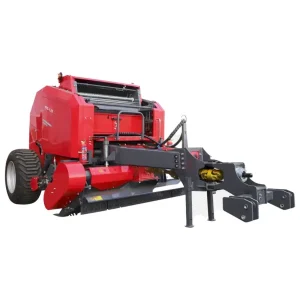
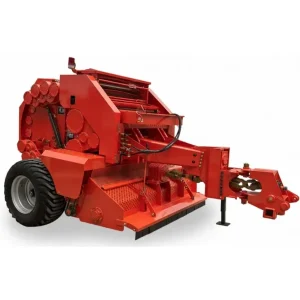
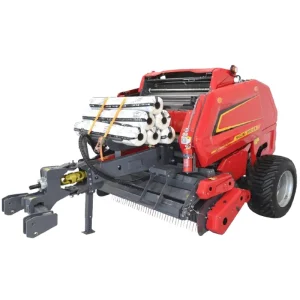
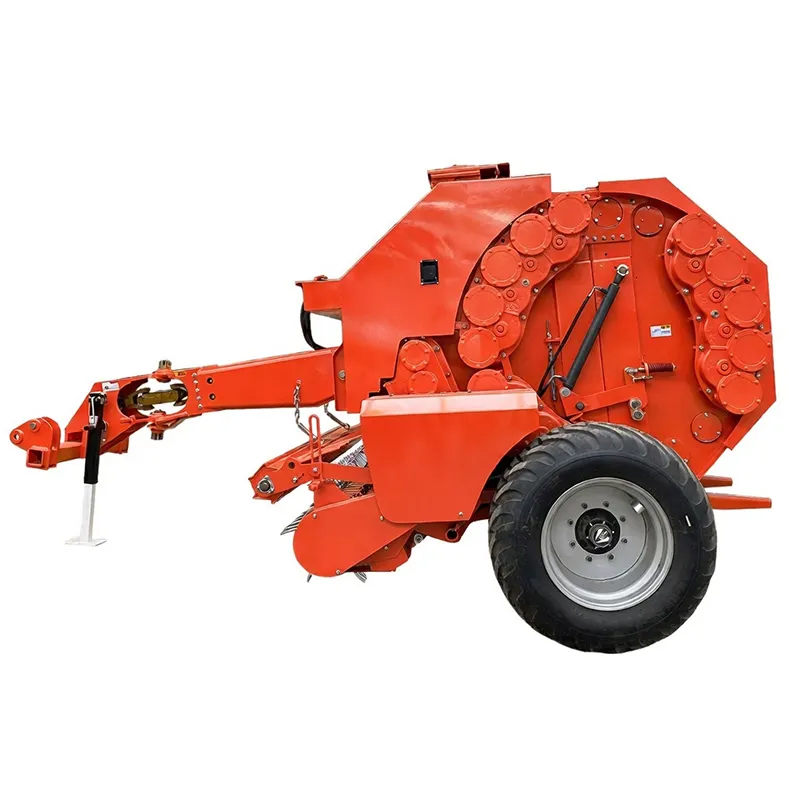
9YH-1.25A6 Round Baler
540 · 720 · 1000 RPM PTO Compatible — Fits the Tractor You Already Own
The 9YH-1.25A6 accepts all three PTO speed standards in common use across US agriculture. Whether your operation runs vintage 540-only equipment, newer economy-PTO tractors at 720 RPM, or modern 1000 RPM high-horsepower units, this baler connects without adapters or compromises.
Legacy and mid-range tractors. The dominant PTO standard on US farms running equipment from the 1970s through early 2000s. Common on compact and utility tractors under 100 HP.
Mid-RPM economy setting available on many modern tractors. Delivers reduced fuel consumption at lighter loads — often the optimal setting for hay operations on tractors from 100–150 HP.
High-performance standard on modern tractors above 150 HP. Delivers maximum torque at lower engine speed. Less commonly used for baling, but available for operations that standardize on 1000 RPM across all implements.
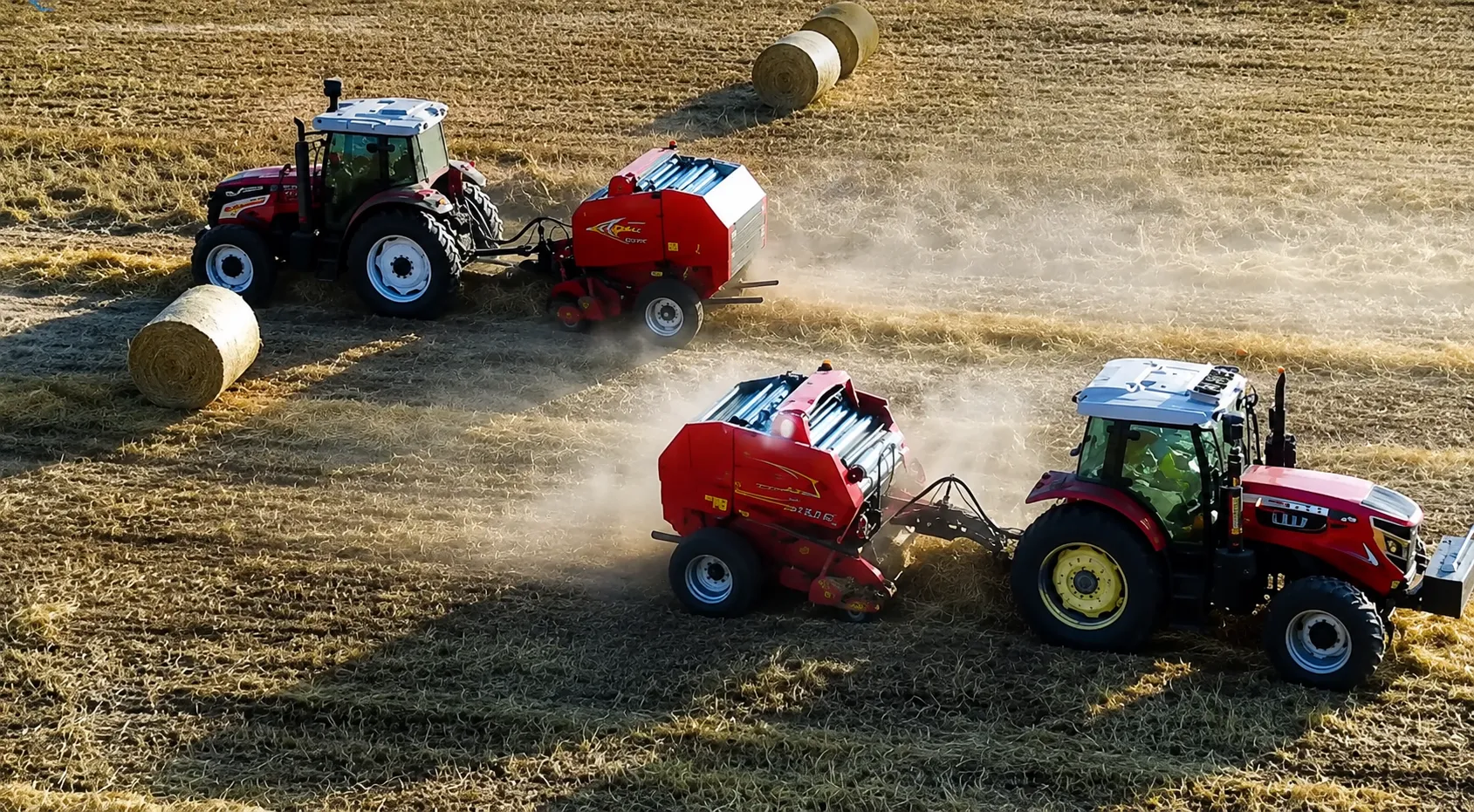
PTO speed compatibility is a practical constraint that eliminates machines from consideration before anything else is evaluated. A baler rated only for 720 RPM cannot run on a tractor that provides 540 RPM output — unless you add a speed-increasing adapter, which is an additional cost, an additional maintenance point, and a source of efficiency loss. A baler rated only for 540 RPM cannot fully use a modern tractor’s torque capacity and may run the implement at sub-optimal speed.
The 9YH-1.25A6 removes PTO speed as a selection constraint entirely. Its input gearbox accepts 540, 720, and 1000 RPM — the three standards in active use across US agriculture — and converts any of those inputs to the correct internal drive speed for the baling chamber and pickup. The operator selects the input speed by engaging the corresponding PTO setting on the tractor; no manual adjustment to the baler is required. The internal gearbox handles the conversion transparently.
This matters most in three situations: farms running a mixed fleet where one baler needs to work behind multiple tractors with different PTO configurations; operations where the primary baling tractor is being replaced and the replacement may have a different PTO standard; and custom operators who move between client farms and cannot control which tractor will be available at each job site.
In all other respects — chamber dimensions, pickup width, feed system, bale size, net wrap, and density control — the 9YH-1.25A6 shares its specification with the standard 9YG-1.25. The A6 designation reflects the multi-speed input gearbox upgrade. For the full product range, see Brazil Ever-Power Farm Balers’ product catalog.
Technical Specifications
| # | Parameter | Unit | Valor |
|---|---|---|---|
| 1 | Model Name | — | 9YH-1.25A6 Round Baler |
| 2 | Hitch Type | — | Towed (Drawbar) |
| 3 | PTO Input Speed | RPM | 540 / 720 / 1000 (all three accepted) |
| 4 | Largura de captação | mm / in | 2,240 mm (88.2 in) |
| 5 | Pickup Type | — | Spring Tooth |
| 6 | Feed System | — | Tooth Bar + Roller (2-Stage) |
| 7 | Chamber Type | — | Fixed-Chamber Roller |
| 8 | Chamber Width | mm / in | 1,250 mm (49.2 in) |
| 9 | Chamber Diameter | mm / in | Φ 1,200 mm (47.2 in) |
| 10 | Number of Rollers | pcs | 18 |
| 11 | Roller Diameter | mm | 222 mm (8.7 in) |
| 12 | Wrapping System | — | Automatic Net Wrap (Standard) |
| 13 | Tractor Power Required | kW / HP | ≥75 kW (≥100 HP) |
| 14 | Machine Weight | kg / lb | 4,472 kg (9,859 lb) |
| 15 | Overall Dimensions (L×W×H) | mm | 4,400 × 2,850 × 2,400 (working) |
| 16 | Bale Density Control | — | Electronic Sensor |
| 17 | Bale Size (Dia. × Width) | mm / in | Φ 1,300 × 1,250 mm (51 × 49 in) |
| 18 | Densidade do fardo | kg/m³ | 100–200 |
| 19 | Productivity | bales/hr | 40–100 |
| 20 | Track Width | mm | 2,450 |
| 21 | Operating Speed | km/h / mph | 5–35 km/h (3–22 mph) |
| 22 | Net Wrap Specification | — | 2,000 × 1.25 m per bale |
Tractor Compatibility Reference
Common US tractor models and their PTO speed configuration — all are compatible with the 9YH-1.25A6
| Tractor Series / Era | Typical PTO | A6 Compatible? | Notes |
|---|---|---|---|
| John Deere 6M / 6R Series (current) | 540 / 720 / 1000 | ✓ All modes | Economy PTO at 720 RPM is the typical hay baling setting; full compatibility at all three settings |
| John Deere 5E / 5M Series (100–125 HP) | 540 / 1000 | ✓ All modes | 540 RPM is the standard hay setting on most 5-series models |
| Case IH Maxxum (current) | 540 / 750 / 1000 | ✓ 540 & 1000 | Case economy PTO runs at 750 RPM — use the 540 or 1000 setting on Maxxum tractors with this baler |
| New Holland T6 / T7 Series (current) | 540 / 720 / 1000 | ✓ All modes | Full compatibility; economy PTO at 720 RPM aligns directly with the A6’s optimal hay baling speed |
| Kubota M7 Series (current) | 540 / 1000 | ✓ 540 & 1000 | Use 540 RPM setting for standard hay baling; 1000 RPM available for high-volume operations |
| Massey Ferguson 6700 / 7700 Series | 540 / 720 / 1000 | ✓ All modes | Dyna-6 and Dyna-VT transmissions offer 720 economy PTO; all three modes supported |
| AGCO IDEAL / Intelli5 Series | 540 / 1000 | ✓ 540 & 1000 | 540 RPM for standard hay and straw; 1000 RPM available |
| Older utility tractors (pre-2005, 100–130 HP) | 540 only | ✓ 540 mode | The A6’s key advantage for farms running legacy equipment — no adapter needed. Standard 9YG-1.25 would require a speed-up gearbox on 540-only tractors |
| Compact utility (75–100 HP, single-speed PTO) | 540 only | ⚠ Minimum HP check | PTO speed is compatible (540 RPM), but verify tractor meets ≥100 HP minimum. Sub-100 HP tractors may struggle in heavy or wet windrows regardless of PTO speed |
Note: PTO configurations listed are typical for the series; individual tractor configurations vary by model year and spec level. Verify your specific tractor’s PTO output speed before connecting any implement.
Core Features
Multi-Speed Input Gearbox
The A6’s multi-speed input gearbox is the single feature that separates this model from the standard 9YG-1.25. Internally, the gearbox contains selectable gear ratios that convert each of the three PTO input speeds to the correct drive speed for the baling chamber’s 18 rollers and the pickup assembly. The selection is made by the tractor’s PTO speed selector — the baler requires no separate manual adjustment. The gearbox is engineered to handle the torque profile of each input speed without differential stress on the output side, meaning bale quality and throughput are consistent regardless of which PTO speed the tractor provides.
18-Roller Fixed Chamber
The compression chamber runs 18 rollers at Φ222 mm each, arranged in a fixed ring that applies consistent radial pressure throughout bale formation. The fixed-chamber design produces tighter, more consistent bale density across a run compared to variable-chamber belt machines, because the compression geometry does not change as the bale grows. At the Φ1,300 mm target diameter, bales across a day’s run show narrow weight variation when windrow conditions are consistent — a characteristic that matters for operations selling hay by weight or standardizing feed rations.
88-Inch Spring-Tooth Pickup
The 2,240 mm (88.2 in) pickup width handles the wide windrows produced by disc mower-conditioners, merger units, and wide swath tedders without requiring reduction in forward speed. Spring-tooth construction handles material gently — minimizing leaf shatter in dry alfalfa and orchardgrass where leaf fraction represents a significant portion of the forage’s nutritional value. Gauge wheels maintain consistent tine clearance over uneven stubble, reducing soil contamination in firm-ground hay conditions.
Sensor-Triggered Automatic Net Wrap
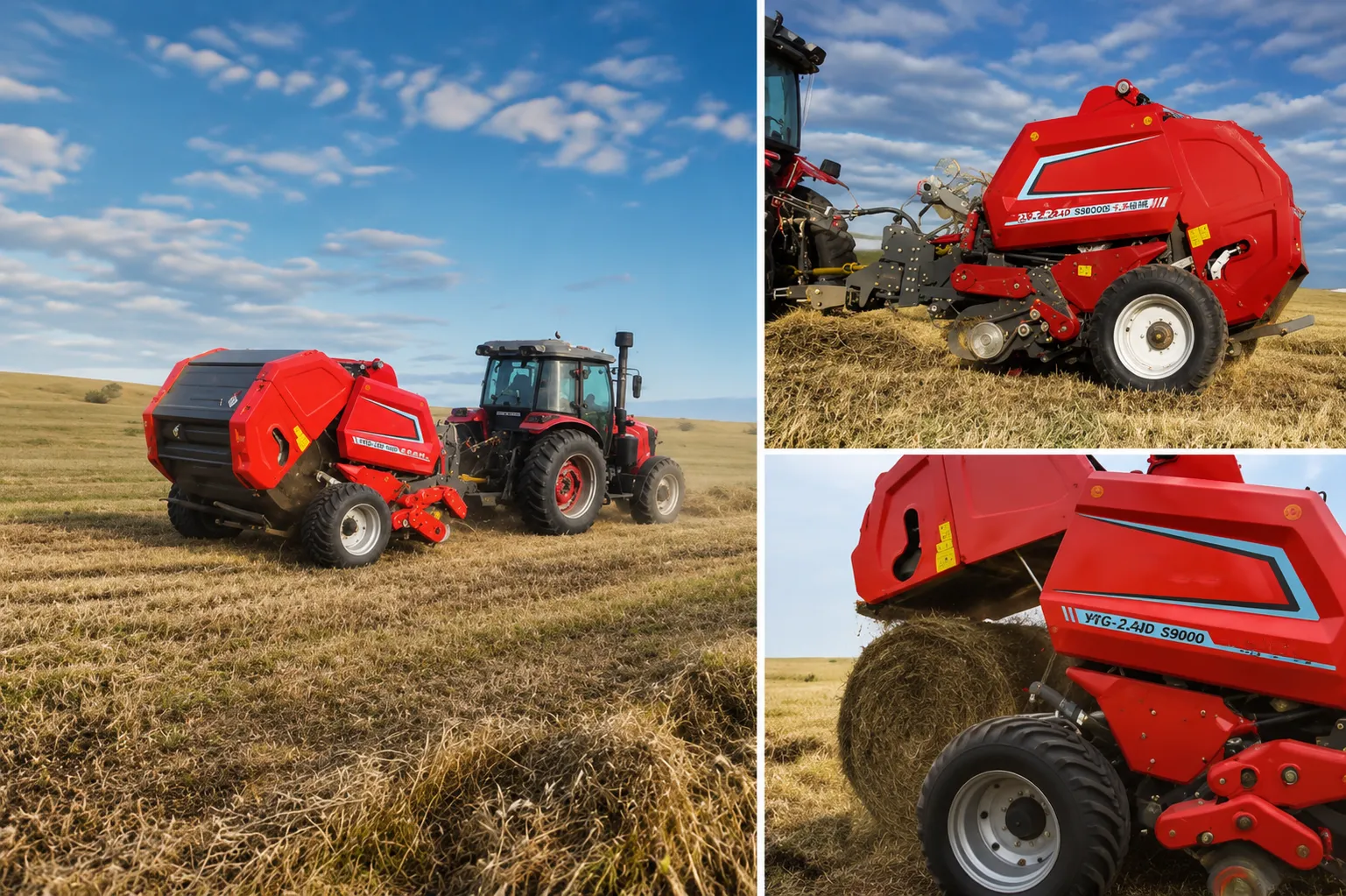
The electronic density sensor reads chamber pressure continuously. When the preset bale density is reached, the net wrap cycle triggers automatically — no operator input needed. The system applies the operator-set number of wrap revolutions, cuts the net cleanly, and opens the hydraulic tailgate in sequence. Bale ejects, gate closes automatically, and the operator resumes forward travel. The automation is consistent across all three PTO input speeds — sensor triggering and wrap timing adjust internally so that bale-to-bale consistency is maintained whether the machine is running at 540 or 1000 RPM input.
PTO Speed — What It Means in the Field
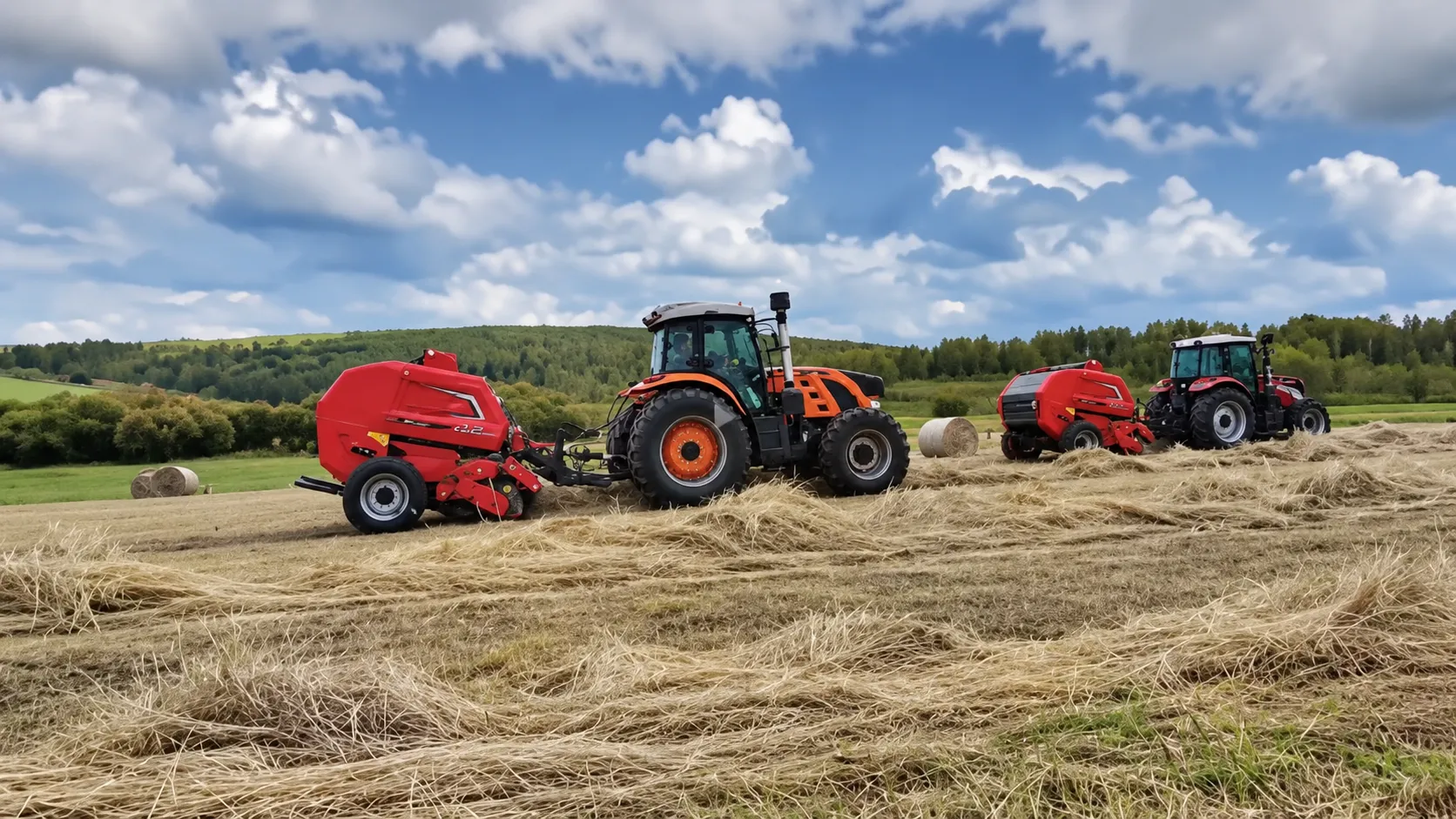
Running the baler at 540 RPM input is appropriate for lighter loads — thin windrows, dry hay in moderate volume, or straw in normal combine swath widths. Most tractors that provide 540 PTO also have a 1000 RPM setting; use 540 when the load doesn’t demand the higher speed.
Legacy tractors; lighter hay and straw in thin-to-moderate windrows; fuel-economy priority runs
The 720 RPM economy setting available on many modern tractors delivers an intermediate torque level that covers most hay baling applications — full-size windrows of dry grass, alfalfa, or moderate-moisture material — at lower engine RPM than the 1000 RPM setting, reducing fuel consumption without compromising throughput. This is often the optimal setting for this baler.
Modern tractors with economy PTO; standard hay and straw at normal windrow densities; fuel-efficiency balanced with throughput
The 1000 RPM setting delivers maximum internal drive speed and is appropriate for high-volume, heavy-density applications — wide merged windrows, thick cover crop terminations, heavy third-cut alfalfa, or haylage at higher moisture content where the increased drive speed maintains throughput. Most operators use 1000 RPM only in the heaviest conditions.
High-horsepower modern tractors; heavy/dense windrows; high-moisture haylage; maximum throughput priority
Intellectual Property & Manufacturing
~100 Utility Patents — All Production In-House
Brazil Ever-Power Farm Balers Co., Ltd holds close to 100 utility patents covering baler chamber design, intake mechanisms, driveline components, and related agricultural machinery technology — all developed internally through the company’s autonomous regional R&D center. Manufacturing is fully in-house at a 32,000 m² facility equipped with CNC laser cutting, robotic welding, and electrostatic coating lines. No structural or mechanical primary components are sourced from third-party fabricators.
Quality certifications: ISO 9001, Two-Informatization Integration Level A, AAA Credit Enterprise, National High-Technology Enterprise designation.

Suitable Crops & Conditions
Alfalfa, brome, orchardgrass, fescue, bermudagrass, timothy, and mixed pasture at below 18% moisture. Spring-tooth pickup minimizes leaf shatter in dry, brittle material. Use 540 or 720 RPM depending on windrow density.
Second- and third-cut at 30–45% moisture. Fixed-chamber roller avoids the belt-slip issues that variable-chamber machines encounter in wet material. Use 720 or 1000 RPM for heavier, higher-moisture cuts.
Wheat, barley, oat, and rye straw for bedding or biomass. The 88-inch pickup handles wide combine-header swaths. 540 RPM is typically sufficient; step up to 720 if throughput slows in thick windrows.
Post-combine stover in windrows. Use 720 or 1000 RPM for denser, heavier stover windrows. For standing-stalk direct harvest without raking, the 9YH-1.25B Hammer Claw is the appropriate model.
Cereal rye, triticale, hairy vetch, and mixed covers in windrows. Use 720–1000 RPM in dense, heavy terminations to maintain intake flow through the tooth bar and roller feed system.
Flat to gently rolling. Standard drawbar hitch. For regular side-slope or contoured terrain, see the S9000 Superior with its adjustable hitch.
9YG / 9YH-1.25 Family — Which Model Fits?
| Model | PTO Input | Pickup Type | Weight | Choose If… |
|---|---|---|---|---|
| 9YG-1.25 | 720 RPM | Spring Tooth | 8,950 lb | Your tractor provides 720 RPM; standard hay/straw; lowest cost in class |
| 9YH-1.25A6 ← Here | 540 / 720 / 1000 | Spring Tooth | 9,859 lb | Mixed fleet, uncertain tractor PTO speed, or 540-only tractor |
| 9YH-1.25B | 720 RPM | Spring Tooth + Hammer Claw | 10,054 lb | Standing corn stover direct harvest — two pickup modes in one machine |
| 9YH-1400 | 720 RPM | Spring Tooth | TBC | Wider 1,400 mm chamber; larger bale format for high-volume operations |
Maintenance — A6 Gearbox Notes
- Grease all standard pickup, roller, and chain lubrication points as per standard 9YG-1.25 schedule
- Check input gearbox for oil seepage at the PTO input seal — the multi-speed gearbox sees more varied torque loading than a single-speed unit and should be monitored at the input seal daily during the first season
- Confirm PTO shaft engages cleanly at the selected speed setting — a grinding engagement can indicate the speed selection mechanism is not fully engaged
- Check multi-speed input gearbox oil level — fill to sight glass or dipstick mark; the gearbox carries a small oil volume that can drop significantly from a slow seal seep
- Standard checks: pickup tine inspection, drive chain tension, roller bearing condition, net wrap brake tension
- If the operation switches PTO speed settings frequently (e.g., between light and heavy crop conditions), check gearbox engagement mechanism for wear at the 50-hour mark through the first season
- Drain and replace multi-speed input gearbox oil — use the grade specified in the operator manual; do not substitute a generic gear oil without confirming viscosity compatibility
- Inspect the speed selector mechanism internally if any shifting difficulty was experienced during the season; address before the next season’s start
- Standard end-of-season service: replace pickup tines if worn, release chain tension, apply anti-corrosion spray to unpainted metal surfaces, remove net wrap roll from machine for off-season storage
Operator Reviews
Northern Iowa — Mixed Tractor Fleet, 900 Acres Hay & Straw
★★★★★
The A6 was the right choice for us specifically because of the mixed fleet situation. We have a 2019 John Deere 6R that runs 720 RPM economy PTO, a 2004 Case IH MXM155 that runs 540 RPM, and an older 130 HP tractor from the mid-1990s that’s also 540 only. With any single-speed baler, at least one of those tractors needs an adapter. The A6 connects to all three without anything extra — we just set the PTO speed selector on the tractor and drive. Bale quality has been consistent across all three tractors regardless of which speed they’re running. We’ve put about 4,100 bales on it across two seasons of alfalfa and brome. No major mechanical issues. The gearbox maintenance is a little more attentive than a standard single-speed unit — the oil level check is important — but it’s not burdensome. Exactly what we needed.
Eastern Ohio — 540-RPM Tractor Fleet, 550 Acres Hay
★★★★☆
I run older tractors and wasn’t interested in buying a new tractor to match a 720 RPM baler. The A6 solved that — it runs cleanly on my 540 RPM output without a speed-up box. The baler performs well in 540 mode for my mixed grass and alfalfa hay, producing consistent bales at 55–65 per hour behind my 115 HP tractor. The one thing I’ll flag is that in 540 RPM mode, I need to be more careful about windrow weight — in a really thick windrow, the intake works harder than it does at 720 or 1000 RPM. I’ve learned to adjust forward speed when I hit denser sections. Four stars because I feel the pickup tines wore a bit faster than expected — at about 3,500 bales I noticed wear on several tines. May be my soil conditions. Parts lead time was about 14 days from order, which I had planned for.
Central Wisconsin — Custom Baling, 2,400 Acres/Season
★★★★★
Custom baling means I use the customer’s tractor sometimes, and I can’t control what PTO speed it provides. The A6 takes the PTO speed variable off the table entirely — I show up, check that the tractor meets the horsepower minimum, connect, and go. I’ve used it behind JD 6R with 720 economy PTO, a New Holland T7 at 1000 RPM, and two older 540-only tractors at different customer locations, all in the same season. The machine baled the same across all of them. 2,400 acres of mixed grass, alfalfa, and some straw over one season. Routine maintenance only — pickup tines, chain lubrication, gearbox oil check. Zero unplanned downtime. For custom operators who work across multiple farms with no control over equipment, the A6 is the most practical baler in this class.
Southwest Minnesota — Alfalfa & Cover Crops, 650 Acres
★★★★☆
Good machine — bought it to work with both a 720 RPM modern tractor and a 540 RPM older one we run during our heavy-season peak. The flexibility works as advertised. In my alfalfa hay work it produces clean, consistent bales at 60–70 per hour behind the 720 RPM tractor. The cereal rye cover crop work in spring benefits from the 1000 RPM option — the heavier drive keeps the intake moving through dense rye terminations more cleanly than at 720. I’m at four rather than five stars for two reasons: the gearbox oil check is a real daily task in the first season, not optional — I had a slow seep from the input seal in the first 200 hours that I caught early; and the operator manual’s description of the multi-speed selection procedure could be clearer for first-time users. Both things worked out, but I’d want buyers to go in with realistic maintenance expectations for the gearbox.
Southern Illinois — Single Modern Tractor, 480 Acres Hay
★★★☆☆
I’ll be straightforward: I bought the A6 because it was available when I ordered, and because the dealer suggested it as a universal option. In hindsight, I should have bought the standard 9YG-1.25. I run one tractor — a 2021 John Deere 6R with 720 economy PTO — and I’ll never need 540 or 1000 RPM capability. The A6 bales exactly as well as I expect from this class of machine, and I have no performance complaints. But I’m carrying an extra 900 pounds of machine weight and paying for a multi-speed gearbox I’ll never use more than one mode of. Three stars is not a quality rating — the machine works well. It’s an honest signal that the A6 is specifically worth choosing for fleet flexibility or 540 RPM compatibility, and if that’s not your situation, the standard 9YG-1.25 is the better purchase.
Frequently Asked Questions
Does the operator need to adjust anything on the baler when changing PTO speed?
No adjustment is required on the baler itself. The multi-speed input gearbox converts the selected PTO speed to the correct internal drive speed automatically. The operator selects the PTO speed on the tractor using the tractor’s own PTO speed selector, engages the PTO at low RPM, and ramps to operating RPM as normal. No lever, switch, or setting on the baler changes between speed modes.
What is the difference in bale output between 540 and 720 RPM operation?
Bale size and density are identical across all three PTO input speeds — the gearbox normalizes the internal drive speed so the chamber and pickup operate at the same effective speed regardless of input. The practical difference between 540 and 720 RPM operation is typically in how the machine handles variations in windrow weight. At 720 RPM, the higher internal drive speed gives the intake system more momentum to push through dense windrow sections without slowing. At 540 RPM, thick windrow sections require more forward speed reduction to avoid intake overloading. In moderate, consistent windrows, both speeds produce the same hourly bale output.
My Case IH tractor has a 750 RPM economy PTO. Will the A6 work?
Some Case IH tractors use a non-standard 750 RPM economy PTO speed rather than the 720 RPM that JD, NH, and Massey economy PTO uses. The 9YH-1.25A6 is rated for 540, 720, and 1000 RPM input. At 750 RPM — which is 4% above the 720 RPM rating — the machine will operate but the internal drive speed will be slightly higher than designed for the 720 RPM gearbox position. This is unlikely to cause damage at modest overload in light to moderate conditions, but for sustained heavy-crop operation on a 750 RPM economy PTO tractor, we recommend running the tractor at its 540 RPM or 1000 RPM setting rather than the 750 RPM economy setting. Confirm with our technical team before purchase if this applies to your primary tractor.
Is the A6 significantly heavier than the standard 9YG-1.25?
The 9YH-1.25A6 weighs 4,472 kg (9,859 lb) versus the standard 9YG-1.25’s 4,060 kg (8,950 lb) — a difference of 412 kg (909 lb). The additional weight comes from the multi-speed input gearbox assembly. In practice, this difference is unlikely to be noticeable in normal field operation for tractors at or above 100 HP. It may be slightly relevant for soft-ground compaction management on farms where soil structure is a priority concern.
Can the A6 handle corn stover in standing-stalk harvest mode?
No — the A6 uses a spring-tooth pickup and is designed for windrowed material. It can bale windrowed corn stover effectively in any of its three PTO speed modes. For standing-stalk corn stover direct harvest — cutting and collecting stalks in a single pass without prior shredding — the 9YH-1.25B Hammer Claw is the correct model.
Should I buy the 9YH-1.25A6 or the standard 9YG-1.25?
Buy the A6 if: (1) you run a mixed fleet where different tractors will pull the baler and they have different PTO speeds; (2) your primary tractor provides 540 RPM only and you want to avoid a speed-up adapter; (3) you are a custom operator who works at multiple farms without controlling which tractor is available. Buy the standard 9YG-1.25 if you run one modern tractor with 720 RPM PTO — the standard model is lighter, simpler, and costs less, with identical bale performance at 720 RPM input.
Where can I see the full range of available baler models?
Brazil Ever-Power Farm Balers Co., Ltd’s complete round baler lineup — including the S9000 series, the full 9YG / 9YH-1.25 family, the 9YG-1.0 and 9YG-1.0C compact balers, and the 9YCM-850 baler-wrapper combination — is documented at Brazil Ever-Power Farm Balers’ product catalog. Additional product and specification information for farmbalers.com products is available on the individual product pages linked in the Related Products section below.
Manufacturer
Brazil Ever-Power Farm Balers Co., Ltd
Brazil Ever-Power Farm Balers Co., Ltd is a national high-technology enterprise operating a 32,000 m² integrated production facility with two dedicated assembly lines at 2,000-unit annual capacity each. The company develops all baler and harvesting machinery designs through its autonomous regional R&D center, holds close to 100 utility patents, and manufactures entirely in-house using CNC laser cutting, robotic welding, and electrostatic coating. Certifications include ISO 9001, Two-Informatization Integration Level A, and AAA Credit Enterprise. The company has independent import and export rights and serves markets in the United States, Mongolia, Russia, Belarus, and Kazakhstan.
Full product documentation at Brazil Ever-Power Farm Balers’ product catalog.