Description
Brazil Ever-Power Farm Balers Co., Ltd
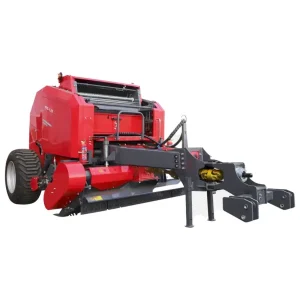
9YH-1400 Round Baler
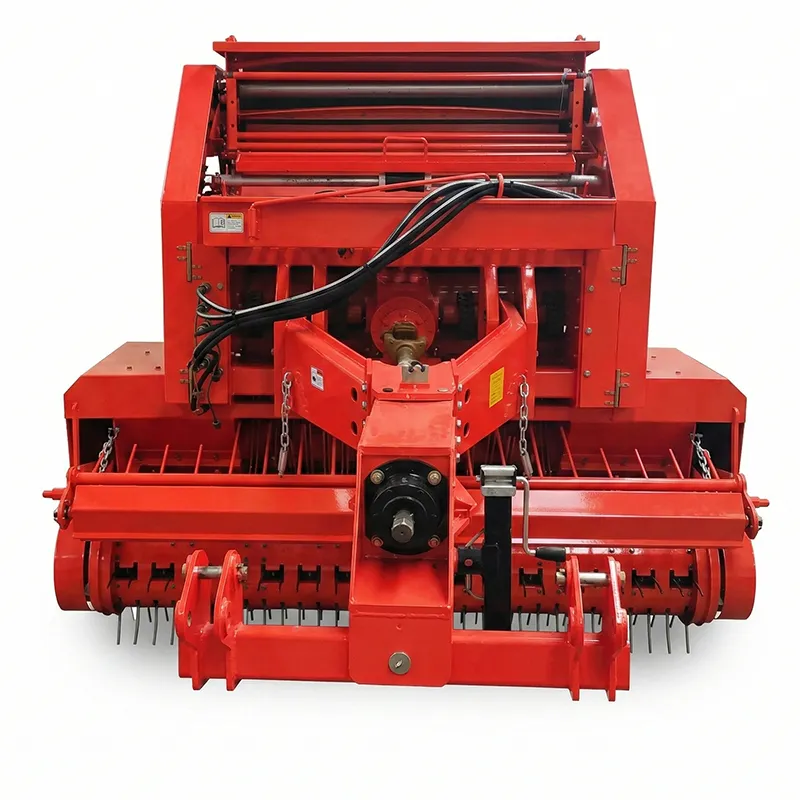
Wide-chamber fixed-roller baler producing the full 55-inch bale format — 6 inches wider than the 49-inch bales from the 1.25 series, more material per bale, lower cost per ton through the full handling chain.
Bale Width Comparison
39 in (1,000 mm)
49 in (1,250 mm)
55 in (1,400 mm) ← Widest in Range
720 RPM PTO · Net Wrap Standard · Electronic Density Sensor · Towed Drawbar · 100–200 kg/m³
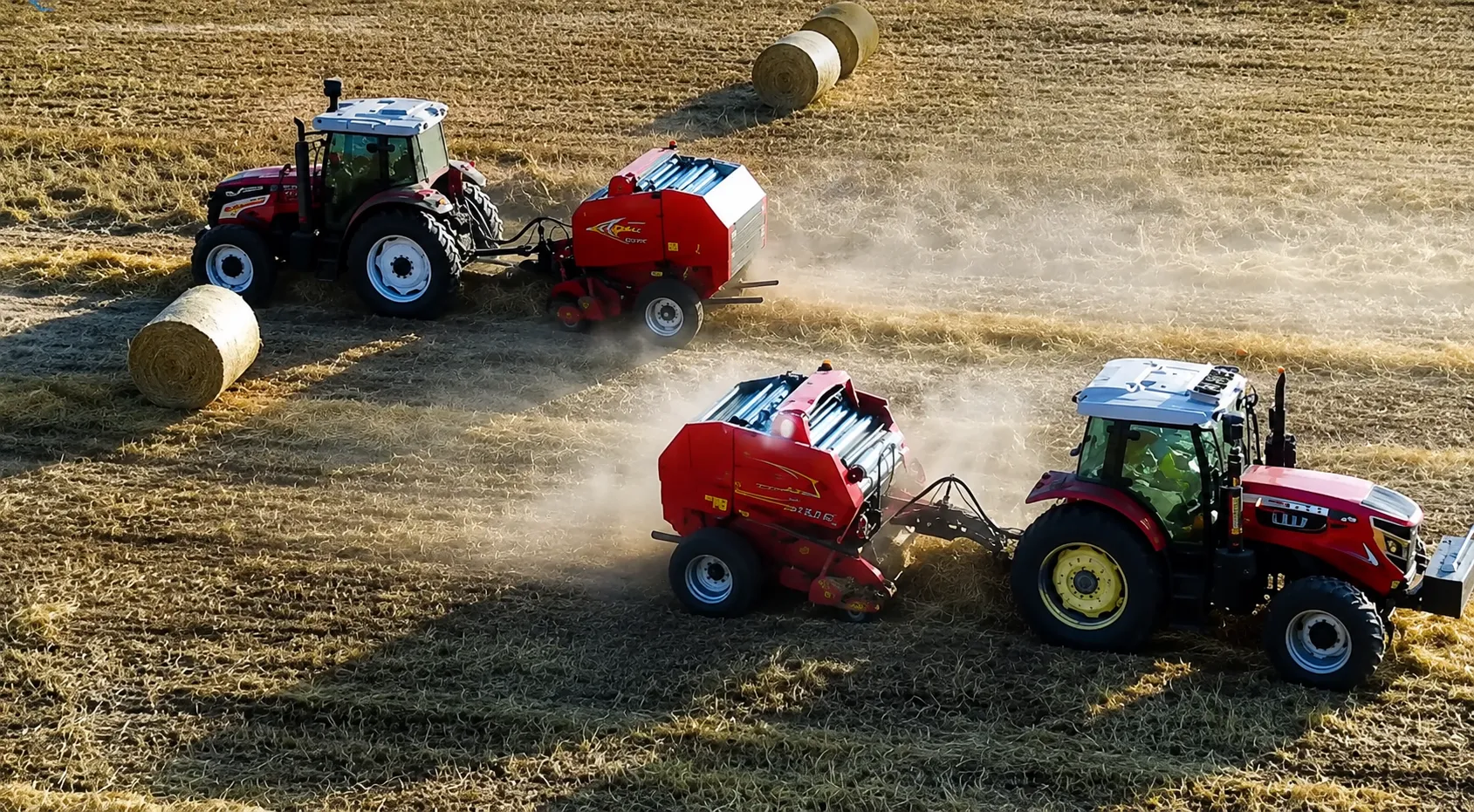
The 9YH-1400 makes the same 51-inch diameter round bale as the 9YG-1.25 series, with one significant difference: at 55 inches wide rather than 49, each bale contains approximately 12% more material by volume. That difference compounds through every step that follows baling — loading, transport, stacking, and feeding. Twelve percent more hay per bale handled means 12% fewer bale cycles on the loader, 12% fewer flatbed positions per ton delivered, and 12% fewer trips to the bale stack per feeding event on a large livestock operation.
The 1,400 mm chamber width also aligns with the standard bale dimension produced by most major OEM round balers in the 150 HP and up class — John Deere 9 Series, New Holland 640/660, Vermeer 604/605. Operations that need bales compatible with existing wrapping tables, bale clamps, hay feeders, or export pallet sizing built around the 55-inch width standard will find the 9YH-1400 directly compatible where the 49-inch 1.25-series bales would not fit those fixtures cleanly.
Like the rest of the 9YH series, the 1400 pairs an 18-roller fixed chamber with a 2,240 mm spring-tooth pickup and tooth bar plus roller intake. It produces 40–100 bales per hour behind tractors from 100 HP up at 720 RPM PTO. Sensor-controlled bale density and automatic net wrap are standard. For the complete model lineup, see Brazil Ever-Power Farm Balers’ product catalog.
Why Bale Width Matters — The 55-Inch Advantage
Volume Comparison
~1.50 m³
~1.77 m³
Based on Φ1,300 mm diameter. Volume = π × (0.65)² × length. Actual weight varies with crop type and moisture content.
Where the 55-Inch Format Matters
- Transport efficiency: A 55-inch bale fills a standard 8-foot flatbed trailer width more efficiently in two-row configurations; fewer loads per ton delivered
- Hay export: Most international hay export container loading specifications are built around the 1.4 m bale width standard
- OEM compatibility: Wrapping tables, inline wrappers, bale clamps, and round bale feeders sized for JD / NH / Vermeer balers typically accept 55-inch bales — the 49-inch bale may shift or feed unevenly in these fixtures
- Large livestock operations: Bale feeders sized for 55-inch bales are the most common format in US cattle feeding — wider bales seat correctly in the feeder ring without gap loss
Technical Specifications
| # | Parameter | Unit | Nilai |
|---|---|---|---|
| 1 | Model Name | — | 9YH-1400 Round Baler |
| 2 | Hitch Type | — | Towed (Drawbar) |
| 3 | Lebar Pengambilan | mm / in | 2,240 mm (88.2 in) |
| 4 | Pickup Type | — | Spring Tooth |
| 5 | Feed System | — | Tooth Bar + Roller (2-Stage) |
| 6 | Chamber Type | — | Fixed-Chamber Roller |
| 7 | Chamber Width | mm / in | 1,400 mm (55.1 in) |
| 8 | Chamber Diameter | mm / in | Φ 1,300 mm (51.2 in) |
| 9 | Number of Rollers | pcs | 18 |
| 10 | Roller Diameter | mm | 222 mm (8.7 in) |
| 11 | Wrapping System | — | Automatic Net Wrap (Standard) |
| 12 | Tractor Power Required | kW / HP | ≥75 kW (≥100 HP) |
| 13 | Machine Weight | kg / lb | 4,050 kg (8,928 lb) |
| 14 | PTO Speed | RPM | 720 |
| 15 | Overall Dimensions (L×W×H) | mm | 4,450 × 3,010 × 2,400 (working) |
| 16 | Bale Density Control | — | Electronic Sensor |
| 17 | Bale Size (Dia. × Width) | mm / in | Φ 1,300 × 1,400 mm (51 × 55 in) |
| 18 | Kepadatan Bal | kg/m³ | 100–200 |
| 19 | Productivity | bales/hr | 40–100 |
| 20 | Track Width | mm | 2,450 |
| 21 | Operating Speed | km/h / mph | 5–35 km/h (3–22 mph) |
| 22 | Net Wrap Specification | — | 2,000 × 1.4 m per bale |
Engineering Features
1,400 mm Fixed Chamber — 18 Rollers
The chamber runs 18 steel rollers at Φ222 mm arranged in a fixed ring at 1,400 mm internal width. Fixed-chamber roller designs apply consistent radial pressure throughout bale formation, producing uniform density from the bale core to the surface. The chamber produces the same diameter bale as the 9YG-1.25 series — Φ1,300 mm — but 150 mm wider, which increases bale volume by approximately 12% at the same density setting. This additional volume translates directly to more material per bale without increasing the number of cycles the machine completes per hour.
88-Inch Spring-Tooth Pickup
The 2,240 mm spring-tooth pickup is proportionally wider than the chamber — deliberately so. A pickup wider than the chamber allows the machine to collect full merge-windrow widths and narrow the material stream before it enters the chamber, rather than missing material at the edges of a wide windrow. Spring-tooth construction handles dry hay without the leaf shatter that cam-guided pickup systems produce in brittle material, and the gauge wheels maintain tine clearance across uneven stubble heights to minimize soil ingestion.
Tooth Bar + Roller 2-Stage Feed
Material from the pickup passes through a tooth bar and roller feed system before entering the chamber. The tooth bar meters crop flow into the chamber, while the roller accelerates and distributes material evenly across the 1,400 mm width. Even lateral distribution at the intake stage prevents the off-center bale cores that produce irregular shapes and waste net wrap — particularly important in wide-chamber machines where a larger lateral distance must be covered for consistent density across the full bale width.
Automatic Net Wrap — 1.4 m Width
The net wrap system is calibrated for the 1,400 mm bale width, using 2,000 × 1.4 m net roll stock. Net wrap is applied automatically when the electronic density sensor reaches the preset target — no manual trigger. The wrap is applied across the full 1,400 mm bale face, cut cleanly, and the hydraulic tailgate opens and closes in sequence without operator action. The additional bale width requires slightly more net per bale than the 1,250 mm format; factor this into net wrap consumption budgeting when comparing models.
Field Operation
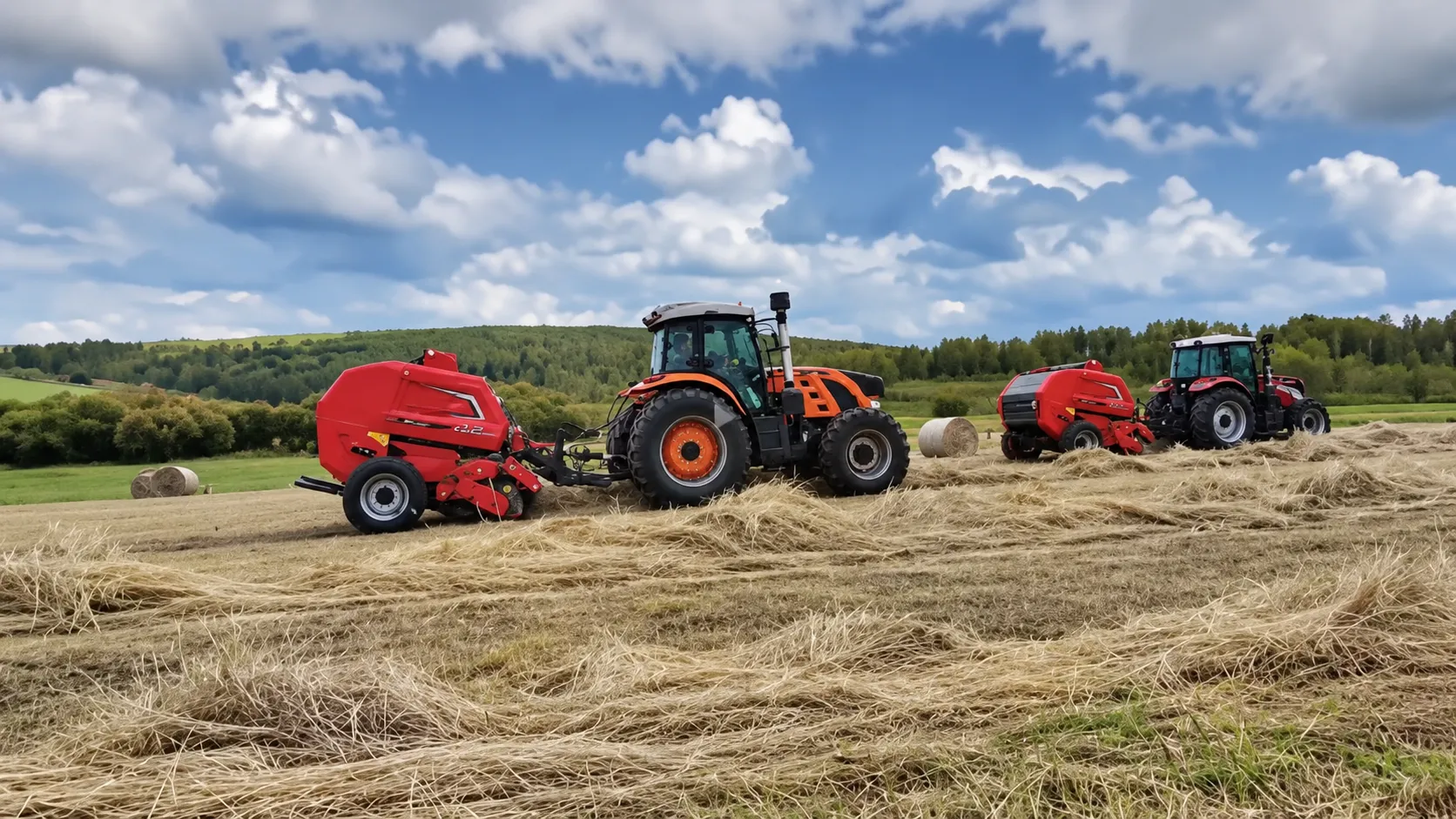
Attach to tractor drawbar at 720 RPM PTO. Set pickup gauge wheel height for the crop’s windrow profile. Load 1.4 m net wrap roll and thread through the wrap guide per the operator manual. Test gate open and close cycle before entering the field. Confirm sensor control panel is active and density target is set.
Drive forward through the windrow at a pace that keeps the intake flowing continuously. The wider chamber takes slightly longer to fill than a 1,250 mm machine at equal material density — do not rush field speed. The 18 rollers build bale density from the core outward. Monitor the density indicator on the control panel; the sensor triggers the net wrap cycle automatically when the target is reached.
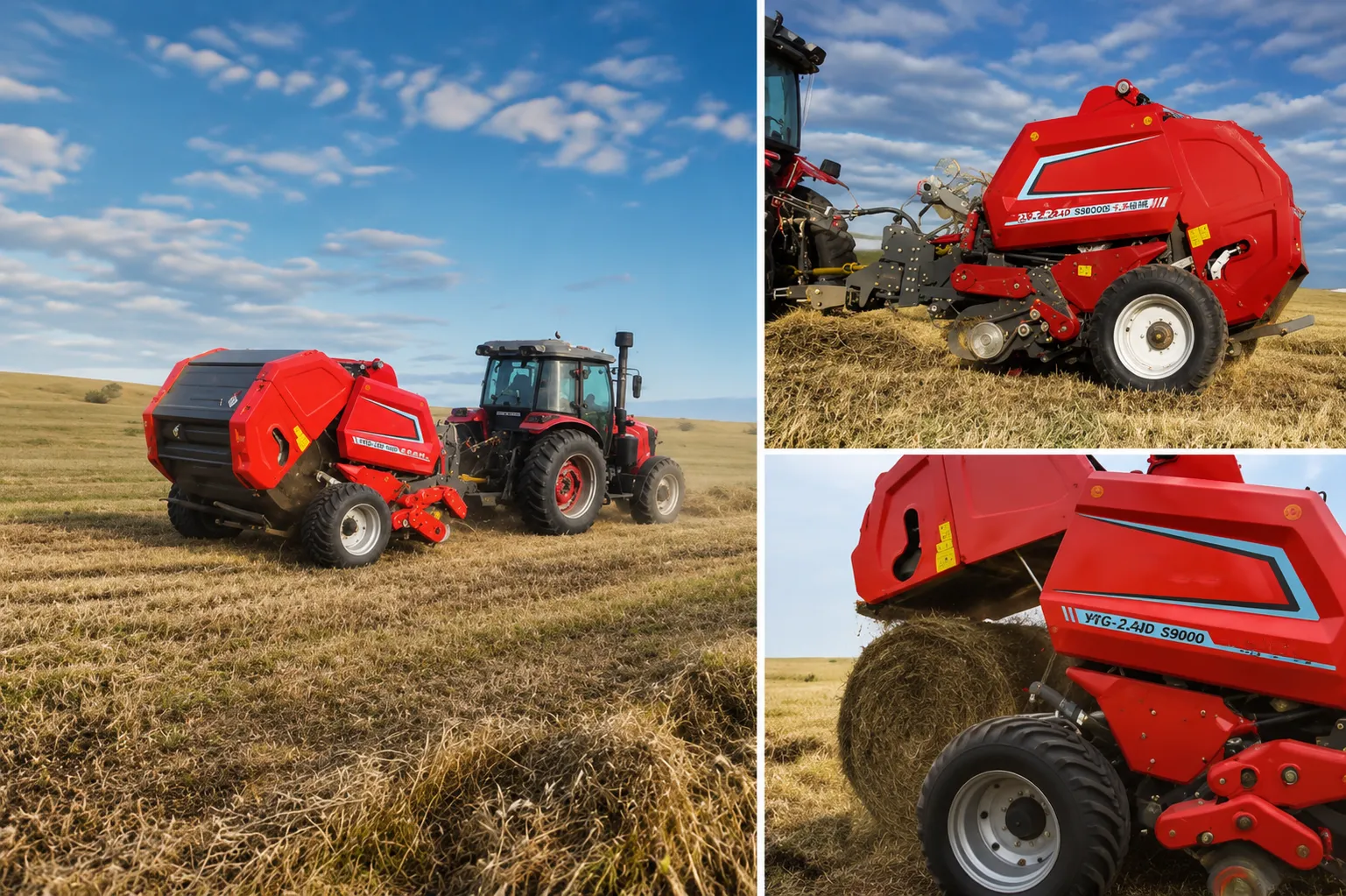
Slow to near-idle during the net wrap cycle. Net is applied across the 1,400 mm bale face, cut, and the gate opens automatically. The wider bale rolls out and stops on the stubble. Gate closes under hydraulic pressure and latches without manual action. Resume forward travel immediately. Cycle time net-wrap to gate-closed: typically 18–25 seconds — slightly longer than the 1,250 mm format due to the wider wrap application.
The 88-inch pickup handles full-width merged windrows. When operating with a merger or combining two swaths, the wider pickup clears the consolidated material cleanly without the material overflow that narrower pickups produce at the edges. This is a primary operational advantage of the 9YH-1400 in operations using disc mowers and mergers to maximize daily cut coverage.
The 9YH-1400 uses a standard fixed drawbar hitch. Turning radius is similar to the 9YG-1.25 series but the machine is slightly wider at 3,010 mm working width — confirm your headland width accommodates the turn arc before the first pass. On fields with tight headlands, allow an extra meter of headland compared to the narrower machines in this range.
The 1.4 m net wrap roll covers the full bale face with no lateral trim required. Net consumption per bale is proportionally higher than on the 1.25 m format — approximately 12% more net per bale at the same number of wrap revolutions. Pre-season: calculate net wrap consumption based on your expected bale count and order accordingly; net wrap is a significant operating cost and undersupply during peak season causes unnecessary downtime.
Patents & Manufacturing
~100 Utility Patents — Fully In-House Production
Brazil Ever-Power Farm Balers Co., Ltd designs and manufactures all baler and harvesting machinery internally. The company’s autonomous regional R&D center has developed close to 100 utility patents covering intake systems, chamber compression mechanisms, driveline components, and related technology. All production takes place at the company’s 32,000 m² facility using CNC laser cutting, robotic welding, and electrostatic coating. No primary structural or mechanical components are outsourced to third-party fabricators.
Certifications: ISO 9001, Two-Informatization Integration Level A, AAA Credit Enterprise, National High-Technology Enterprise designation.

Suitable Crops & Conditions
Alfalfa, brome, orchardgrass, fescue, bermudagrass, timothy, and mixed pasture at below 18% moisture. Operations running disc mower-mergers at high daily cut volumes benefit most from the 55-inch format — fewer bales to move per ton produced.
Operations selling into hay export markets where container loading specifications are built around the 1,400 mm / 55-inch bale width standard. The 9YH-1400 produces bales that fit these specifications without width adaptation.
Second- and third-cut alfalfa or grass at 30–45% moisture. Fixed-chamber roller handles wet material reliably. Wider bales produce larger anaerobic mass per wrapping event when film-wrapped, which can improve fermentation consistency across the bale cross-section.
Beef cattle, dairy, and equine operations running round bale feeders sized for the 55-inch format. Bales seat correctly in the feeder ring without the gap loss that occurs when a 49-inch bale sits in a 55-inch feeder.
Wheat, barley, oat, and rye straw for bedding or biomass. Wide-format straw bales reduce handling cycles for operations managing large bedding volumes. The 88-inch pickup handles full combine-header swath widths cleanly.
Flat to gently rolling. Standard drawbar hitch. Note: the 9YH-1400 is 3,010 mm wide in working state — confirm adequate field width for turns on narrow fields. For sloped terrain requiring an adjustable hitch, see the S9000 Superior.
Bale Width Across the Range
All Brazil Ever-Power Farm Balers round balers produce Φ1,200–1,300 mm diameter bales. The key variable across models is bale width — which determines bale volume, transport efficiency, and equipment compatibility.
| Model | Bale Width | Approx Volume | Min HP | Best For |
|---|---|---|---|---|
| 9YG-1.0 | 39 in (1,000 mm) | ~0.95 m³ | 65 HP | Small farms, compact tractors, easy handling |
| 9YG-1.25 / A6 / 1.25B | 49 in (1,250 mm) | ~1.57 m³ | 100 HP | Mid-scale hay, straw, haylage |
| 9YH-1400 ← Here | 55 in (1,400 mm) | ~1.77 m³ | 100 HP | High-volume, export, large livestock, OEM compatibility |
| S9000 Series | 55 in (1,400 mm) | ~1.77 m³ | 74 HP | Very high volume, complex terrain, widest pickup |
Volume approximated at Φ1,300 mm diameter. Actual weights vary with crop type and moisture. The S9000 series also produces 55-inch bales and may be compared with the 9YH-1400 for high-volume applications — the key difference is the S9000’s axial-flow patented intake, wider 88-inch pickup in the larger 2.24 m configuration, and terrain hitch options.
Maintenance Schedule
- Grease all lubrication fittings — pickup tine pivots, roller shaft ends, chain idlers, and tailgate pivot points
- Check 1.4 m net wrap roll load and brake tension — incorrect tension on the wider roll causes uneven wrap coverage across the 55-inch bale face
- Verify hydraulic tailgate cycles cleanly before the first bale
- Check pickup gauge wheel height is set for the day’s crop and windrow profile
- Confirm PTO shaft guard is intact and telescoping section moves freely
- Adjust drive chain tension if sag exceeds 15–20 mm mid-span
- Inspect pickup tines — replace any with visible cracks or length loss exceeding 15%
- Check roller bearings for roughness or heat during operation as early-warning indicators
- Inspect tooth bar for wear — the bar handles a wider material stream than on the 1.25 series and should be checked against the 50-hour interval rather than visual inspection only
- Verify density sensor cable connections are secure and unobstructed
- Drain and replace gearbox oil — check operator manual for grade and fill volume
- Inspect all 18 roller bearings; replace any showing detectable play rather than waiting for failure in the field
- Replace pickup tine set if overall wear is greater than 20% by length count
- Clean machine thoroughly, apply anti-corrosion spray to all unpainted metal surfaces, and store in a covered location
- Release drive chain tension for off-season storage; retighten at season start
- Remove 1.4 m net wrap roll — store in dry conditions to prevent moisture absorption that affects roll dispensing consistency next season
Operator Reviews
Western Kansas — Hay Export & Large Cow-Calf Operation, 2,800 acres
★★★★★
We sell a portion of our alfalfa into the export market, and the 55-inch bale format is what our hay broker requires for container loading. The 9YH-1400 matches that specification exactly, so we don’t need to sort or segregate bales by machine anymore. The bale quality has been consistent — tight, flat-ended bales that load cleanly into the container. We also use the wider bales in our cow-calf feeders, and they seat correctly in the ring feeders in a way our old 49-inch bales didn’t. We’re at 3,900 bales across two seasons, mostly alfalfa with some brome. Maintenance has been routine and predictable. The machine matched the expectation from the spec sheet. Exactly what we needed.
Eastern Colorado — Custom Baling, 3,200 acres/season alfalfa & grass
★★★★☆
I switched to the 9YH-1400 from a 49-inch baler specifically for the transport math. My customers have 8-foot flatbeds and when loading two rows of bales side by side, the 55-inch format fills the trailer better — less gap, more hay per load, fewer trips per ton. Over a full season that’s a meaningful reduction in transport cost for my clients, which makes my service more competitive. The machine bales well — consistent density, clean net wrap, no major mechanical issues in 3,200 acres. The net wrap consumption is higher than the 1.25 series, which I’d factored in, but I want buyers to know that going in. Four stars because the gate cycle is slightly slower than I’d like when turning quickly on short fields — it adds 5–6 seconds per cycle that adds up on tight headland work. Not a dealbreaker, just something I noticed transitioning from my previous machine.
Central Nebraska — Replacing Aging OEM Baler, 1,400 acres hay
★★★★★
I was replacing a 15-year-old OEM baler that made 55-inch bales, and I needed a replacement that matched the same format — our inline wrapper, our bale clamps, and our bale feeders are all sized for 55 inches. The 9YH-1400 was the only machine in this price range that matched that spec. It’s been a straightforward transition — the bale dimensions are compatible with all our existing equipment, operator training was minimal since the automation is similar to what we ran before, and bale quality has been consistent through 1,400 acres of brome and mixed grass. The price point was significantly below what a comparable OEM replacement would have cost. For anyone replacing a 55-inch OEM baler and primarily concerned about equipment compatibility, this machine makes the transition straightforward.
Northern Wisconsin — Dairy Operation, 800 acres alfalfa & grass hay
★★★★☆
We run a 300-head dairy and bale our own alfalfa. The switch to the 9YH-1400 was driven by our bale feeder equipment — all sized for 55-inch bales. Feeding performance from the ring feeders has improved noticeably since the bale now fits the feeder the way it was designed. Bale density has been consistent, which matters for us because we track milk production against feed quality closely. The machine bales at about 55–65 per hour behind our 115 HP tractor, which covers our volume comfortably. I’m at four stars because we had a net wrap feed issue in the third week — the wrap was threading slightly off-center across the 55-inch face, leaving one edge thin. A tension adjustment resolved it, but I spent half a day figuring out the correct setting before finding it in the manual. After adjustment, no further issues in 2,100 bales.
Southern Missouri — Small Cow-Calf, 350 acres mixed hay
★★★☆☆
I’ll be honest: the 9YH-1400 is more machine than my operation needed. At 350 acres, I’m not putting enough volume through it to make the wider bale format pay for the extra cost and net wrap consumption. The machine itself bales well — I have no mechanical complaints. But at my scale, the 55-inch bale doesn’t move the needle on transport efficiency and my bale feeders are 49-inch — the wider bale actually sits slightly loose in them, which creates some gap waste at feeding. Three stars is my honest signal that this machine is sized and priced for operations above mine. If your operation is below 600–700 acres of hay per season and you don’t have an export market or OEM-compatible downstream equipment requirement, the standard 9YG-1.25 is probably the better fit.
Frequently Asked Questions
What is the exact bale size the 9YH-1400 produces?
The 9YH-1400 produces bales at Φ1,300 mm diameter × 1,400 mm wide — equivalent to approximately 51 inches diameter × 55 inches wide. This is the same diameter as the 9YG-1.25 series and the same width as the S9000 series. The 55-inch width is the standard produced by most major OEM round balers in the mid to large class, making the 9YH-1400 compatible with downstream equipment and handling systems built for those balers.
How much more net wrap does the 9YH-1400 use per bale compared to the 9YG-1.25?
At the same number of wrap revolutions, the 9YH-1400 uses approximately 12% more net wrap per bale than the 9YG-1.25 — proportional to the 12% increase in bale width (1,400 mm vs 1,250 mm). The machine uses 1.4 m wide net roll stock versus 1.25 m wide stock on the 1.25 series, so you cannot share net wrap inventory between the two machines. When budgeting net wrap consumption, use the 1.4 m specification and add 10–15% to your bale count estimate for planning purposes.
Will 9YH-1400 bales fit my existing round bale wrapper?
Most inline and standalone round bale wrappers sized for the 55-inch OEM standard (such as those calibrated for John Deere, New Holland, or Vermeer 55-inch bales) will accept 9YH-1400 bales. Wrappers calibrated only for 49-inch bales may not clamp or rotate the wider bale correctly. Confirm your wrapper’s maximum bale width specification before purchasing the 9YH-1400 if wrapping is part of your production chain.
What is the practical difference in bale weight between the 9YH-1400 and the 9YG-1.25?
At the same crop type, moisture content, and density setting, 9YH-1400 bales weigh approximately 10–12% more per bale than 9YG-1.25 bales, reflecting the proportionally larger bale volume. For dry alfalfa at 12% moisture: expect 820–1,050 lb versus 730–950 lb from the 1.25 series. For wheat straw: expect 560–770 lb versus 500–700 lb. Bales heavier than approximately 1,200 lb may require a higher-capacity bale spike or grapple than light-duty loaders are rated for — verify your loader’s bale handling capacity against expected wet-material bale weights before ordering.
Does the 9YH-1400 have the same patented intake system as the S9000?
No. The 9YH-1400 uses a tooth bar and roller 2-stage intake system, which is a different configuration from the patented axial-flow semi-force-feed intake exclusive to the S9000 series. Both systems prevent blockage by distributing material laterally across the chamber before compression, but the S9000’s patented design uses a camless, ringless architecture that delivers higher volumetric flow capacity in very heavy windrow conditions. For standard hay and straw volumes, the 9YH-1400’s 2-stage intake performs comparably; for extreme-volume or very dense material conditions, the S9000 series offers additional intake capacity.
Should I buy the 9YH-1400 or the S9000 for a 55-inch bale?
Both produce the same 51 × 55 inch bale format. Choose the 9YH-1400 if your operation runs 100–130 HP tractors, works primarily on flat to gently rolling terrain, and processes standard to moderately heavy windrows without complex terrain requirements. Choose the S9000 series if you need the patented axial-flow intake for very heavy or dense material, work on sloped or contoured terrain (Superior variant), need driveline upgrades for small-field frequent-turn operation (Classic variant), or want the 88-inch wide-pickup configuration with the S9000’s higher throughput capacity in large-volume operations.
How do I get spare parts for the 9YH-1400 in the US?
Parts are ordered directly through Brazil Ever-Power Farm Balers Co., Ltd’s spare parts program. Standard in-stock parts — pickup tines, drive chain, roller bearings, net wrap components — ship to US customers with an estimated 10–18 business day delivery. We recommend ordering a pre-season spare parts kit before each baling season that includes: one full pickup tine set, drive chain (one spare length), two roller bearings, and a net wrap brake pad set. The wider 1.4 m net wrap roll is available through standard agricultural supply channels in the US — confirm with your local supplier before season start. Additional product documentation is at Brazil Ever-Power Farm Balers’ product catalog.
Manufacturer
Brazil Ever-Power Farm Balers Co., Ltd
Brazil Ever-Power Farm Balers Co., Ltd is a national high-technology enterprise operating from a purpose-built 32,000 m² manufacturing facility. The company runs two dedicated assembly lines with 2,000-unit annual capacity each, maintains an autonomous regional R&D center with close to 100 utility patents, and manufactures all products in-house using CNC laser cutting, automated welding, and electrostatic coating systems. Certifications include ISO 9001, Two-Informatization Integration Level A, and AAA Credit Enterprise. The company holds independent import and export rights and serves customers in the United States, Mongolia, Russia, Belarus, and Kazakhstan.
Full round baler documentation — including the complete S9000 series, the 9YG/9YH-1.25 family, the 9YG-1.0 platform, and the 9YCM-850 baler-wrapper combination — at Brazil Ever-Power Farm Balers’ product catalog.