Description
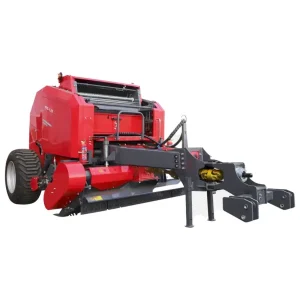
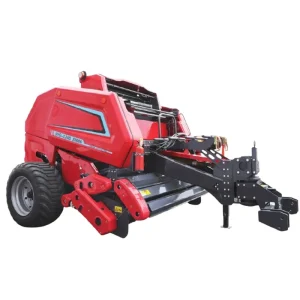
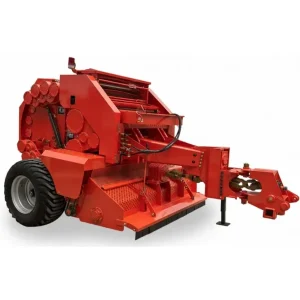
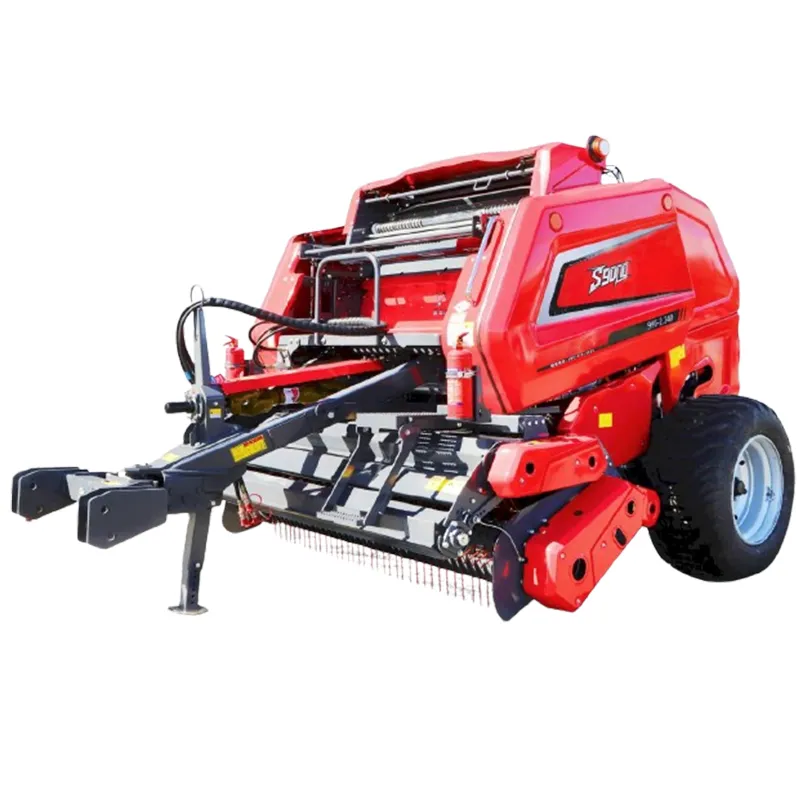
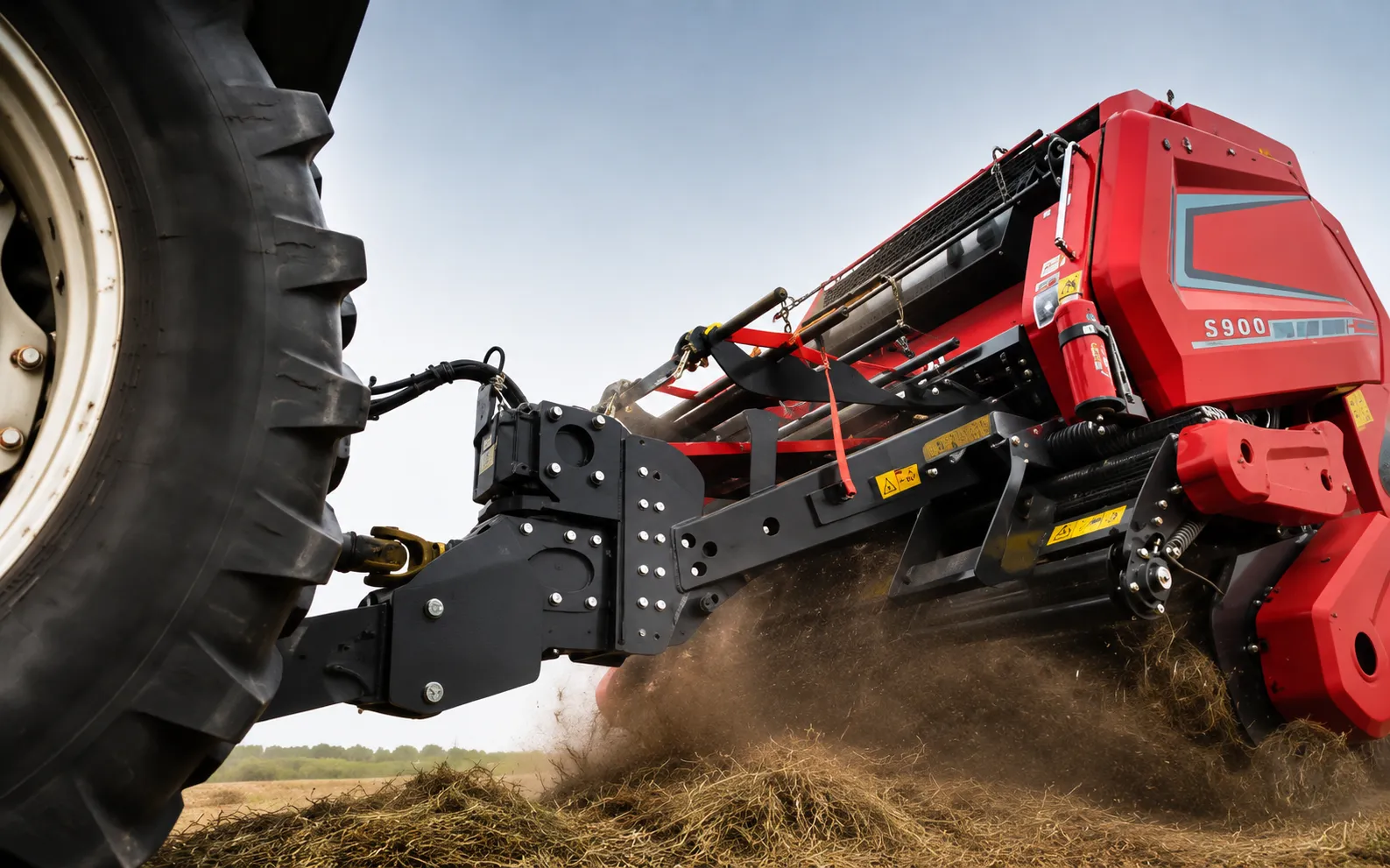
9YG-2.24D (S9000) Round Baler — High-Capacity Field Performance for Serious Hay Operations
Consistent bale density is the single biggest factor separating profitable hay operations from break-even ones. Loose, uneven bales cost money at every step — in net wrap consumption, storage space, spoilage, and trucking inefficiency. The 9YG-2.24D (S9000) was engineered specifically to address that problem, producing uniform 1.3-meter diameter bales across a full range of crop types and moisture conditions, from dry brome grass to second-cut alfalfa and corn stover, without the blockage interruptions that slow belt-type machines in heavy windrows.
At its core is a 2.24-meter wide spring-tooth pickup feeding a patented axial-flow semi-force-feed intake mechanism — a system developed in-house by Brazil Ever-Power Farm Balers Co., Ltd and protected under independent utility patent. Unlike conventional cam-track pickups that rely on cam guides and protective rings to meter crop flow, this design uses a camless, ringless architecture. The result is a freer, higher-volume crop path that reduces power draw, increases throughput per hour, and — critically for US operators running wide windrows — virtually eliminates the mid-field shutdowns caused by intake jams.
Compatible with standard 55–100 kW (74–134 HP) tractors via 720 RPM PTO, the S9000 slots into most existing fleets without powertrain changes. It is available for purchase through Brazil Ever-Power Farm Balers Co., Ltd’s international distribution network, with full spare parts support and technical documentation included. For additional model comparisons across the brand’s full round baler lineup, visit farmbalers.com.
Technical Specifications
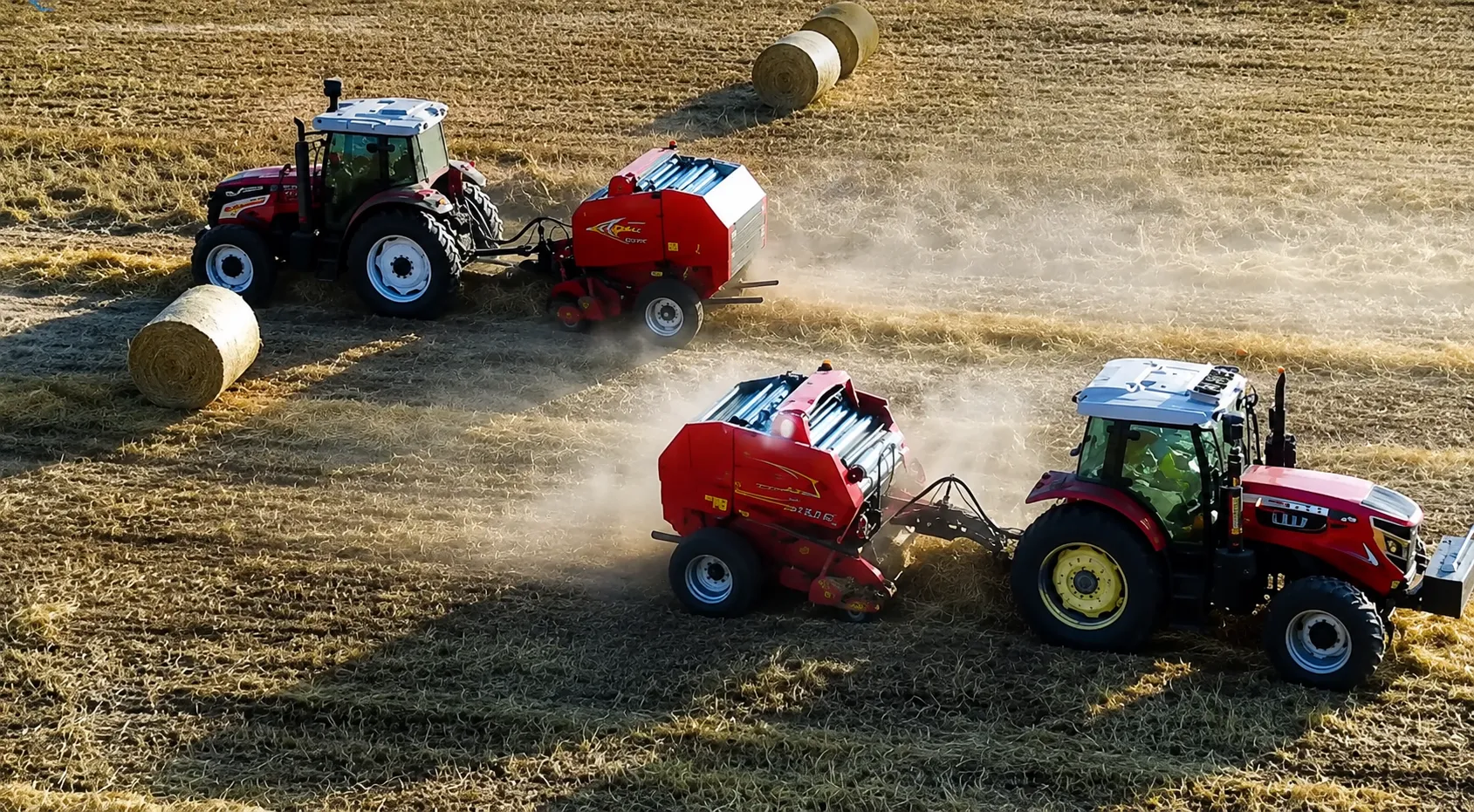
| No. | Parameter | Unit | Spesifikasi |
|---|---|---|---|
| 1 | Model Name | — | 9YG-2.24D Round Baler (S9000) |
| 2 | Hitch Type | — | Towed (Drawbar) |
| 3 | Lebar Pengambilan | mm | 2,240 (88.2 in) |
| 4 | Pickup Type | — | Spring Tooth |
| 5 | Feed System | — | Tooth Bar + Roller (Axial-Flow) |
| 6 | Chamber Type | — | Fixed-Chamber Roller Type |
| 7 | Chamber Width | mm | 1,400 (55.1 in) |
| 8 | Chamber Diameter | mm | Φ1,200 (47.2 in) |
| 9 | Number of Rollers | pcs | 18 |
| 10 | Roller Diameter | mm | Φ222 (8.7 in) |
| 11 | Wrapping System | — | Net Wrap (Standard) |
| 12 | Required Tractor Power | kW / HP | 55–100 kW (74–134 HP) |
| 13 | Machine Weight | kg / lb | 3,922 kg (8,647 lb) |
| 14 | PTO Speed | rpm | 720 |
| 15 | Overall Dimensions (L×W×H) | mm | 4,110 × 3,010 × 2,450 (working) |
| 16 | Bale Density Control | — | Electronic Sensor Control |
| 17 | Bale Size (Dia. × Width) | mm | Φ1,300 × 1,400 |
| 18 | Kepadatan Bal | kg/m³ | 100–200 |
| 19 | Productivity | bales/hr | 40–100 |
| 20 | Track Width | mm | 2,600 |
| 21 | Operating Speed | km/h / mph | 5–35 km/h (3–22 mph) |
| 22 | Net Wrap Specification | — | 2,000 × 1.4 m per bale |
Engineering Highlights
Patented Axial-Flow Semi-Force-Feed Intake
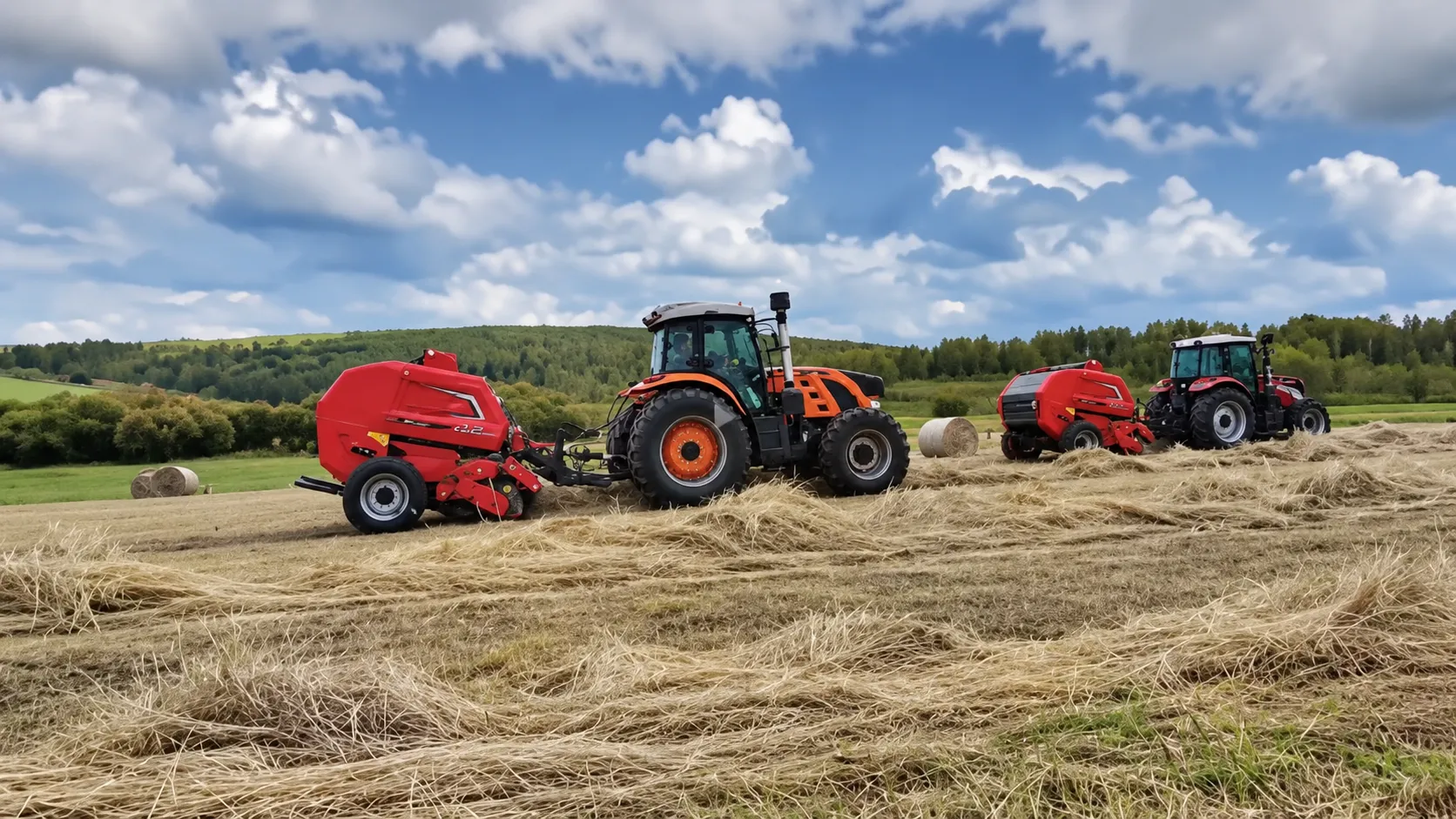
The S9000’s intake mechanism departs from the cam-track-and-guard-ring approach used on most conventional round balers. Instead, a tooth-bar and roller assembly moves crop through an open, cam-free path at higher volumetric flow. The absence of cam guides eliminates the most common single-point failure in high-moisture or heavy-straw conditions — the cam-track jam — while simultaneously reducing the power required to meter material into the chamber. Independent testing on the manufacturer’s production line recorded throughput increases of up to 80% compared to machines using legacy cam-track designs, and field operators consistently report fewer mid-run shutdowns when processing large, dense windrows of wheat straw or corn stover. The mechanism is protected under a utility patent held by Brazil Ever-Power Farm Balers Co., Ltd.
18-Roller Fixed Chamber — Consistent Pressure Across the Full Bale
Fixed-chamber roller designs apply consistent radial pressure throughout bale formation because the roller array geometry does not change as the bale grows — unlike variable-chamber belt systems where belt tension must be continuously managed. The S9000 uses 18 steel rollers at Φ222 mm diameter, arranged to apply even compression from the moment crop enters the chamber. This translates directly to bale-to-bale density consistency, which matters for any operation stacking bales outdoors or loading onto trucks with a bale spear. The electronic sensor system monitors chamber pressure in real time and triggers the net wrap cycle automatically when the target density is reached, removing guesswork from the operator’s workflow.
2.24-Meter Pickup Width — Built for Wide US Windrows
At 88.2 inches, the S9000’s spring-tooth pickup is sized for the wide windrows common in US hay and stover operations where disc mowers or merger units consolidate multiple swaths before baling. Running a narrower pickup across a wide windrow forces the operator to slow field speed to avoid overloading the intake — a trade-off that adds hours to the job. The S9000 processes these consolidated windrows at forward speeds up to 22 mph without compromising bale shape or triggering pickup overflow. Spring-tooth construction handles light, fluffy material like dry grass without wrapping, and cleans out reliably in the heavy, stemmy crops like triticale or sorghum-sudan that clog stiffer pickup systems.
Broad Tractor Compatibility — 74 to 134 HP
The S9000 operates across a 60 HP power band, which covers the majority of mid-size utility and row-crop tractors in US fleet inventories — John Deere 6 Series, Case IH Maxxum, New Holland T6, AGCO Intelli5, Kubota M7, and equivalents. The 720 RPM PTO input matches the standard rear PTO configuration on these platforms without requiring a gearbox adapter. At the lower end of the range (74–85 HP), the machine handles dry hay and straw in normal windrow volumes without straining the drivetrain. At the upper end (110–134 HP), operators can push field speed in heavier crops or run continuous high-volume cycles with consistent bale formation throughout the shift.
In-House R&D — Protected by Independent Utility Patent
The intake design and several bale chamber features on the S9000 series are covered by utility patents developed entirely within Brazil Ever-Power Farm Balers Co., Ltd’s autonomous R&D center. The company holds close to 100 technical patents across its product range and manufactures all components in its own 32,000 m² facility equipped with CNC laser cutting, robotic welding, and electrostatic coating lines. This vertical integration — from design through fabrication — means specification changes and custom adaptations can be handled directly without third-party tooling lead times.

How the S9000 Works — Field Operation Sequence
Power Transfer
The tractor PTO shaft delivers torque at 720 RPM to the baler’s main gearbox. The gearbox splits drive to three circuits simultaneously: pickup drive, feed roller assembly, and bale chamber roller chain. The single PTO input powers all functions — there are no supplementary hydraulic motors required for primary operation, reducing parasitic loss.
Crop Pickup
The 2.24-meter spring-tooth pickup lifts material from the windrow and accelerates it rearward. Tooth spacing and sweep angle are calibrated for the mixed crop types common in US operations — fine enough to capture thin layers of dry brome or fescue without gathering soil, wide enough to handle wet alfalfa or thick corn stover without packing between tines.
Axial-Flow Intake
Crop passes from the pickup into the tooth-bar and roller feed assembly. The axial-flow path draws material into the chamber laterally and evenly across the full 1,400 mm chamber width. Even distribution at the intake stage is what prevents the off-center bale cores that lead to irregular shapes and net wrap waste downstream.
Bale Formation
Inside the fixed chamber, the 18 rollers spin the incoming material into a rotating core. As the core grows, it compresses against the roller array, building density layer by layer. Because the chamber geometry is fixed — not expandable like a variable-chamber belt machine — the pressure profile is consistent from the bale’s first rotation to its last, which is what produces the tight, flat-ended bale shape that stacks cleanly.
Density Sensing & Net Wrap
The electronic pressure sensor monitors chamber load in real time. When the pre-set density threshold is reached, the control system triggers the automatic net wrap sequence — no manual judgment required. Net wrap is applied in the operator-selected number of revolutions, the tailgate opens hydraulically, and the finished bale rolls onto the ground. Total cycle time from wrap trigger to next pickup is typically under 20 seconds.
Bale Discharge
The hydraulic tailgate drops the bale onto the field surface. On flat ground, the bale rolls a short distance and comes to rest on its flat end. On slopes, the operator can hold the tractor stationary until the tailgate closes before moving forward to prevent runaway bales. The gate closes under hydraulic pressure and latches automatically — there is no manual resetting step before the next cycle begins.
Suitable Crops & Operating Conditions
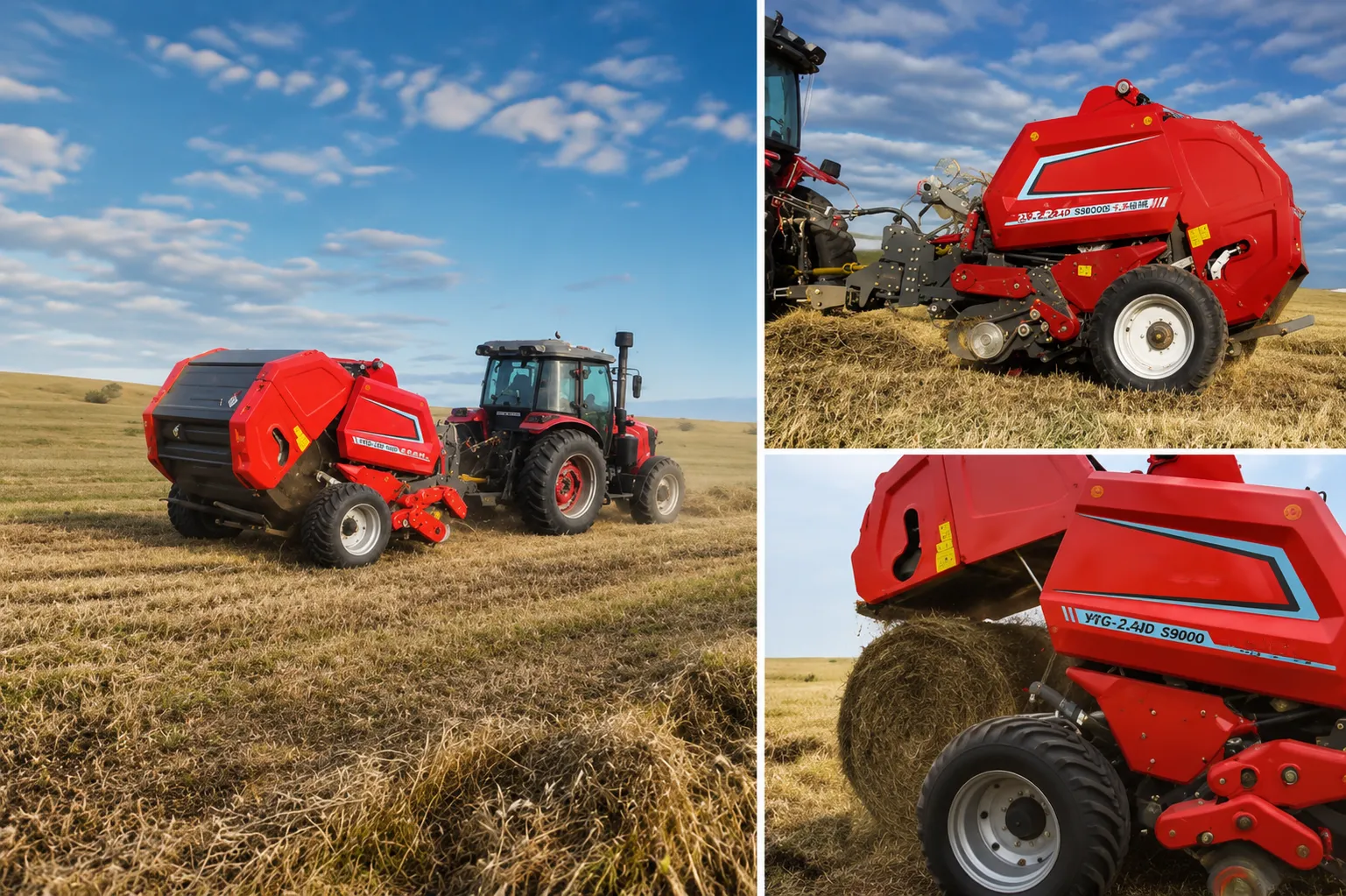
The S9000’s fixed-roller chamber and axial-flow intake make it broadly capable across the crop types and terrain conditions that US operators encounter most frequently.
Dry Hay
Alfalfa, brome, orchard grass, timothy, fescue, bermudagrass, and mixed pasture grasses at moisture levels below 18%. The roller chamber handles dry material without the belt-slip risk that affects variable-chamber machines in low-moisture, low-friction conditions.
Haylage & High-Moisture Hay
Second- and third-cut alfalfa or grass at 30–45% moisture for baleage production. The fixed roller chamber does not experience the belt tracking problems or slippage that variable-chamber machines exhibit in wet material.
Wheat & Small Grain Straw
Post-combine wheat, barley, oat, and rye straw for bedding or biomass. The camless intake handles the high-volume, low-weight material in large combine-header windrows without the pickup overflow common on narrow-front balers.
Corn Stover
Chopped or whole-stalk corn stover for bedding, ethanol feedstock, or soil amendment. The 88.2-inch pickup clears full combine header-width swaths in one pass. Note: for standing-stalk direct pickup, the 9YG-1.25 Hammer Claw model is better suited.
Sorghum-Sudan & Cover Crops
Summer annuals and cover crop mixes including sorghum-sudan, sudangrass, cereal rye, and triticale. Stemmy, tangled material that clogs conventional intakes moves cleanly through the tooth-bar and roller feed path.
Terrain
Flat to moderately rolling terrain. The towed drawbar configuration and 2,600 mm track width provide stable tracking on slopes up to approximately 10–12°. For steeper terrain with more aggressive lateral grade changes, the S9000 Superior’s dual-gearbox adjustable hitch is recommended.
Which S9000 Variant Is Right for Your Operation?
Brazil Ever-Power Farm Balers Co., Ltd produces three variants of the 9YG-2.24D platform. All share the same pickup width, chamber dimensions, roller count, and productivity range. They differ in driveline and hitch engineering to suit different terrain and fleet conditions.
| Feature | S9000 (This Model) | S9000 Classic | S9000 Superior |
|---|---|---|---|
| Driveline | Standard gearbox | Dual crossjoint shaft + torque limiter | Dual-gearbox (±90° lateral swing) |
| Hitch Articulation | Fixed | Fixed | 100° horizontal / 30° lateral tilt |
| Rear Chamber Drive | Standard chain | Dual-side sprocket, heavy-duty gearbox | Dual 20A heavy-duty chain |
| Machine Weight | 3,922 kg | 4,312 kg | 4,570 kg |
| Best Suited For | Flat to gently rolling fields, standard hay & stover | Small fields, frequent turns, demanding driveline loads | Sloped or contoured terrain, heavy-volume continuous runs |
Maintenance Schedule & Pre-Season Checklist
Before Each Daily Use
- Grease all marked lubrication points (typically 12–15 fittings)
- Check PTO shaft guard is intact and rotates freely
- Inspect pickup tines for bent or missing teeth
- Verify net wrap roll is loaded and brake tension set
- Check hydraulic fluid level; inspect hoses for chafing
- Confirm tailgate latch engages cleanly
Every 50 Operating Hours
- Check and adjust main drive chain tension
- Inspect roller bearings for play or heat
- Check pickup cam-track and tine pivot wear
- Inspect belt (if applicable) or roller surface condition
- Confirm electronic sensor cable connections are clean and tight
- Check tire pressure — both baler wheels
Annual / End-of-Season Service
- Drain and refill gearbox oil (check manufacturer spec for grade)
- Replace pickup tines showing wear beyond 20% of original length
- Inspect all roller shaft bearings; replace any with detectable play
- Clean and protect all unpainted steel with rust-inhibiting spray
- Release chain tension for storage; retighten at season start
- Inspect and replace hydraulic hose clamps and any cracked hoses
What Operators Are Saying
Dale M.
Central Kansas — Wheat Straw & Brome Hay, 1,400 acres
We picked up the S9000 to replace a 12-year-old belt baler that kept having tracking problems in heavy wheat straw. The roller chamber has been a clear improvement for us in that specific application — bale shape is consistent and we’re not stopping every few hundred bales to readjust belts. Throughput on a good day in wheat straw is right around 75–80 bales an hour running a 95 HP tractor, which is better than we expected. We did have to replace one pickup tine set at about 4,000 bales, which is normal wear for that volume. Parts came in reasonable time. My one note is that the operator manual could use better diagrams for the net wrap threading sequence — took us a couple tries to get it right the first time. Overall it’s doing the job well for the money.
Ray & Susan H.
Eastern Nebraska — Alfalfa & Grass Mix, 800 acres
Third cutting alfalfa at around 38% moisture is where our old baler always gave us trouble — belts slipping, uneven density, bales that wouldn’t hold shape on the truck. The S9000 has handled that same material without any of those issues. We’re 2,800 bales into our first season on it and haven’t had a single belt issue, for the obvious reason that there aren’t any belts. Bale weight has been very consistent, which our dairy customer specifically commented on — they noticed the difference in feeding management. The 88-inch pickup is also a big deal for us because we’re running a merger and making wide windrows. We can push a higher field speed without overloading it. No complaints so far.
Curtis T.
Southwest Missouri — Fescue Pasture & Corn Stover, 600 acres
I run the S9000 behind a 110 HP tractor and use it on fescue in the spring and corn stover in the fall. The fescue work has been straightforward — consistent bales, no issues, runs clean. Corn stover is more demanding and I did have two intake jams early on, both in conditions where the combine had left a very uneven row. Not blaming the baler for that — I just had to learn to slow down in those spots. After adjusting my approach I haven’t had problems. Density on stover bales is noticeably better than what I was getting from the belt machine I replaced. One thing I’d like to see improved is the tailgate close speed — it’s a little slow compared to machines I’ve used before, which costs some time on tight turnarounds. That’s the main reason I’m at 4 stars instead of 5.
Mike B.
Northwest Iowa — Custom Baling Contractor, 3,000+ acres/season
I run a custom baling operation and bought the S9000 as a second unit to handle overflow work during peak season. I needed something that could keep up without requiring a lot of operator skill to get consistent results. The automatic density sensor and net wrap trigger have been the main thing I rely on — it takes the guesswork out and means I can put a less-experienced operator on it and still get acceptable bale quality. We put around 5,200 bales on it in the first season across alfalfa, grass hay, and some triticale for a client. Maintenance has been pretty standard — routine greasing, one bearing replacement on the pickup at about 3,500 bales. For what we paid relative to domestic brand alternatives, it’s been a solid investment. I’ll likely add a second one.
Greg W.
Northern Montana — Native Grass & Prairie Hay, 1,100 acres
I want to be fair about this review because my situation is specific. We bale native prairie grass that’s very fine-stemmed and low-density — not the typical application this machine is designed for. The S9000 works on it but I’ve found the intake system tends to move the material a bit unevenly in very light, fluffy windrows, which affects bale shape occasionally. In heavier, denser material it’s fine. We also waited about three weeks longer than expected for a replacement pickup tine set, which is a lead time issue we need to plan around next season. The bale density and roller system itself I have no complaints about. I’d recommend this machine strongly for heavier hay types, but if you’re mainly doing fine native grass, be aware it may need some fine-tuning.
Frequently Asked Questions
What is the difference between a fixed-chamber and a variable-chamber round baler?
A fixed-chamber baler — like the S9000 — uses a set of rollers or bars arranged in a fixed ring. Crop builds up inside this ring and compresses against the roller array as the bale grows. Bale size is therefore fixed at the chamber diameter. A variable-chamber baler uses expandable belts that open as the bale grows, allowing bale diameter to vary. Fixed-chamber designs produce more consistent density and are generally more durable with wet or heavy crops. Variable-chamber designs give more flexibility in bale size but require ongoing belt tension management.
My tractor runs at 540 PTO — is the S9000 compatible?
The standard S9000 is rated for 720 RPM PTO input. If your tractor only provides 540 RPM rear PTO, you would need a speed-up gearbox adapter to operate this model at correct speed. If your operation is 540-only, the 9YG-1.25A model — which accepts 540–1000 RPM — is a better fit. Contact our sales team to confirm compatibility with your specific tractor before ordering.
How many bales can the S9000 produce in a full working day?
At 40–100 bales per hour, a 10-hour working day produces 400–1,000 bales depending on crop type, windrow size, field conditions, and operator approach. Most US operators in moderate hay crops report 55–75 bales per hour as a practical sustained rate with a 90–100 HP tractor. In lighter straw with good windrow consistency, 80–90 bales per hour is achievable.
What size are the bales and how much do they weigh?
The S9000 produces bales at Φ1,300 mm (51 in) diameter × 1,400 mm (55 in) wide — a common 4×5-foot round bale format. Bale weight varies significantly by crop type and moisture. Dry grass hay at 10–12% moisture typically produces bales of 700–900 lb. Alfalfa hay at 15% moisture runs 900–1,100 lb. Corn stover or wheat straw bales tend to be lighter: 550–750 lb. High-moisture haylage bales can reach 1,400–1,600 lb.
Is twine wrap available as an option?
Net wrap is standard on the S9000. Twine wrap is not a factory option on this specific model. If you require twine capability, discuss this with our sales team at the time of order — retrofit options may be available depending on your specific use case.
Can I get spare parts in the United States?
Brazil Ever-Power Farm Balers Co., Ltd maintains a spare parts inventory and ships internationally to US customers. Common wear parts — pickup tines, roller bearings, chain links, and net wrap brake pads — are stocked for rapid dispatch. Lead times for in-stock parts to US destinations are typically 10–18 business days via standard freight. Operators are advised to carry one set of pickup tines and a roller bearing kit as on-hand spares during peak season to avoid downtime if a part is needed urgently.
What warranty does the S9000 carry?
The S9000 carries a 12-month manufacturer’s warranty covering defects in materials and workmanship on structural and mechanical components including the gearbox, roller assembly, and hydraulic cylinders. Normal wear parts — pickup tines, chain, bearings, and net wrap components — are covered under separate wear-part terms. Extended service agreements are available; contact our team for details.
How does the S9000 compare to the S9000 Classic and S9000 Superior?
All three variants share the same chamber, pickup, and productivity specs. The S9000 (this model) uses a standard driveline and fixed hitch — it is the most straightforward configuration and suits flat to gently rolling fields. The S9000 Classic adds a dual crossjoint driveshaft with torque limiter and a heavier rear-chamber gearbox for more demanding driveline conditions and fields with frequent direction changes. The S9000 Superior adds a dual-gearbox hitch with 100° horizontal and 30° lateral adjustment, designed for sloped or contoured terrain where a fixed hitch causes the pickup to run off-level.
About Brazil Ever-Power Farm Balers Co., Ltd
Brazil Ever-Power Farm Balers Co., Ltd is a dedicated agricultural machinery manufacturer operating from a purpose-built 32,000 m² production facility. The company holds national high-technology enterprise status, maintains an autonomous regional R&D center, and has accumulated close to 100 utility patents across its round baler and harvesting equipment product lines. Production infrastructure includes CNC laser cutting machines, automated welding lines, and electrostatic coating systems — all operated in-house with no third-party fabrication dependency on core components.
The company holds ISO 9001 quality management certification, Two-Informatization Integration Level A certification, and AAA credit enterprise rating. It has independent import and export authority and exports to markets including Mongolia, Russia, Belarus, and Kazakhstan, in addition to supplying the US market through its international distribution program.
The full round baler product range — including the S9000 series, the 9YG-1.25 lineup, the 9YG-1.0 and 9YG-1.0C models, and the 9YCM-850 baler-wrapper combination — is documented at agriculturalbalers.com.