फार्म बेलर नॉलेज सेंटर · स्ट्रॉ बेलर
This guide explains round baler for straw for farmers, contractors and equipment buyers who want practical answers rather than a list of generic specifications. It covers field setup, tractor matching, crop flow, bale quality, maintenance, ownership and purchasing decisions. Straw is often dry, abrasive and bulky, so pickup feeding, dust management and bale density deserve careful attention. The goal is to help readers connect machine features with the work that has to happen before and after baling, because that full workflow determines whether the equipment actually saves time and money.
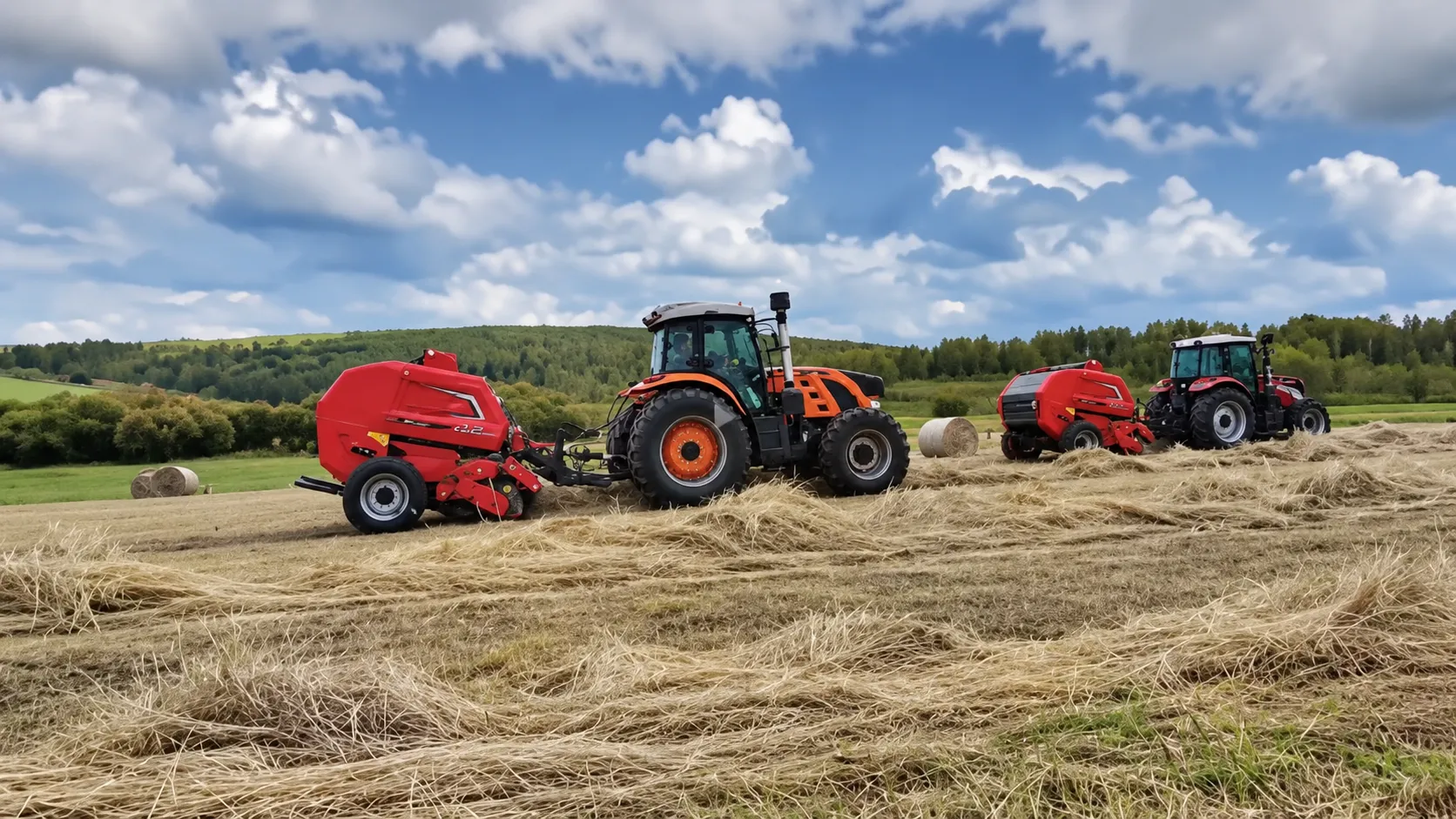
सही चुनाव फसल, ट्रैक्टर की क्षमता, वांछित गांठ का प्रारूप, खेत की स्थिति, श्रम, भंडारण और सेवा सहायता पर निर्भर करता है। उपकरण बदलने, आपूर्तिकर्ताओं की तुलना करने या खरीदारी की योजना बनाने से पहले नीचे दिए गए अनुभागों को एक व्यावहारिक चेकलिस्ट के रूप में उपयोग करें।.
- Understanding round baler for straw
- वास्तविक खेतों में यह विषय क्यों महत्वपूर्ण है?
- मशीन और ट्रैक्टर का मिलान
- फसल की तैयारी और खेत की व्यवस्था
- गांठों की गुणवत्ता और प्रबंधन
- उत्पादकता और परिचालन दक्षता
- रखरखाव और सेवा योजना
- बचने योग्य सामान्य गलतियाँ
- खरीद और स्वामित्व संबंधी विचार
- व्यावहारिक निर्णय चेकलिस्ट
Understanding round baler for straw
Field efficiency with round baler for straw is built through consistency. Even windrows, correct PTO speed, appropriate travel speed and routine observation of bale shape prevent many common problems. Straw is often dry, abrasive and bulky, so pickup feeding, dust management and bale density deserve careful attention. Operators who make small adjustments early usually avoid the larger interruptions that appear when crop flow or machine timing is allowed to drift. The most dependable approach is to evaluate the machine as part of a complete forage system: mowing and conditioning influence drying, raking shapes the windrow, the baler determines density and shape, and handling equipment determines how efficiently the bale reaches storage or feeding. When these steps are planned together, the farm can reduce crop losses, improve bale uniformity and make better use of labor during narrow weather windows. It also becomes easier to communicate with a supplier because the buyer can describe actual requirements instead of asking for a generic recommendation.
For farmers researching round baler for straw, the useful starting point is not a single specification but the relationship between crop conditions, tractor capability, labor, bale handling and the timing pressure of harvest. Straw is often dry, abrasive and bulky, so pickup feeding, dust management and bale density deserve careful attention. A machine that looks ideal on paper can become frustrating if it does not fit the actual field workflow, while a correctly matched machine can deliver consistent results for many seasons. The most dependable approach is to evaluate the machine as part of a complete forage system: mowing and conditioning influence drying, raking shapes the windrow, the baler determines density and shape, and handling equipment determines how efficiently the bale reaches storage or feeding. When these steps are planned together, the farm can reduce crop losses, improve bale uniformity and make better use of labor during narrow weather windows. It also becomes easier to communicate with a supplier because the buyer can describe actual requirements instead of asking for a generic recommendation.
The practical side of round baler for straw becomes clearer when the farm maps the entire process from windrow preparation to final storage. Crop volume, moisture, terrain and operator experience all change how the equipment behaves. Straw is often dry, abrasive and bulky, so pickup feeding, dust management and bale density deserve careful attention. This is why experienced buyers compare real operating conditions instead of relying only on maximum advertised capacity. The most dependable approach is to evaluate the machine as part of a complete forage system: mowing and conditioning influence drying, raking shapes the windrow, the baler determines density and shape, and handling equipment determines how efficiently the bale reaches storage or feeding. When these steps are planned together, the farm can reduce crop losses, improve bale uniformity and make better use of labor during narrow weather windows. It also becomes easier to communicate with a supplier because the buyer can describe actual requirements instead of asking for a generic recommendation.
A reliable plan for round baler for straw should include ownership questions as well as performance questions. Buyers need to think about adjustment, lubrication, spare parts, service access, twine or wrapping consumables, transport and the way finished bales are fed or sold. Straw is often dry, abrasive and bulky, so pickup feeding, dust management and bale density deserve careful attention. These details often decide whether the machine remains economical after the first harvest season. The most dependable approach is to evaluate the machine as part of a complete forage system: mowing and conditioning influence drying, raking shapes the windrow, the baler determines density and shape, and handling equipment determines how efficiently the bale reaches storage or feeding. When these steps are planned together, the farm can reduce crop losses, improve bale uniformity and make better use of labor during narrow weather windows. It also becomes easier to communicate with a supplier because the buyer can describe actual requirements instead of asking for a generic recommendation.
वास्तविक खेतों में यह विषय क्यों महत्वपूर्ण है?
For farmers researching round baler for straw, the useful starting point is not a single specification but the relationship between crop conditions, tractor capability, labor, bale handling and the timing pressure of harvest. Straw is often dry, abrasive and bulky, so pickup feeding, dust management and bale density deserve careful attention. A machine that looks ideal on paper can become frustrating if it does not fit the actual field workflow, while a correctly matched machine can deliver consistent results for many seasons. The most dependable approach is to evaluate the machine as part of a complete forage system: mowing and conditioning influence drying, raking shapes the windrow, the baler determines density and shape, and handling equipment determines how efficiently the bale reaches storage or feeding. When these steps are planned together, the farm can reduce crop losses, improve bale uniformity and make better use of labor during narrow weather windows. It also becomes easier to communicate with a supplier because the buyer can describe actual requirements instead of asking for a generic recommendation.
The practical side of round baler for straw becomes clearer when the farm maps the entire process from windrow preparation to final storage. Crop volume, moisture, terrain and operator experience all change how the equipment behaves. Straw is often dry, abrasive and bulky, so pickup feeding, dust management and bale density deserve careful attention. This is why experienced buyers compare real operating conditions instead of relying only on maximum advertised capacity. The most dependable approach is to evaluate the machine as part of a complete forage system: mowing and conditioning influence drying, raking shapes the windrow, the baler determines density and shape, and handling equipment determines how efficiently the bale reaches storage or feeding. When these steps are planned together, the farm can reduce crop losses, improve bale uniformity and make better use of labor during narrow weather windows. It also becomes easier to communicate with a supplier because the buyer can describe actual requirements instead of asking for a generic recommendation.
A reliable plan for round baler for straw should include ownership questions as well as performance questions. Buyers need to think about adjustment, lubrication, spare parts, service access, twine or wrapping consumables, transport and the way finished bales are fed or sold. Straw is often dry, abrasive and bulky, so pickup feeding, dust management and bale density deserve careful attention. These details often decide whether the machine remains economical after the first harvest season. The most dependable approach is to evaluate the machine as part of a complete forage system: mowing and conditioning influence drying, raking shapes the windrow, the baler determines density and shape, and handling equipment determines how efficiently the bale reaches storage or feeding. When these steps are planned together, the farm can reduce crop losses, improve bale uniformity and make better use of labor during narrow weather windows. It also becomes easier to communicate with a supplier because the buyer can describe actual requirements instead of asking for a generic recommendation.
Field efficiency with round baler for straw is built through consistency. Even windrows, correct PTO speed, appropriate travel speed and routine observation of bale shape prevent many common problems. Straw is often dry, abrasive and bulky, so pickup feeding, dust management and bale density deserve careful attention. Operators who make small adjustments early usually avoid the larger interruptions that appear when crop flow or machine timing is allowed to drift. The most dependable approach is to evaluate the machine as part of a complete forage system: mowing and conditioning influence drying, raking shapes the windrow, the baler determines density and shape, and handling equipment determines how efficiently the bale reaches storage or feeding. When these steps are planned together, the farm can reduce crop losses, improve bale uniformity and make better use of labor during narrow weather windows. It also becomes easier to communicate with a supplier because the buyer can describe actual requirements instead of asking for a generic recommendation.

मशीन और ट्रैक्टर का मिलान
The practical side of round baler for straw becomes clearer when the farm maps the entire process from windrow preparation to final storage. Crop volume, moisture, terrain and operator experience all change how the equipment behaves. Straw is often dry, abrasive and bulky, so pickup feeding, dust management and bale density deserve careful attention. This is why experienced buyers compare real operating conditions instead of relying only on maximum advertised capacity. The most dependable approach is to evaluate the machine as part of a complete forage system: mowing and conditioning influence drying, raking shapes the windrow, the baler determines density and shape, and handling equipment determines how efficiently the bale reaches storage or feeding. When these steps are planned together, the farm can reduce crop losses, improve bale uniformity and make better use of labor during narrow weather windows. It also becomes easier to communicate with a supplier because the buyer can describe actual requirements instead of asking for a generic recommendation.
A reliable plan for round baler for straw should include ownership questions as well as performance questions. Buyers need to think about adjustment, lubrication, spare parts, service access, twine or wrapping consumables, transport and the way finished bales are fed or sold. Straw is often dry, abrasive and bulky, so pickup feeding, dust management and bale density deserve careful attention. These details often decide whether the machine remains economical after the first harvest season. The most dependable approach is to evaluate the machine as part of a complete forage system: mowing and conditioning influence drying, raking shapes the windrow, the baler determines density and shape, and handling equipment determines how efficiently the bale reaches storage or feeding. When these steps are planned together, the farm can reduce crop losses, improve bale uniformity and make better use of labor during narrow weather windows. It also becomes easier to communicate with a supplier because the buyer can describe actual requirements instead of asking for a generic recommendation.
Field efficiency with round baler for straw is built through consistency. Even windrows, correct PTO speed, appropriate travel speed and routine observation of bale shape prevent many common problems. Straw is often dry, abrasive and bulky, so pickup feeding, dust management and bale density deserve careful attention. Operators who make small adjustments early usually avoid the larger interruptions that appear when crop flow or machine timing is allowed to drift. The most dependable approach is to evaluate the machine as part of a complete forage system: mowing and conditioning influence drying, raking shapes the windrow, the baler determines density and shape, and handling equipment determines how efficiently the bale reaches storage or feeding. When these steps are planned together, the farm can reduce crop losses, improve bale uniformity and make better use of labor during narrow weather windows. It also becomes easier to communicate with a supplier because the buyer can describe actual requirements instead of asking for a generic recommendation.
For farmers researching round baler for straw, the useful starting point is not a single specification but the relationship between crop conditions, tractor capability, labor, bale handling and the timing pressure of harvest. Straw is often dry, abrasive and bulky, so pickup feeding, dust management and bale density deserve careful attention. A machine that looks ideal on paper can become frustrating if it does not fit the actual field workflow, while a correctly matched machine can deliver consistent results for many seasons. The most dependable approach is to evaluate the machine as part of a complete forage system: mowing and conditioning influence drying, raking shapes the windrow, the baler determines density and shape, and handling equipment determines how efficiently the bale reaches storage or feeding. When these steps are planned together, the farm can reduce crop losses, improve bale uniformity and make better use of labor during narrow weather windows. It also becomes easier to communicate with a supplier because the buyer can describe actual requirements instead of asking for a generic recommendation.
फसल की तैयारी और खेत की व्यवस्था
A reliable plan for round baler for straw should include ownership questions as well as performance questions. Buyers need to think about adjustment, lubrication, spare parts, service access, twine or wrapping consumables, transport and the way finished bales are fed or sold. Straw is often dry, abrasive and bulky, so pickup feeding, dust management and bale density deserve careful attention. These details often decide whether the machine remains economical after the first harvest season. The most dependable approach is to evaluate the machine as part of a complete forage system: mowing and conditioning influence drying, raking shapes the windrow, the baler determines density and shape, and handling equipment determines how efficiently the bale reaches storage or feeding. When these steps are planned together, the farm can reduce crop losses, improve bale uniformity and make better use of labor during narrow weather windows. It also becomes easier to communicate with a supplier because the buyer can describe actual requirements instead of asking for a generic recommendation.
Field efficiency with round baler for straw is built through consistency. Even windrows, correct PTO speed, appropriate travel speed and routine observation of bale shape prevent many common problems. Straw is often dry, abrasive and bulky, so pickup feeding, dust management and bale density deserve careful attention. Operators who make small adjustments early usually avoid the larger interruptions that appear when crop flow or machine timing is allowed to drift. The most dependable approach is to evaluate the machine as part of a complete forage system: mowing and conditioning influence drying, raking shapes the windrow, the baler determines density and shape, and handling equipment determines how efficiently the bale reaches storage or feeding. When these steps are planned together, the farm can reduce crop losses, improve bale uniformity and make better use of labor during narrow weather windows. It also becomes easier to communicate with a supplier because the buyer can describe actual requirements instead of asking for a generic recommendation.
For farmers researching round baler for straw, the useful starting point is not a single specification but the relationship between crop conditions, tractor capability, labor, bale handling and the timing pressure of harvest. Straw is often dry, abrasive and bulky, so pickup feeding, dust management and bale density deserve careful attention. A machine that looks ideal on paper can become frustrating if it does not fit the actual field workflow, while a correctly matched machine can deliver consistent results for many seasons. The most dependable approach is to evaluate the machine as part of a complete forage system: mowing and conditioning influence drying, raking shapes the windrow, the baler determines density and shape, and handling equipment determines how efficiently the bale reaches storage or feeding. When these steps are planned together, the farm can reduce crop losses, improve bale uniformity and make better use of labor during narrow weather windows. It also becomes easier to communicate with a supplier because the buyer can describe actual requirements instead of asking for a generic recommendation.
The practical side of round baler for straw becomes clearer when the farm maps the entire process from windrow preparation to final storage. Crop volume, moisture, terrain and operator experience all change how the equipment behaves. Straw is often dry, abrasive and bulky, so pickup feeding, dust management and bale density deserve careful attention. This is why experienced buyers compare real operating conditions instead of relying only on maximum advertised capacity. The most dependable approach is to evaluate the machine as part of a complete forage system: mowing and conditioning influence drying, raking shapes the windrow, the baler determines density and shape, and handling equipment determines how efficiently the bale reaches storage or feeding. When these steps are planned together, the farm can reduce crop losses, improve bale uniformity and make better use of labor during narrow weather windows. It also becomes easier to communicate with a supplier because the buyer can describe actual requirements instead of asking for a generic recommendation.

गांठों की गुणवत्ता और प्रबंधन
Field efficiency with round baler for straw is built through consistency. Even windrows, correct PTO speed, appropriate travel speed and routine observation of bale shape prevent many common problems. Straw is often dry, abrasive and bulky, so pickup feeding, dust management and bale density deserve careful attention. Operators who make small adjustments early usually avoid the larger interruptions that appear when crop flow or machine timing is allowed to drift. The most dependable approach is to evaluate the machine as part of a complete forage system: mowing and conditioning influence drying, raking shapes the windrow, the baler determines density and shape, and handling equipment determines how efficiently the bale reaches storage or feeding. When these steps are planned together, the farm can reduce crop losses, improve bale uniformity and make better use of labor during narrow weather windows. It also becomes easier to communicate with a supplier because the buyer can describe actual requirements instead of asking for a generic recommendation.
For farmers researching round baler for straw, the useful starting point is not a single specification but the relationship between crop conditions, tractor capability, labor, bale handling and the timing pressure of harvest. Straw is often dry, abrasive and bulky, so pickup feeding, dust management and bale density deserve careful attention. A machine that looks ideal on paper can become frustrating if it does not fit the actual field workflow, while a correctly matched machine can deliver consistent results for many seasons. The most dependable approach is to evaluate the machine as part of a complete forage system: mowing and conditioning influence drying, raking shapes the windrow, the baler determines density and shape, and handling equipment determines how efficiently the bale reaches storage or feeding. When these steps are planned together, the farm can reduce crop losses, improve bale uniformity and make better use of labor during narrow weather windows. It also becomes easier to communicate with a supplier because the buyer can describe actual requirements instead of asking for a generic recommendation.
The practical side of round baler for straw becomes clearer when the farm maps the entire process from windrow preparation to final storage. Crop volume, moisture, terrain and operator experience all change how the equipment behaves. Straw is often dry, abrasive and bulky, so pickup feeding, dust management and bale density deserve careful attention. This is why experienced buyers compare real operating conditions instead of relying only on maximum advertised capacity. The most dependable approach is to evaluate the machine as part of a complete forage system: mowing and conditioning influence drying, raking shapes the windrow, the baler determines density and shape, and handling equipment determines how efficiently the bale reaches storage or feeding. When these steps are planned together, the farm can reduce crop losses, improve bale uniformity and make better use of labor during narrow weather windows. It also becomes easier to communicate with a supplier because the buyer can describe actual requirements instead of asking for a generic recommendation.
A reliable plan for round baler for straw should include ownership questions as well as performance questions. Buyers need to think about adjustment, lubrication, spare parts, service access, twine or wrapping consumables, transport and the way finished bales are fed or sold. Straw is often dry, abrasive and bulky, so pickup feeding, dust management and bale density deserve careful attention. These details often decide whether the machine remains economical after the first harvest season. The most dependable approach is to evaluate the machine as part of a complete forage system: mowing and conditioning influence drying, raking shapes the windrow, the baler determines density and shape, and handling equipment determines how efficiently the bale reaches storage or feeding. When these steps are planned together, the farm can reduce crop losses, improve bale uniformity and make better use of labor during narrow weather windows. It also becomes easier to communicate with a supplier because the buyer can describe actual requirements instead of asking for a generic recommendation.
उत्पादकता और परिचालन दक्षता
For farmers researching round baler for straw, the useful starting point is not a single specification but the relationship between crop conditions, tractor capability, labor, bale handling and the timing pressure of harvest. Straw is often dry, abrasive and bulky, so pickup feeding, dust management and bale density deserve careful attention. A machine that looks ideal on paper can become frustrating if it does not fit the actual field workflow, while a correctly matched machine can deliver consistent results for many seasons. The most dependable approach is to evaluate the machine as part of a complete forage system: mowing and conditioning influence drying, raking shapes the windrow, the baler determines density and shape, and handling equipment determines how efficiently the bale reaches storage or feeding. When these steps are planned together, the farm can reduce crop losses, improve bale uniformity and make better use of labor during narrow weather windows. It also becomes easier to communicate with a supplier because the buyer can describe actual requirements instead of asking for a generic recommendation.
The practical side of round baler for straw becomes clearer when the farm maps the entire process from windrow preparation to final storage. Crop volume, moisture, terrain and operator experience all change how the equipment behaves. Straw is often dry, abrasive and bulky, so pickup feeding, dust management and bale density deserve careful attention. This is why experienced buyers compare real operating conditions instead of relying only on maximum advertised capacity. The most dependable approach is to evaluate the machine as part of a complete forage system: mowing and conditioning influence drying, raking shapes the windrow, the baler determines density and shape, and handling equipment determines how efficiently the bale reaches storage or feeding. When these steps are planned together, the farm can reduce crop losses, improve bale uniformity and make better use of labor during narrow weather windows. It also becomes easier to communicate with a supplier because the buyer can describe actual requirements instead of asking for a generic recommendation.
A reliable plan for round baler for straw should include ownership questions as well as performance questions. Buyers need to think about adjustment, lubrication, spare parts, service access, twine or wrapping consumables, transport and the way finished bales are fed or sold. Straw is often dry, abrasive and bulky, so pickup feeding, dust management and bale density deserve careful attention. These details often decide whether the machine remains economical after the first harvest season. The most dependable approach is to evaluate the machine as part of a complete forage system: mowing and conditioning influence drying, raking shapes the windrow, the baler determines density and shape, and handling equipment determines how efficiently the bale reaches storage or feeding. When these steps are planned together, the farm can reduce crop losses, improve bale uniformity and make better use of labor during narrow weather windows. It also becomes easier to communicate with a supplier because the buyer can describe actual requirements instead of asking for a generic recommendation.
Field efficiency with round baler for straw is built through consistency. Even windrows, correct PTO speed, appropriate travel speed and routine observation of bale shape prevent many common problems. Straw is often dry, abrasive and bulky, so pickup feeding, dust management and bale density deserve careful attention. Operators who make small adjustments early usually avoid the larger interruptions that appear when crop flow or machine timing is allowed to drift. The most dependable approach is to evaluate the machine as part of a complete forage system: mowing and conditioning influence drying, raking shapes the windrow, the baler determines density and shape, and handling equipment determines how efficiently the bale reaches storage or feeding. When these steps are planned together, the farm can reduce crop losses, improve bale uniformity and make better use of labor during narrow weather windows. It also becomes easier to communicate with a supplier because the buyer can describe actual requirements instead of asking for a generic recommendation.
रखरखाव और सेवा योजना
The practical side of round baler for straw becomes clearer when the farm maps the entire process from windrow preparation to final storage. Crop volume, moisture, terrain and operator experience all change how the equipment behaves. Straw is often dry, abrasive and bulky, so pickup feeding, dust management and bale density deserve careful attention. This is why experienced buyers compare real operating conditions instead of relying only on maximum advertised capacity. The most dependable approach is to evaluate the machine as part of a complete forage system: mowing and conditioning influence drying, raking shapes the windrow, the baler determines density and shape, and handling equipment determines how efficiently the bale reaches storage or feeding. When these steps are planned together, the farm can reduce crop losses, improve bale uniformity and make better use of labor during narrow weather windows. It also becomes easier to communicate with a supplier because the buyer can describe actual requirements instead of asking for a generic recommendation.
A reliable plan for round baler for straw should include ownership questions as well as performance questions. Buyers need to think about adjustment, lubrication, spare parts, service access, twine or wrapping consumables, transport and the way finished bales are fed or sold. Straw is often dry, abrasive and bulky, so pickup feeding, dust management and bale density deserve careful attention. These details often decide whether the machine remains economical after the first harvest season. The most dependable approach is to evaluate the machine as part of a complete forage system: mowing and conditioning influence drying, raking shapes the windrow, the baler determines density and shape, and handling equipment determines how efficiently the bale reaches storage or feeding. When these steps are planned together, the farm can reduce crop losses, improve bale uniformity and make better use of labor during narrow weather windows. It also becomes easier to communicate with a supplier because the buyer can describe actual requirements instead of asking for a generic recommendation.
Field efficiency with round baler for straw is built through consistency. Even windrows, correct PTO speed, appropriate travel speed and routine observation of bale shape prevent many common problems. Straw is often dry, abrasive and bulky, so pickup feeding, dust management and bale density deserve careful attention. Operators who make small adjustments early usually avoid the larger interruptions that appear when crop flow or machine timing is allowed to drift. The most dependable approach is to evaluate the machine as part of a complete forage system: mowing and conditioning influence drying, raking shapes the windrow, the baler determines density and shape, and handling equipment determines how efficiently the bale reaches storage or feeding. When these steps are planned together, the farm can reduce crop losses, improve bale uniformity and make better use of labor during narrow weather windows. It also becomes easier to communicate with a supplier because the buyer can describe actual requirements instead of asking for a generic recommendation.
For farmers researching round baler for straw, the useful starting point is not a single specification but the relationship between crop conditions, tractor capability, labor, bale handling and the timing pressure of harvest. Straw is often dry, abrasive and bulky, so pickup feeding, dust management and bale density deserve careful attention. A machine that looks ideal on paper can become frustrating if it does not fit the actual field workflow, while a correctly matched machine can deliver consistent results for many seasons. The most dependable approach is to evaluate the machine as part of a complete forage system: mowing and conditioning influence drying, raking shapes the windrow, the baler determines density and shape, and handling equipment determines how efficiently the bale reaches storage or feeding. When these steps are planned together, the farm can reduce crop losses, improve bale uniformity and make better use of labor during narrow weather windows. It also becomes easier to communicate with a supplier because the buyer can describe actual requirements instead of asking for a generic recommendation.
बचने योग्य सामान्य गलतियाँ
A reliable plan for round baler for straw should include ownership questions as well as performance questions. Buyers need to think about adjustment, lubrication, spare parts, service access, twine or wrapping consumables, transport and the way finished bales are fed or sold. Straw is often dry, abrasive and bulky, so pickup feeding, dust management and bale density deserve careful attention. These details often decide whether the machine remains economical after the first harvest season. The most dependable approach is to evaluate the machine as part of a complete forage system: mowing and conditioning influence drying, raking shapes the windrow, the baler determines density and shape, and handling equipment determines how efficiently the bale reaches storage or feeding. When these steps are planned together, the farm can reduce crop losses, improve bale uniformity and make better use of labor during narrow weather windows. It also becomes easier to communicate with a supplier because the buyer can describe actual requirements instead of asking for a generic recommendation.
Field efficiency with round baler for straw is built through consistency. Even windrows, correct PTO speed, appropriate travel speed and routine observation of bale shape prevent many common problems. Straw is often dry, abrasive and bulky, so pickup feeding, dust management and bale density deserve careful attention. Operators who make small adjustments early usually avoid the larger interruptions that appear when crop flow or machine timing is allowed to drift. The most dependable approach is to evaluate the machine as part of a complete forage system: mowing and conditioning influence drying, raking shapes the windrow, the baler determines density and shape, and handling equipment determines how efficiently the bale reaches storage or feeding. When these steps are planned together, the farm can reduce crop losses, improve bale uniformity and make better use of labor during narrow weather windows. It also becomes easier to communicate with a supplier because the buyer can describe actual requirements instead of asking for a generic recommendation.
For farmers researching round baler for straw, the useful starting point is not a single specification but the relationship between crop conditions, tractor capability, labor, bale handling and the timing pressure of harvest. Straw is often dry, abrasive and bulky, so pickup feeding, dust management and bale density deserve careful attention. A machine that looks ideal on paper can become frustrating if it does not fit the actual field workflow, while a correctly matched machine can deliver consistent results for many seasons. The most dependable approach is to evaluate the machine as part of a complete forage system: mowing and conditioning influence drying, raking shapes the windrow, the baler determines density and shape, and handling equipment determines how efficiently the bale reaches storage or feeding. When these steps are planned together, the farm can reduce crop losses, improve bale uniformity and make better use of labor during narrow weather windows. It also becomes easier to communicate with a supplier because the buyer can describe actual requirements instead of asking for a generic recommendation.
The practical side of round baler for straw becomes clearer when the farm maps the entire process from windrow preparation to final storage. Crop volume, moisture, terrain and operator experience all change how the equipment behaves. Straw is often dry, abrasive and bulky, so pickup feeding, dust management and bale density deserve careful attention. This is why experienced buyers compare real operating conditions instead of relying only on maximum advertised capacity. The most dependable approach is to evaluate the machine as part of a complete forage system: mowing and conditioning influence drying, raking shapes the windrow, the baler determines density and shape, and handling equipment determines how efficiently the bale reaches storage or feeding. When these steps are planned together, the farm can reduce crop losses, improve bale uniformity and make better use of labor during narrow weather windows. It also becomes easier to communicate with a supplier because the buyer can describe actual requirements instead of asking for a generic recommendation.
खरीद और स्वामित्व संबंधी विचार
Field efficiency with round baler for straw is built through consistency. Even windrows, correct PTO speed, appropriate travel speed and routine observation of bale shape prevent many common problems. Straw is often dry, abrasive and bulky, so pickup feeding, dust management and bale density deserve careful attention. Operators who make small adjustments early usually avoid the larger interruptions that appear when crop flow or machine timing is allowed to drift. The most dependable approach is to evaluate the machine as part of a complete forage system: mowing and conditioning influence drying, raking shapes the windrow, the baler determines density and shape, and handling equipment determines how efficiently the bale reaches storage or feeding. When these steps are planned together, the farm can reduce crop losses, improve bale uniformity and make better use of labor during narrow weather windows. It also becomes easier to communicate with a supplier because the buyer can describe actual requirements instead of asking for a generic recommendation.
For farmers researching round baler for straw, the useful starting point is not a single specification but the relationship between crop conditions, tractor capability, labor, bale handling and the timing pressure of harvest. Straw is often dry, abrasive and bulky, so pickup feeding, dust management and bale density deserve careful attention. A machine that looks ideal on paper can become frustrating if it does not fit the actual field workflow, while a correctly matched machine can deliver consistent results for many seasons. The most dependable approach is to evaluate the machine as part of a complete forage system: mowing and conditioning influence drying, raking shapes the windrow, the baler determines density and shape, and handling equipment determines how efficiently the bale reaches storage or feeding. When these steps are planned together, the farm can reduce crop losses, improve bale uniformity and make better use of labor during narrow weather windows. It also becomes easier to communicate with a supplier because the buyer can describe actual requirements instead of asking for a generic recommendation.
The practical side of round baler for straw becomes clearer when the farm maps the entire process from windrow preparation to final storage. Crop volume, moisture, terrain and operator experience all change how the equipment behaves. Straw is often dry, abrasive and bulky, so pickup feeding, dust management and bale density deserve careful attention. This is why experienced buyers compare real operating conditions instead of relying only on maximum advertised capacity. The most dependable approach is to evaluate the machine as part of a complete forage system: mowing and conditioning influence drying, raking shapes the windrow, the baler determines density and shape, and handling equipment determines how efficiently the bale reaches storage or feeding. When these steps are planned together, the farm can reduce crop losses, improve bale uniformity and make better use of labor during narrow weather windows. It also becomes easier to communicate with a supplier because the buyer can describe actual requirements instead of asking for a generic recommendation.
A reliable plan for round baler for straw should include ownership questions as well as performance questions. Buyers need to think about adjustment, lubrication, spare parts, service access, twine or wrapping consumables, transport and the way finished bales are fed or sold. Straw is often dry, abrasive and bulky, so pickup feeding, dust management and bale density deserve careful attention. These details often decide whether the machine remains economical after the first harvest season. The most dependable approach is to evaluate the machine as part of a complete forage system: mowing and conditioning influence drying, raking shapes the windrow, the baler determines density and shape, and handling equipment determines how efficiently the bale reaches storage or feeding. When these steps are planned together, the farm can reduce crop losses, improve bale uniformity and make better use of labor during narrow weather windows. It also becomes easier to communicate with a supplier because the buyer can describe actual requirements instead of asking for a generic recommendation.
व्यावहारिक निर्णय चेकलिस्ट
For farmers researching round baler for straw, the useful starting point is not a single specification but the relationship between crop conditions, tractor capability, labor, bale handling and the timing pressure of harvest. Straw is often dry, abrasive and bulky, so pickup feeding, dust management and bale density deserve careful attention. A machine that looks ideal on paper can become frustrating if it does not fit the actual field workflow, while a correctly matched machine can deliver consistent results for many seasons. The most dependable approach is to evaluate the machine as part of a complete forage system: mowing and conditioning influence drying, raking shapes the windrow, the baler determines density and shape, and handling equipment determines how efficiently the bale reaches storage or feeding. When these steps are planned together, the farm can reduce crop losses, improve bale uniformity and make better use of labor during narrow weather windows. It also becomes easier to communicate with a supplier because the buyer can describe actual requirements instead of asking for a generic recommendation.
The practical side of round baler for straw becomes clearer when the farm maps the entire process from windrow preparation to final storage. Crop volume, moisture, terrain and operator experience all change how the equipment behaves. Straw is often dry, abrasive and bulky, so pickup feeding, dust management and bale density deserve careful attention. This is why experienced buyers compare real operating conditions instead of relying only on maximum advertised capacity. The most dependable approach is to evaluate the machine as part of a complete forage system: mowing and conditioning influence drying, raking shapes the windrow, the baler determines density and shape, and handling equipment determines how efficiently the bale reaches storage or feeding. When these steps are planned together, the farm can reduce crop losses, improve bale uniformity and make better use of labor during narrow weather windows. It also becomes easier to communicate with a supplier because the buyer can describe actual requirements instead of asking for a generic recommendation.
A reliable plan for round baler for straw should include ownership questions as well as performance questions. Buyers need to think about adjustment, lubrication, spare parts, service access, twine or wrapping consumables, transport and the way finished bales are fed or sold. Straw is often dry, abrasive and bulky, so pickup feeding, dust management and bale density deserve careful attention. These details often decide whether the machine remains economical after the first harvest season. The most dependable approach is to evaluate the machine as part of a complete forage system: mowing and conditioning influence drying, raking shapes the windrow, the baler determines density and shape, and handling equipment determines how efficiently the bale reaches storage or feeding. When these steps are planned together, the farm can reduce crop losses, improve bale uniformity and make better use of labor during narrow weather windows. It also becomes easier to communicate with a supplier because the buyer can describe actual requirements instead of asking for a generic recommendation.
Field efficiency with round baler for straw is built through consistency. Even windrows, correct PTO speed, appropriate travel speed and routine observation of bale shape prevent many common problems. Straw is often dry, abrasive and bulky, so pickup feeding, dust management and bale density deserve careful attention. Operators who make small adjustments early usually avoid the larger interruptions that appear when crop flow or machine timing is allowed to drift. The most dependable approach is to evaluate the machine as part of a complete forage system: mowing and conditioning influence drying, raking shapes the windrow, the baler determines density and shape, and handling equipment determines how efficiently the bale reaches storage or feeding. When these steps are planned together, the farm can reduce crop losses, improve bale uniformity and make better use of labor during narrow weather windows. It also becomes easier to communicate with a supplier because the buyer can describe actual requirements instead of asking for a generic recommendation.
| निर्णय क्षेत्र | क्या जांचना है | यह क्यों मायने रखती है |
|---|---|---|
| ट्रैक्टर मैच | पीटीओ हॉर्सपावर, स्थिरता, हिच और भूभाग | अधिक भोजन से बचाव करता है और नियमित आहार सुनिश्चित करता है। |
| फसल की स्थिति | नमी, पंक्ति का आकार, तने की संरचना | इससे पिकअप प्रदर्शन और गांठों के घनत्व पर असर पड़ता है। |
| बेल लक्ष्य | आकार, घनत्व, लपेटने या रस्सी का उपयोग, संभालने का तरीका | भंडारण, खिलाने और परिवहन दक्षता निर्धारित करता है |
| स्वामित्व | पुर्जे, रखरखाव, सेवा, वारंटी | डाउनटाइम और दीर्घकालिक परिचालन लागत को नियंत्रित करता है |
अक्सर पूछे जाने वाले प्रश्नों
What should I check first when researching round baler for straw?
फसल, वार्षिक कार्यभार, ट्रैक्टर की पीटीओ शक्ति, वांछित गांठ का आकार और तैयार गांठों को संभालने और भंडारण करने के तरीके से शुरुआत करें।.
How do I compare machines for round baler for straw?
वास्तविक फसल परिस्थितियों, समायोजन सीमा, सेवा उपलब्धता, घिसाव वाले पुर्जों, आपूर्तिकर्ता सहायता और कुल स्वामित्व लागत के तहत क्षमता की तुलना करें।.
मैदान की तैयारी इतनी महत्वपूर्ण क्यों है?
जब पंक्तियों का संयोजन समतल हो, नमी उपयुक्त हो और यात्रा की गति फसल की मात्रा के अनुरूप हो, तो बेलर अधिक सुसंगत रूप से कार्य करता है।.
मुझे बेलर आपूर्तिकर्ता से कब संपर्क करना चाहिए?
अपने ट्रैक्टर की शक्ति, फसल के प्रकार, अपेक्षित वार्षिक उत्पादन और पसंदीदा गांठ प्रारूप जानने के बाद ही आपूर्तिकर्ता से संपर्क करें ताकि विशिष्ट अनुशंसा प्राप्त की जा सके।.
कटाई के दौरान मैं डाउनटाइम को कैसे कम कर सकता हूँ?
सीज़न शुरू होने से पहले निरीक्षण करें, रोजाना सफाई और चिकनाई का इस्तेमाल करें, सामान्य रूप से घिसने वाले पुर्जों को उपलब्ध रखें और असामान्य शोर, गर्मी या गांठों में असमानता का जल्द से जल्द समाधान करें।.
फार्मबेलर्स के साथ अपनी बेलर संबंधी आवश्यकताओं पर चर्चा करें।
हमें अपनी फसल, ट्रैक्टर की हॉर्सपावर, लक्षित गांठ का आकार और अनुमानित वार्षिक कार्यभार बताएं। हम आपके खेत के लिए राउंड, स्क्वायर, मिनी और साइलेज बेलर विकल्पों की तुलना करने में आपकी मदद कर सकते हैं।.
आप संबंधित समीक्षा भी कर सकते हैं कृषि बेलर उपकरण संसाधन।.