Description
Brazil Ever-Power Farm Balers Co., Ltd
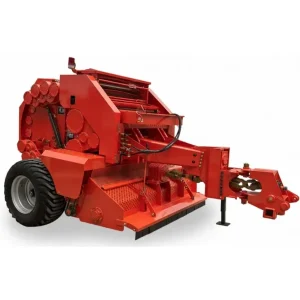
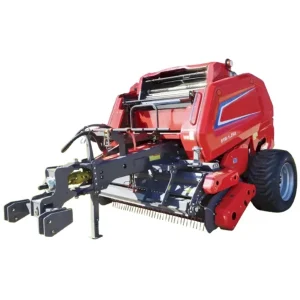
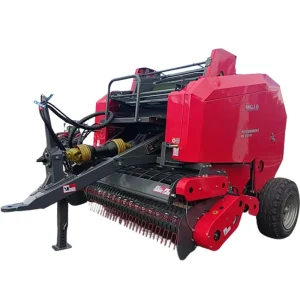
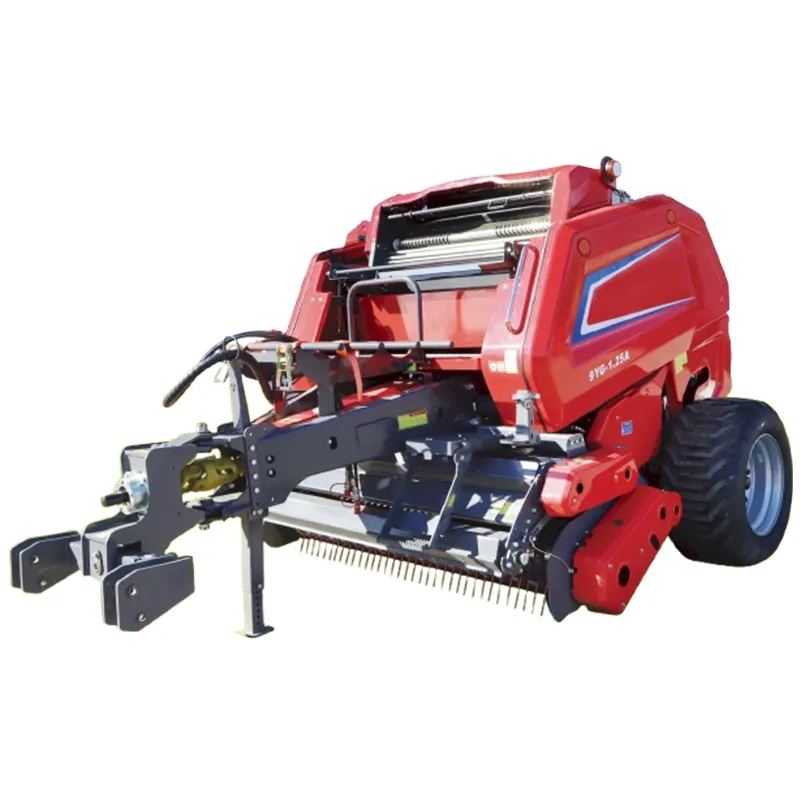
9YG-1.25 Round Baler
Mid-Range · 720 RPM · 51×49-Inch Bale · 3-Stage Feed
The baseline of the 1.25 series — the right choice when your tractor provides 720 RPM, your field is flat to rolling, and your primary crops are hay, straw, or haylage at mid-scale volumes.
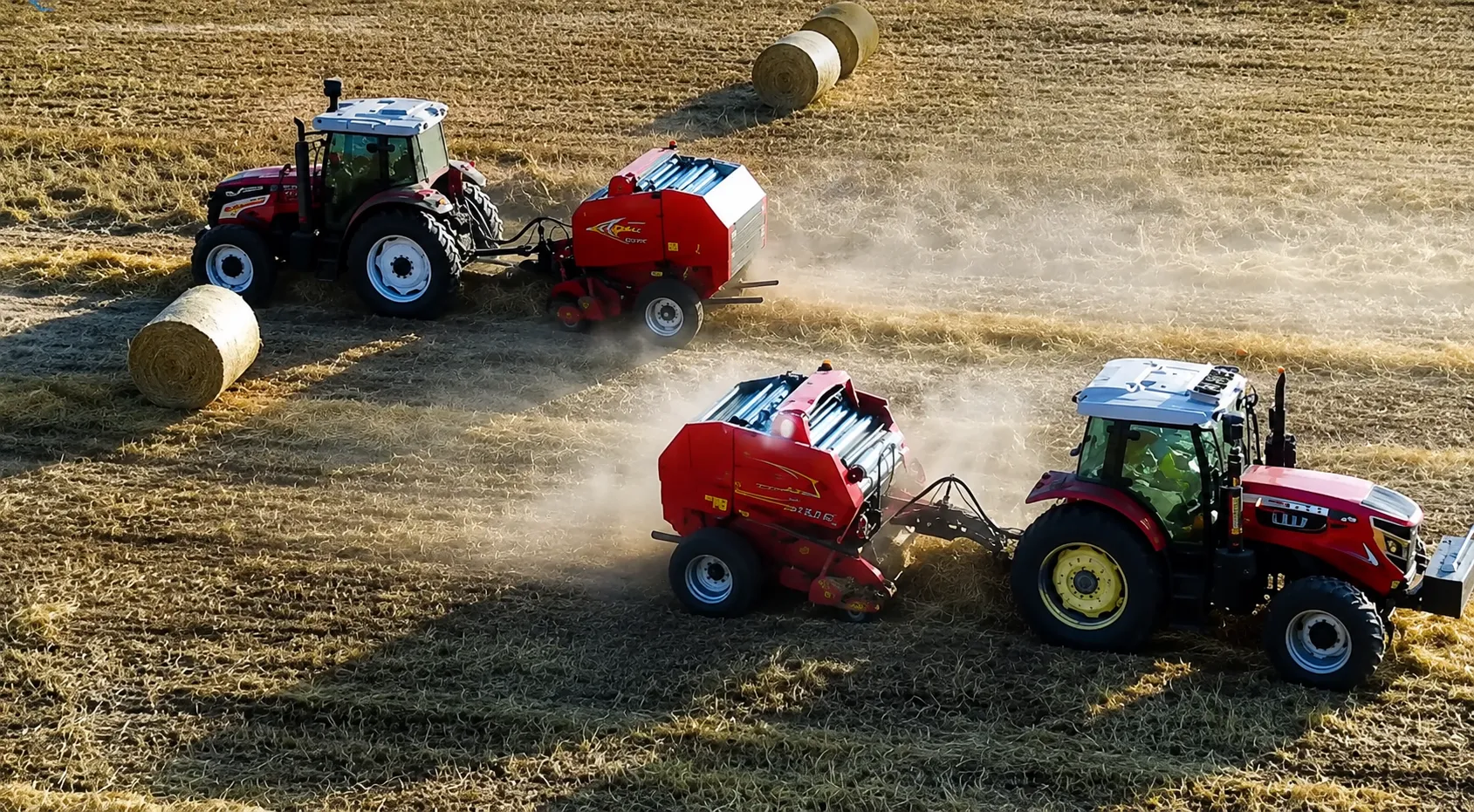
The 9YG-1.25 is the most straightforward model in the farmbalers.com round baler lineup: one pickup type, one PTO speed, one bale format, one feed system configuration. There are no multi-speed gearboxes, no interchangeable pickup assemblies, no terrain-hitch adjustments. It bales hay, straw, haylage, and windrowed stover behind tractors from 100 HP upward at 720 RPM, and produces the 51 × 49-inch round bale format that suits the majority of US mid-scale livestock feeding, bedding, and hay market applications.
That simplicity is its primary advantage over the other models in the 1.25 family. Lighter at 8,950 lb than the multi-speed 9YG-1.25A and 9YH-1.25A6 (9,859 lb), simpler to maintain than the hammer claw 9YH-1.25B, and priced below the wider-bale 9YH-1400 — the standard 9YG-1.25 makes sense when the additional capabilities of those models are not needed.
The three-stage auger + tooth roller + drum feed system is the primary feature that distinguishes the 9YG-1.25 from previous-generation mid-range balers. The auger pre-distributes material laterally before it reaches the chamber, reducing the off-center bale cores that single-stage intakes produce in uneven windrows. For operations running merged windrows or wide swaths from disc mower-conditioners, this lateral distribution step has a direct effect on bale shape consistency across the day’s run. Full product range at Brazil Ever-Power Farm Balers’ product catalog.
Is the 9YG-1.25 the Right Model for Your Operation?
Work through these questions — each leads to a recommendation
Does your tractor provide 720 RPM PTO — or do you run 540-only equipment?
The 9YG-1.25 connects directly. Continue to Q2.
The 9YG-1.25 requires 720 RPM and will not operate on 540-only input without an adapter. Consider instead:
Do you need to harvest standing corn stalks directly — without shredding first?
The 9YG-1.25 handles windrowed stover cleanly. Continue to Q3.
Spring-tooth balers cannot harvest standing stalks. Choose a hammer claw model:
Do you work on regularly sloped or contoured terrain where pickup alignment on grade is a problem?
Standard drawbar hitch is appropriate. Continue to Q4.
The 9YG-1.25’s fixed drawbar loses pickup alignment on grade. Consider:
Do you need the 55-inch bale width — for export specifications, OEM-compatible wrappers/feeders, or higher-volume handling efficiency?
The 9YG-1.25 produces the right format. Continue to Q5.
The 9YG-1.25 produces a 49-inch wide bale. For 55-inch format:
If you answered “no” to Q2, Q3, and Q4 and have a 720 RPM tractor → the 9YG-1.25 is your model.
It is the lightest (8,950 lb), simplest, and lowest-maintenance option in the 1.25 class for 100–130 HP operations baling hay, straw, and haylage on flat to rolling terrain with a stable 720 RPM tractor fleet.
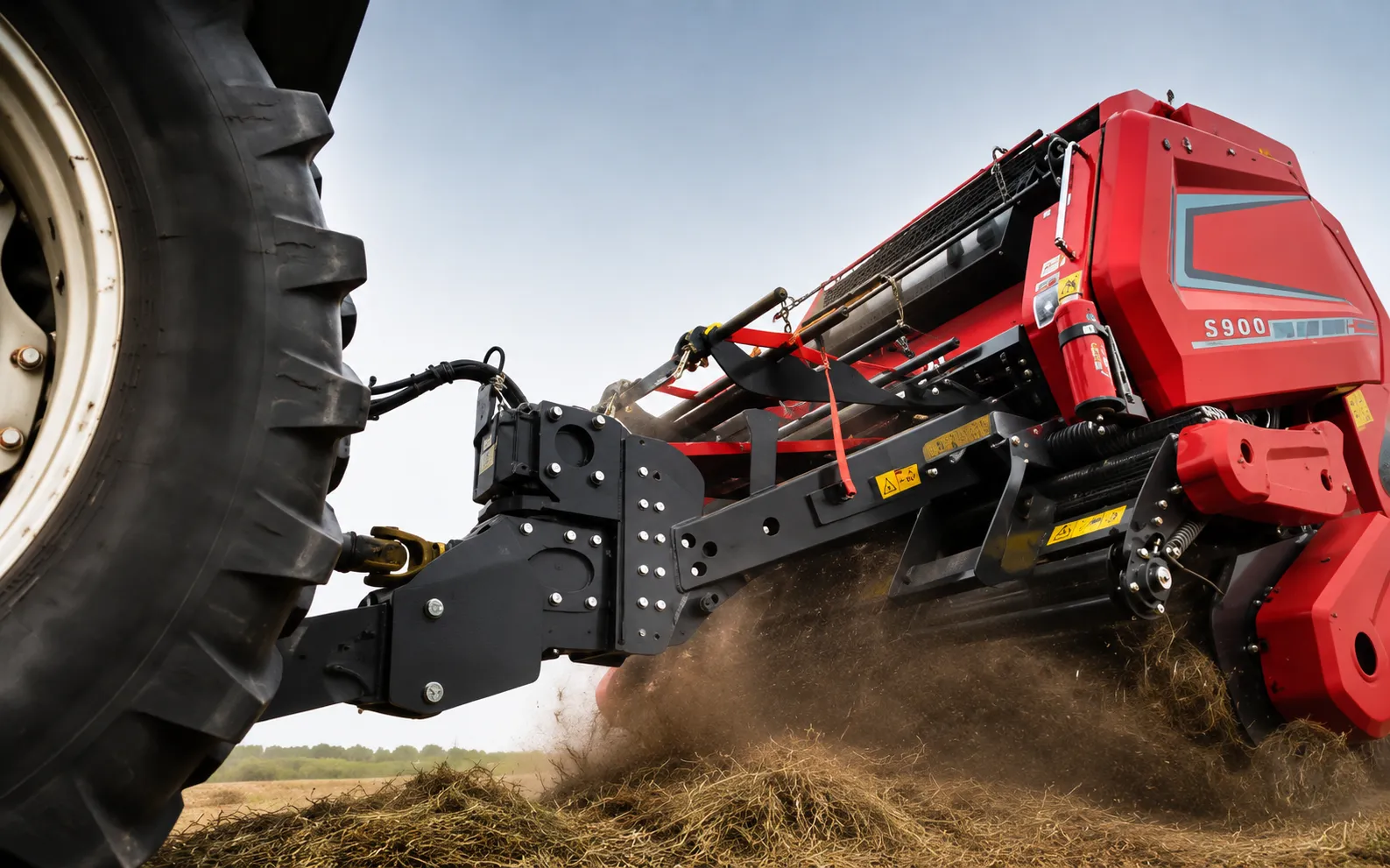
Technical Specifications
| # | Parameter | Unit | Valeur |
|---|---|---|---|
| 1 | Model Name | — | 9YG-1.25 Round Baler |
| 2 | Hitch Type | — | Towed (Drawbar) |
| 3 | PTO Input Speed | RPM | 720 (single-speed) |
| 4 | Largeur de ramassage | mm / in | 2,240 mm (88.2 in) |
| 5 | Pickup Type | — | Spring Tooth |
| 6 | Feed System | — | Auger + Tooth Roller + Drum (3-Stage) |
| 7 | Chamber Type | — | Fixed-Chamber Roller |
| 8 | Chamber Width | mm / in | 1,250 mm (49.2 in) |
| 9 | Chamber Diameter | mm / in | Φ 1,300 mm (51.2 in) |
| 10 | Number of Rollers | pcs | 18 |
| 11 | Roller Diameter | mm | 222 mm (8.7 in) |
| 12 | Wrapping System | — | Automatic Net Wrap (Standard) |
| 13 | Tractor Power Required | kW / HP | ≥75 kW (≥100 HP) |
| 14 | Machine Weight | kg / lb | 4,060 kg (8,950 lb) |
| 15 | Overall Dimensions (L×W×H) | mm | 4,400 × 2,850 × 2,400 (working) |
| 16 | Bale Density Control | — | Electronic Sensor |
| 17 | Bale Size (Dia. × Width) | mm / in | Φ 1,300 × 1,250 mm (51 × 49 in) |
| 18 | Densité des balles | kg/m³ | 100–200 |
| 19 | Productivity | bales/hr | 40–100 |
| 20 | Track Width | mm | 2,450 |
| 21 | Operating Speed | km/h / mph | 5–35 km/h (3–22 mph) |
| 22 | Net Wrap Specification | — | 2,000 × 1.25 m per bale |
The 3-Stage Feed System
Why 3 Stages Instead of 1
Single-stage pickup-to-chamber intakes transfer material directly from the tine sweep into the chamber, with no intermediate handling. The limitation is that material arrives at the chamber in whatever lateral distribution it had in the windrow — which is rarely even. Merged or combined windrows tend to peak in the center where the mower or merger deposited material. In a single-stage system, that center peak enters the chamber disproportionately, producing an off-center bale core that compresses unevenly and may produce a D-shaped bale that doesn’t stack flat. The 9YG-1.25’s auger spreads the material across the full 1,250 mm chamber width before the tooth roller and drum move it into the compression zone. The result is a bale core that builds from the center outward uniformly — consistent shape, predictable weight, and clean net wrap application across the full face.
Patent Context
The 9YG-1.25’s auger + tooth roller + drum configuration is the 3-stage intake used across the 9YH-1.25B, 9YG-1.25A, and 9YH-1.25A6. It is distinct from the patented axial-flow semi-force-feed intake used in the S9000 series and 9YG-1.0. The 3-stage system provides reliable lateral distribution through mechanical staging; the patented axial-flow system achieves higher volumetric throughput through its camless, open-path architecture. For mid-scale operations with standard windrow densities, the 3-stage system delivers consistent performance without the complexity of the patented design.
For very heavy or mixed-density material where maximum intake throughput matters, see the S9000 series with its patented axial-flow intake.
Suitable Crops & Conditions
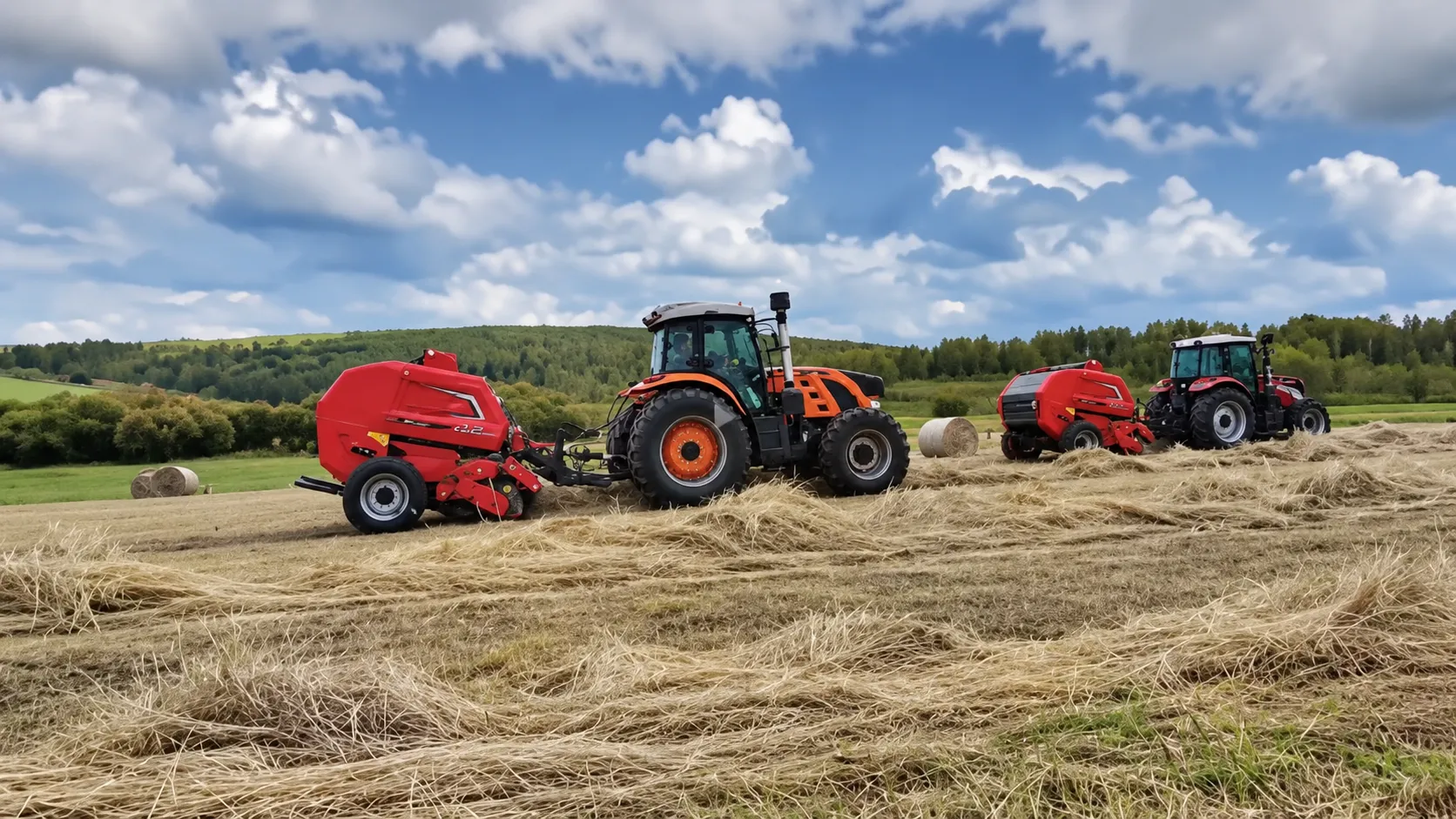
Alfalfa, brome, orchardgrass, fescue, bermudagrass, timothy, mixed pasture below 18% moisture. The 3-stage auger distributes narrow and wide windrow types evenly across the chamber without operator speed adjustment between windrow widths.
Second- and third-cut at 30–45% moisture for wrapped baleage. Fixed-chamber roller handles wet material without belt-slip. The 3-stage feed’s auger is especially valuable here — wet alfalfa tends to clump and pile on one side of narrow pickups; the auger spreads it before chamber entry.
Wheat, barley, oat, and rye straw for bedding or biomass. The 88-inch pickup handles full combine-header swath widths. The tooth roller in the feed system meters high-volume straw flow into the drum at a consistent rate, reducing the overfeed surges that cause blockages in high-speed straw baling.
Post-combine corn stover from windrows. The 3-stage feed handles the variable density and stem diameter of stover windrows effectively. For direct standing-stalk harvest without raking, see the 9YH-1.25B or 9YG-1.0C.
Cereal rye, triticale, hairy vetch, and sorghum-sudan in windrows. The auger is particularly effective in tangled cover crop mats that form uneven windrows — it breaks up mat sections and distributes them across the chamber width before they can block the drum entry.
Flat to gently rolling. Standard drawbar, 100–130 HP tractors, 400–1,200 acres per season. For high-volume above 1,200 acres or sloped terrain, the S9000 series offers additional intake capacity and terrain hitch options.
IP & Manufacturing
~100 Utility Patents — 32,000 m² In-House Facility
Brazil Ever-Power Farm Balers Co., Ltd holds close to 100 utility patents and manufactures all equipment at a 32,000 m² in-house facility using CNC laser cutting, robotic welding, and electrostatic coating. ISO 9001, Two-Informatization Integration Level A, AAA Credit Enterprise, National High-Technology Enterprise. Two assembly lines at 2,000-unit annual capacity. Independent import and export rights.

Field Operation
Connect drawbar and 720 RPM PTO. Set pickup gauge wheel height for the crop. Load the 1.25 m net wrap roll and thread per the manual’s routing. Verify hydraulic gate cycles cleanly before entering the field. Confirm the density sensor control is active and the setpoint matches the target bale weight for the day’s crop type.
Advance at steady pace — the 3-stage feed absorbs windrow density variations more smoothly than single-stage systems, so dramatic speed changes are less often needed. The auger’s lateral distribution is passive and continuous; it does not require operator input to adjust. Monitor the density indicator; when the setpoint triggers, slow to near-idle for the net wrap cycle.
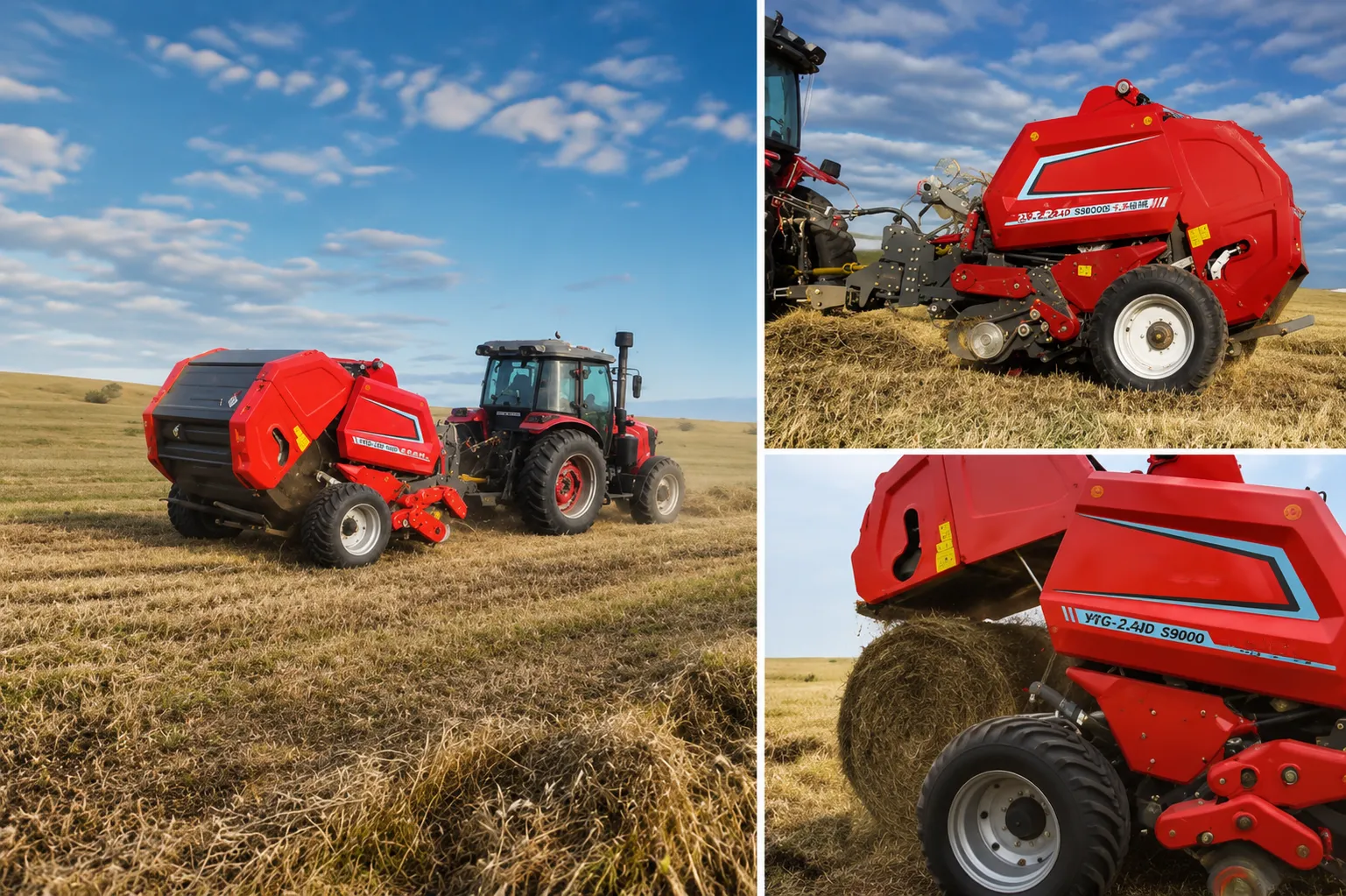
Net wraps automatically across the 1,250 mm bale face, cuts, and the gate opens. Bale ejects; gate closes without manual latching. Resume forward travel on gate close signal. Cycle time 15–20 seconds. In good windrow conditions at normal forward speed, the 9YG-1.25 achieves 65–80 bales per hour in sustained operation — the upper end of the 40–100 range under typical mid-scale hay conditions.
Maintenance
- Grease all pickup tine pivots, auger shaft bearings, roller shaft ends, and chain idlers
- Check net wrap roll and brake tension
- Inspect auger flights for crop build-up between tines — tangled cover crop material can pack at the auger housing; clear before each session
- Verify PTO shaft guard intact; confirm gate opens and closes cleanly
- Adjust drive chain tension — 15–20 mm sag mid-span maximum
- Inspect pickup tines for wear and cracks
- Check tooth roller for worn teeth — the roller is a higher-wear component in straw and stover than in hay; inspect early in the first season to establish wear rate
- Verify roller bearing condition; check density sensor cable connections
- Drain and replace gearbox oil
- Inspect all 18 roller bearings; replace any with play
- Replace pickup tine set if overall wear exceeds 20%
- Inspect auger shaft bearings and housing seals
- Clean machine, release chain tension, apply anti-corrosion spray, remove net wrap for dry storage
Operator Reviews
Central Illinois — Alfalfa & Brome Hay, 120 HP JD 6R, 800 acres
★★★★★
The 9YG-1.25 is exactly what I needed and nothing more. My 120 HP 6R provides 720 RPM economy PTO, I bale flat central Illinois ground, and I needed a reliable 51 × 49-inch bale for my cattle feeders and hay market customers. The 3-stage feed has made a noticeable difference in bale shape consistency compared to the single-stage machine I ran before — I’m getting less of the D-shape problem on wide combined windrows. The auger spreads the material and the bale cores are centered. We’ve run 3,800 bales across two seasons of alfalfa and brome without significant mechanical issues. Parts took 12 days from order when I needed a pickup tine set. Very satisfied — bought exactly the right machine for my operation.
Western Kentucky — Mixed Hay & Cover Crop, 105 HP Tractor, 550 acres
★★★★☆
We bale mixed fescue-clover hay and then cereal rye cover crops in spring — two very different materials. The 9YG-1.25 handles both without adjustment. The hay baling is clean and consistent at about 65–70 bales per hour. The cereal rye termination baling has been where the 3-stage feed shows its value — the rye forms dense, tangled mats in the windrow and a single-stage pickup jams in those conditions. The auger breaks up the mat before it reaches the drum and we’ve had maybe four intake stoppages in 2,100 bales of rye, which is much better than our previous machine. Four stars rather than five because I had one issue with the tooth roller — a tooth sheared off at about 1,800 bales. Replacement part came in 14 days and the repair was straightforward, but the failure was unexpected at that mileage. May be an outlier; keeping an eye on it this season.
Northern Indiana — Wheat Straw & Brome, 130 HP Tractor, 1,100 acres
★★★★★
Running the 9YG-1.25 for wheat straw in July and brome hay in late May. Both crops have been straightforward on this machine. Wheat straw at the combine header windrow width — which is wide and uneven — benefits noticeably from the auger distributing the material before the drum. I was getting off-center bales with my old machine in thick straw and the 9YG-1.25 has largely eliminated that problem. At 1,100 acres per season I’m pushing this machine toward the higher end of its comfortable operating range, but it’s held up well. Two seasons, approximately 4,400 bales total, routine maintenance only. The net wrap automation has been consistent — I can’t remember the last time I had a mis-wrap. For a machine at this price point versus the OEM alternatives I looked at, the value is excellent.
Central Missouri — Fescue Hay for Beef Cattle, 110 HP Tractor, 650 acres
★★★★☆
Used the 9YG-1.25 for two cutting seasons of tall fescue hay for our cow-calf herd. The fescue baling is clean and consistent — our feeders are sized for 49-inch bales and the machine delivers the right format every time. The sensor-controlled net wrap automation means I’m getting the same density bale at 6 a.m. and 6 p.m. without manually judging when to trigger the wrap. Cattle have been consuming the hay consistently, which I take as an indicator of reasonable bale quality. I give four rather than five stars because I noticed some variation in bale weight on days when windrows were inconsistent in thickness — not a machine problem, more a reminder that bale consistency starts with raking quality. The machine does its part; the operator has to do theirs on the windrow preparation side.
Eastern Colorado — Alfalfa, 540-Only Older Tractor, 480 acres
★★★☆☆
I need to be upfront: I bought the 9YG-1.25 before thoroughly checking that it requires 720 RPM PTO. My primary tractor is a pre-2000 unit with 540 RPM only. I’ve been running it with a speed-up adapter gearbox that I purchased separately — the machine technically runs, but the adapter adds cost, another maintenance point, and some efficiency loss that I didn’t budget for. The baler itself performs well and bale quality has been good. This is a buying mistake on my part, not a machine quality issue. I’m giving three stars to signal very clearly to other buyers: confirm your tractor’s PTO speed before purchasing the 9YG-1.25. If you have a 540-only tractor, buy the 9YH-1.25A6 instead — it’s the same bale, same output, and accepts 540 RPM natively without any adapter required.
Frequently Asked Questions
What distinguishes the 9YG-1.25 from the other 1.25-series models?
The 9YG-1.25 is the standard, single-speed 720 RPM model — the lowest-cost, lightest (8,950 lb), and simplest configuration in the 1.25 class. The 9YG-1.25A and 9YH-1.25A6 add a multi-speed gearbox accepting 540/720/1000 RPM at 9,859 lb. The 9YH-1.25B adds an interchangeable hammer claw pickup for standing corn stover direct harvest. The 9YH-1400 widens the chamber to 1,400 mm (55 inches) for higher per-bale volume. If none of those additions are needed, the standard 9YG-1.25 is the correct choice.
Does the 9YG-1.25 accept 540 RPM PTO input?
No. The 9YG-1.25 requires 720 RPM PTO input. Tractors providing only 540 RPM cannot drive this machine at correct operating speed without a speed-up adapter gearbox. If your primary tractor is 540-only, the 9YH-1.25A6 (which natively accepts 540, 720, and 1000 RPM) is the correct model — same bale size, same output, direct connection to your tractor without adapter.
What practical difference does the 3-stage feed make in real field conditions?
The most visible difference is bale shape consistency in uneven or wide windrows. Single-stage intakes deliver material to the chamber in the lateral distribution it had in the windrow — peaked in the center for merged windrows, offset for windrows blown by wind drift, or thin on one side when the mower ran slightly off-line. The 9YG-1.25’s auger redistributes that material before the drum delivers it into the compression zone, so the bale core builds from center outward regardless of how the windrow was arranged. In hay-market operations where bale shape directly affects customer acceptance and price, this consistency has a tangible value.
How does the 9YG-1.25 compare to the S9000 series?
Both produce a 51 × 49-inch or 51 × 55-inch bale (the S9000 is 55 inches wide; the 9YG-1.25 is 49 inches). The S9000 uses the patented axial-flow semi-force-feed intake — a camless, higher-throughput design that handles very heavy and dense windrows more reliably than the 3-stage auger system. The S9000 also offers terrain hitch variants (Classic, Superior) and comes in higher machine weights (8,647–10,076 lb). For standard hay and straw at mid-scale volumes on flat ground, the 9YG-1.25 performs comparably to the S9000 at lower cost and weight. The S9000 earns its higher specification in high-volume operations, difficult crop types, or challenging terrain where the 9YG-1.25’s 3-stage feed reaches its practical limits.
What annual bale volume suits this machine?
The 9YG-1.25 is well-suited to 400–1,200 acres per season in typical hay and straw conditions. Below 400 acres, the compact and lighter 9YG-1.0 may offer better economy at a lower machine weight and HP requirement. Above 1,200 acres per season in a single machine, the S9000 series’ higher intake capacity and — if 55-inch bales are acceptable — the 9YH-1400’s wider chamber may reduce per-ton handling costs enough to justify the higher machine cost.
How do I order parts and what is the lead time?
Parts are ordered through Brazil Ever-Power Farm Balers Co., Ltd’s spare parts program with 10–18 business day estimated US delivery. Pre-season stock recommendation: one full pickup tine set, one drive chain length, two roller bearings, a tooth roller inspection kit, and net wrap brake pads. The 1.25 m net wrap roll stock is widely available from US agricultural suppliers and can be sourced locally. Full product documentation at Brazil Ever-Power Farm Balers’ product catalog.
Manufacturer
Brazil Ever-Power Farm Balers Co., Ltd
National high-technology enterprise. 32,000 m² integrated production facility. Two assembly lines at 2,000-unit annual capacity. ~100 utility patents. ISO 9001, Two-Informatization Integration Level A, AAA Credit Enterprise. All production in-house — CNC laser cutting, robotic welding, electrostatic coating. Independent import/export rights. US, Mongolia, Russia, Belarus, Kazakhstan markets.
Full range at Brazil Ever-Power Farm Balers’ product catalog.
Your Situation → Best Model
| Your situation | Recommended model | Key reason |
|---|---|---|
| 720 RPM tractor · flat ground · hay & straw · 400–1,200 acres | 9YG-1.25 ← This Model | Lightest, simplest, right scale |
| 540-only tractor OR mixed fleet with different PTO speeds | 9YH-1.25A6 | Accepts 540/720/1000 RPM natively |
| Need to bale hay AND harvest standing corn stover with one machine | 9YH-1.25B Hammer Claw | Both pickups included, swappable |
| Dedicated standing corn stover only · 95 HP · 540 RPM tractor | 9YG-1.0C Compact Hammer Claw | Widest pickup (94.5″), 540 RPM, lightest |
| 55-inch bale required — export, OEM wrapper/feeder, or >1,200 acres | 9YH-1400 or S9000 series | Wide chamber, 55-inch bale |
| Sloped, rolling, or contoured terrain above 10–12° grade | S9000 Superior | 100° swing / 30° lateral tilt hitch |
| Small farm · 65 HP tractor · multi-crop (corn, rice, wheat, soy straw) | 9YG-1.0 Compact | 65 HP min, patented camless intake |
| Silage production — bale and wrap in one pass | 9YCM-850 Baler-Wrapper | Integrated baling + wrapping, 30–40 bales/hr |