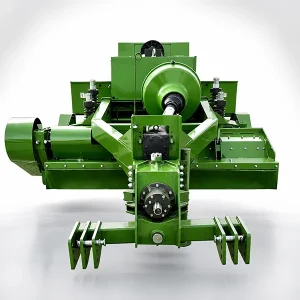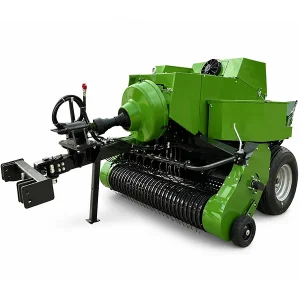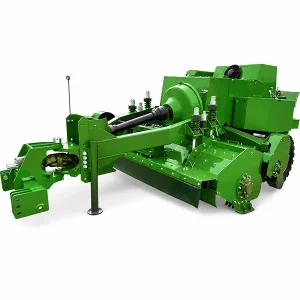
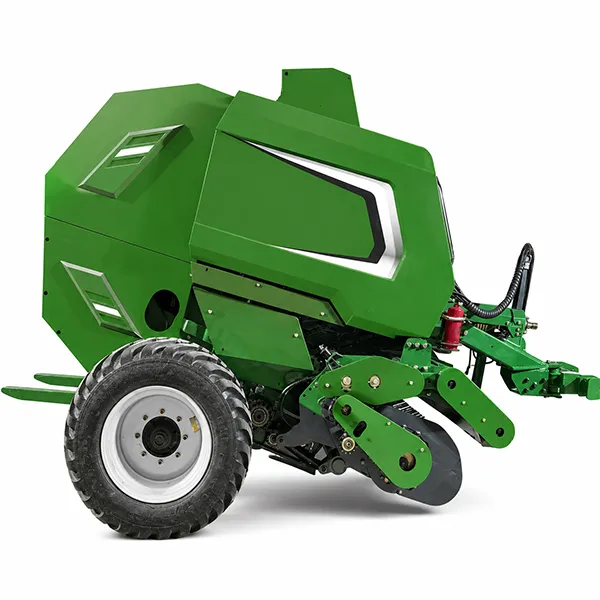
Περιγραφή
Quick Specifications
Key parameters for the 9YG-2.2 model at a glance.
🚜 Tractor Power
81.6–110.4 kW
110–150 HP
📏 Pickup Width
2,200 mm
Spring-tooth pickup
⭕ Bale Size
Ø1,220 mm
Width: 1,400 mm
⚙️ PTO Speed
540 rpm
Standard 6-spline
🎀 Binding Method
Δίχτυ περιτύλιξης
Automatic net wrapping
⚖️ Machine Weight
3,600 kg
Transport dimensions:
4100×2900×2400 mm
Product Gallery
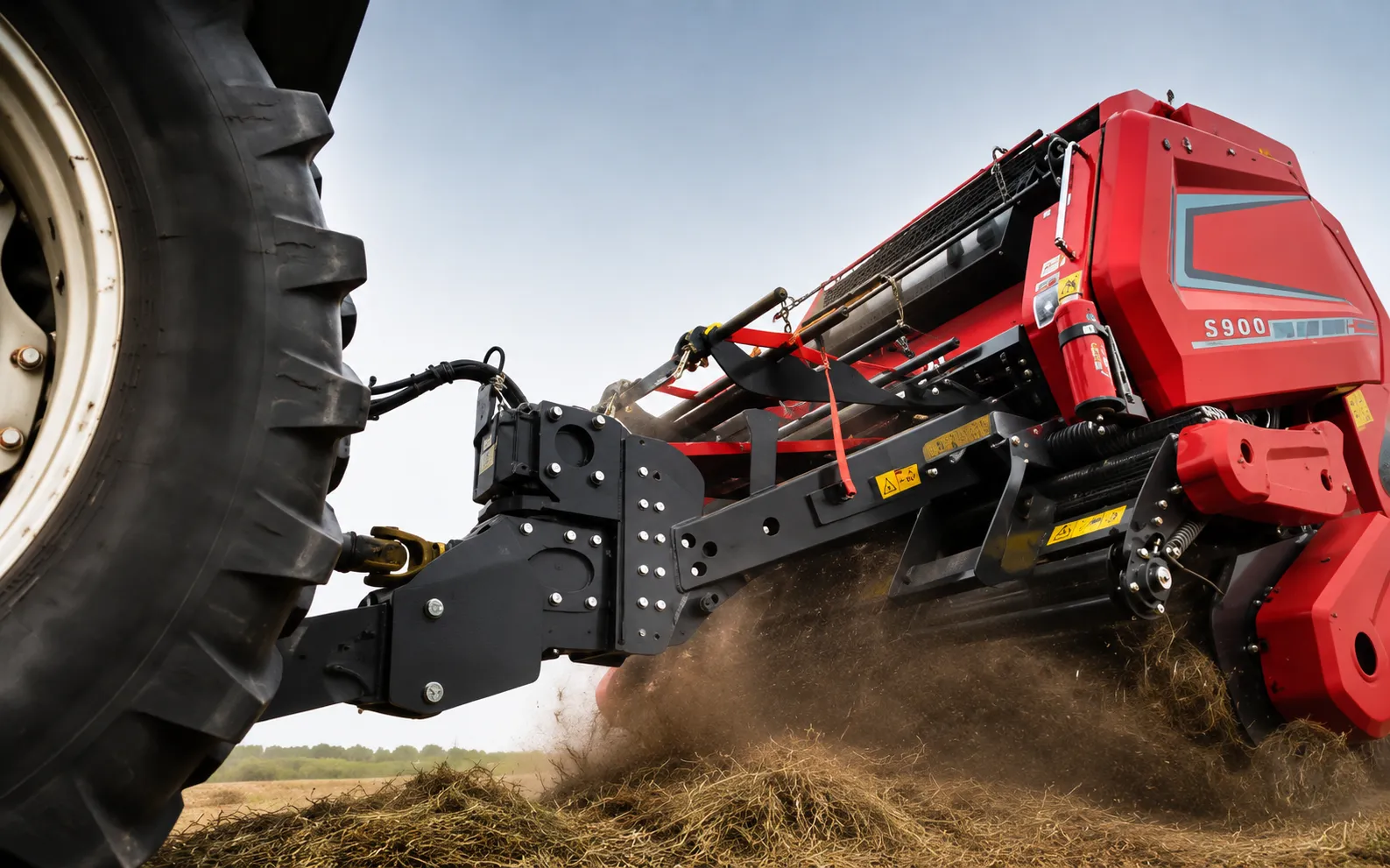
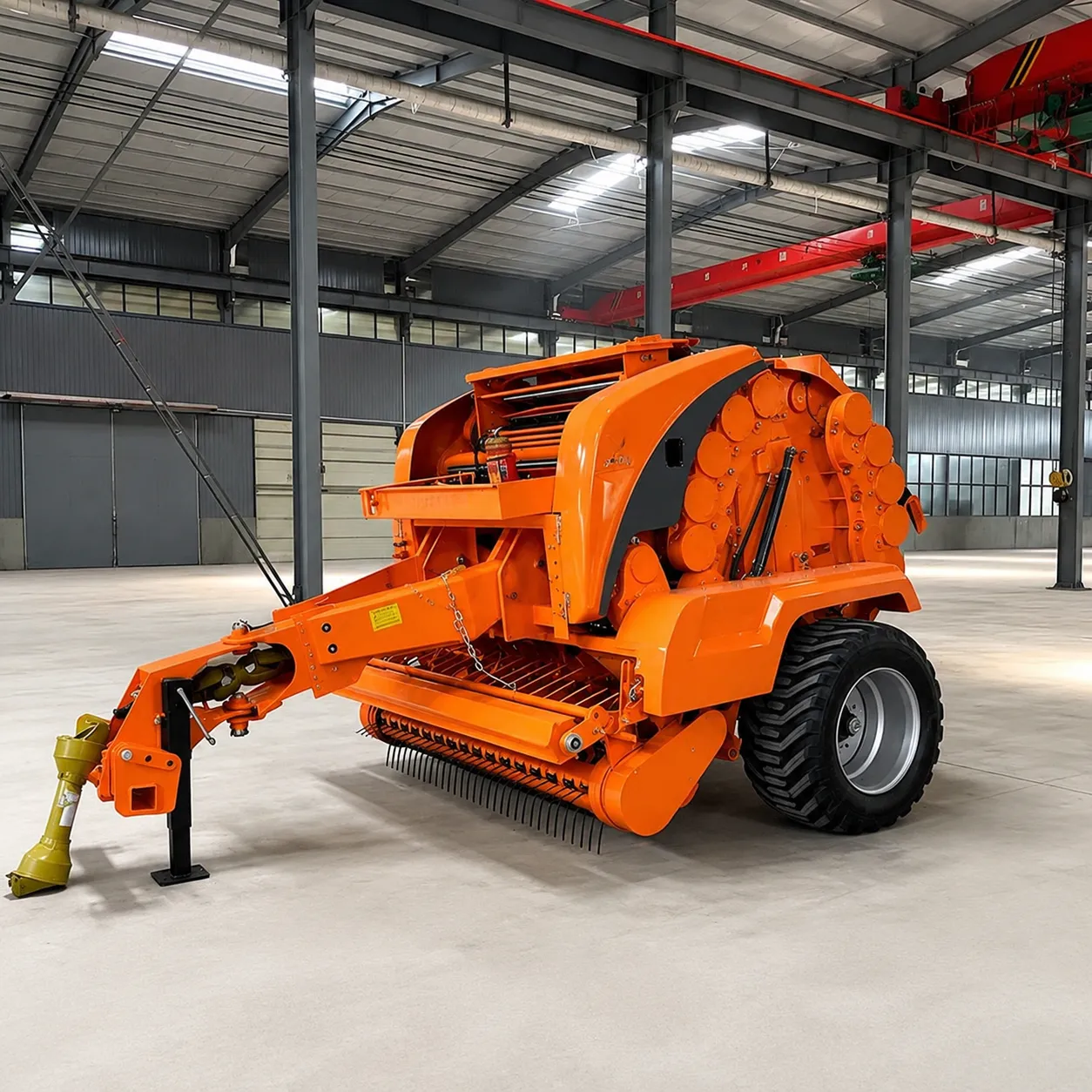
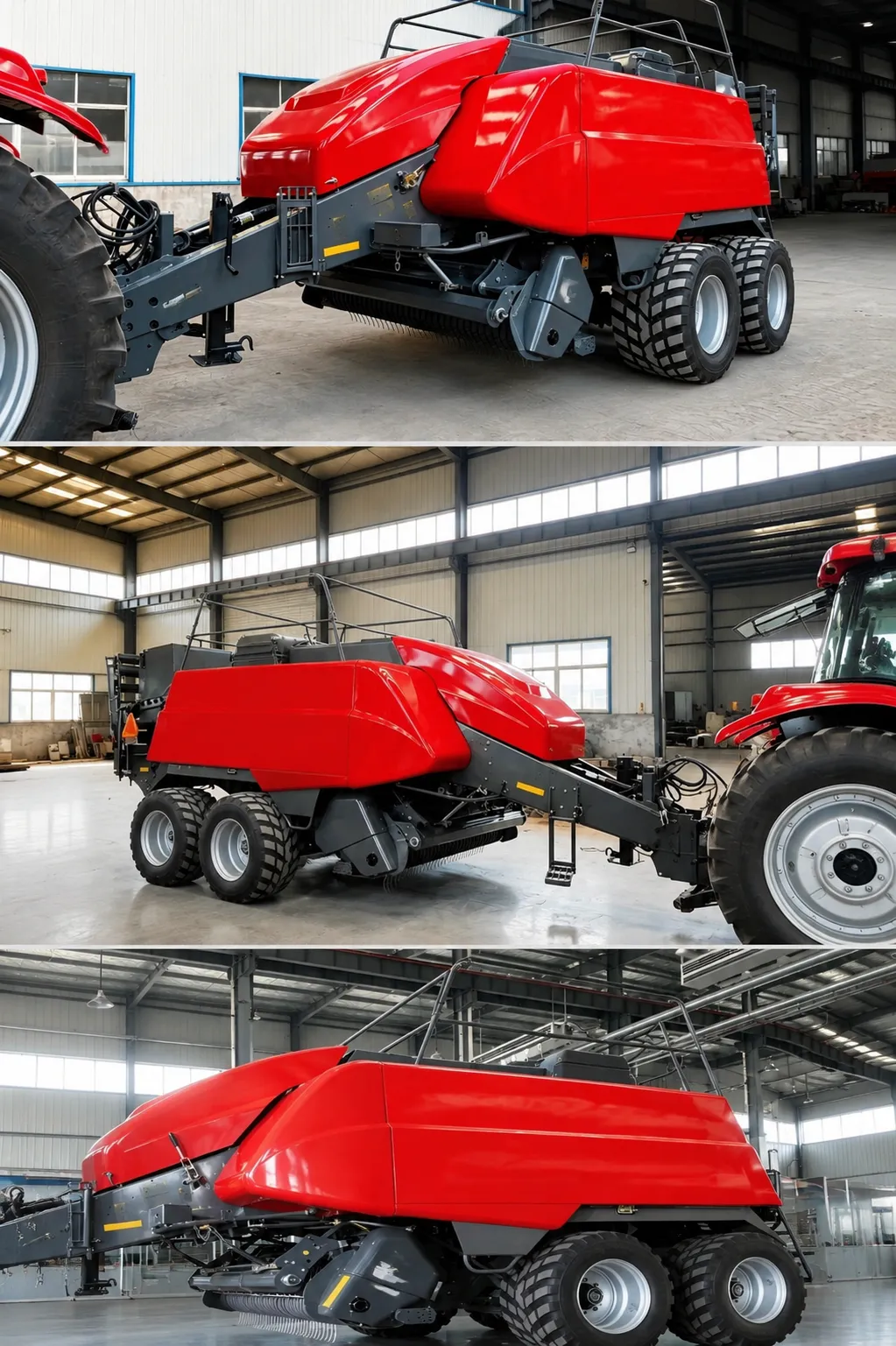
Product Overview
The 9YG-2.2 is the largest and most fully specified model in our round baler range. It is designed for professional hay contractors, large-scale grain farms, and livestock operations that bale significant acreage per season and need a machine that can sustain continuous high-output baling with minimal operator intervention. If you are looking for the best round hay baler in terms of capacity, feature set, and bale quality per pass, this is the model that delivers on all three criteria — provided you have a tractor in the 110–150 HP range to drive it.
The 9YG-2.2 uses a 2,200 mm spring-tooth pickup reel feeding into an 18-roller fixed-chamber pressing system. The bale chamber is 1,400 mm wide and produces bales up to Ø1,220 mm in diameter — among the largest bale dimensions available in this class of trailed round baler. Bales of this size produced from dry wheat straw typically weigh 280–350 kg under test conditions (14–16% moisture, flat paddock, 75 kW tractor at 5–6 km/h). Alfalfa and pasture hay bales at comparable moisture will be heavier due to crop density.
The machine features a colour handheld touchscreen monitor as standard. The monitor displays real-time bale diameter progress, net wrap count, bale weight estimate (via high-precision displacement sensor), and equipment operating status. Both automatic and manual wrapping modes are available, allowing experienced operators to fine-tune wrap settings based on crop conditions. This level of monitoring visibility is particularly useful for contractors charging clients on a per-bale basis, as bale count and weight data can be logged across working sessions.
The continuous screw feeding mechanism on the 9YG-2.2 is designed to handle the full 2,200 mm pickup width consistently, including in dense windrows. The screw feeds material uniformly across the full width of the pressing chamber, reducing the uneven bale density that can occur in wide-pickup machines when crop distribution is uneven. This results in more consistently shaped bales that store and handle more reliably.
For drivetrain reliability, key components including the drive shaft, bearings, clutch, chain, and electronic control system are sourced from internationally recognised component suppliers. The centralised thin-oil lubrication system connects all chain drive and bearing lubrication points to a single reservoir, which can be serviced in a single operation rather than requiring individual attention at each grease nipple. This is a practical feature on a machine of this size and complexity, where a full manual lubrication round would otherwise take 20–30 minutes per day. A well-specified round baler gearbox with adequate oil level and seal integrity is equally critical to long service life — inspect gearbox oil level and seals at the start of each season and after every 100 operating hours.
For operations that handle both round and square format bales — for example, producing large round bales for silage or outdoor storage alongside small square bales for direct livestock feeding — our square baler range is available alongside the 9YG-2.2 to cover both baling formats from the same tractor fleet.
Suitable Crops and Applications
✅ Suitable For
- Wheat straw (moisture 10–18%)
- Rice straw (moisture 10–20%)
- Corn stalks (moisture 10–23%)
- Cotton straw
- Dry alfalfa and timothy hay
- Mixed dry and semi-dry pasture grasses
- Sorghum straw
- Fresh forage grasses (moisture below 25%)
- Sunflower stalks
❌ Not Recommended For
- Wet silage above 30% moisture (requires separate wrapper)
- Heavily contaminated or muddy windrows
- Crops with stones or hard foreign objects
- Freshly cut material above 40% moisture
- Root crops or bulky vegetable waste
🌾 Required Crop Condition
Crops must be cut, field-dried to below 20% moisture, and raked into a consistent windrow matched to the 2,200 mm pickup width before baling. For optimal bale density and net wrap performance, target moisture content of 12–18% for hay and 10–16% for cereal straw. Windrows that are too narrow (under 1,500 mm) will reduce effective pickup width utilisation and lower output per hour.
🗺️ Field Size and Terrain
The 9YG-2.2 is most productive on open flat paddocks of 50 acres or more. The machine’s 4,100 mm length and 3,600 kg weight mean it is suited to farms with standard-width gateways and road access for transport. All models are rated for slopes up to 8° (14% gradient). Steeper slopes are not recommended due to bale roll-off risk on ejection and transport safety considerations.
✂️ Pre-Baling Field Preparation
Standard sequence: cut → field-dry (1–4 days depending on crop and weather) → rake into uniform windrows at 1,800–2,200 mm width → bale. Do not bale immediately after cutting. Raking to the full pickup width maximises throughput and reduces passes per paddock. For large-scale operations, coordinating the mowing, tedding, and raking schedule with available tractor hours will determine overall daily baling output more than baler speed alone.
📐 Ideal Operation Scale
This model is designed for operations baling 200 acres or more per season, or hay contractors serving multiple clients. At a working speed of 5–6 km/h on a standard windrow, output varies significantly with crop volume per metre of windrow, but a well-prepared paddock in good crop conditions can expect 40–60 bales per working hour as a broad guide. This figure is highly crop- and condition-dependent and is not a performance guarantee.
Product Features
Each feature is tied to a specific mechanical component or measurable specification.
18-Roller Fixed Chamber — Ø222 mm Rollers
The pressing chamber contains 18 rollers, each 222 mm in diameter, arranged in a fixed-position roll drum configuration. Chamber width is 1,400 mm, producing bales up to Ø1,220 mm. The fixed chamber maintains consistent bale diameter and density throughout the filling cycle — there is no expanding-chamber mechanism to adjust, which reduces mechanical complexity and simplifies operator management. Larger roller diameter compared to smaller models reduces surface pressure per roller, extending roller bearing life under continuous operation.
Colour Touchscreen Monitor with Displacement Sensor
A handheld colour touchscreen controller provides real-time display of bale diameter progress (via high-precision displacement sensor), net wrap count, estimated bale weight, equipment status, and alarm notifications. Two operating modes are available: automatic (baler wraps and ejects at preset diameter) and manual (operator-controlled wrap trigger). The sensor-controlled wrap count ensures consistent net use per bale, reducing net consumption waste and maintaining bale integrity.
Screw Continuous Feeding Mechanism
The 2,200 mm pickup feeds into a screw continuous feeding mechanism that distributes crop uniformly across the full 1,400 mm chamber width. Uniform cross-chamber crop distribution is critical at this pickup width — without it, bales develop denser edges and lighter centres, leading to uneven bale shape and potential net wrap failure at the bale shoulder. The screw design handles material of varying stalk lengths and densities, including the more challenging corn stalk and sorghum crop types.
Centralised Thin-Oil Lubrication System
All chain-drive assemblies and shaft bearings are connected to a single centralised thin-oil lubrication system. Daily lubrication is completed in a single operation at one reservoir point, rather than requiring separate attention at each individual lubrication point. On a machine of this size, this reduces daily maintenance time from an estimated 20–30 minutes (individual greasing) to under 5 minutes, and significantly reduces the risk of missed lubrication points — a primary cause of bearing and chain failure in high-output commercial operations.
Spring-Tooth Pickup — 2,200 mm Width
The spring-tooth pickup reel spans the full 2,200 mm working width. The hydraulic flotation system adjusts pickup height automatically to maintain consistent ground contact on uneven terrain, improving crop recovery and reducing tine wear. Spring-tooth design is well-suited to the range of crops this model handles — including light straw windrows and heavier grass hay — as the tine flexibility accommodates varying windrow profiles without aggressive soil disturbance.
Internationally Sourced Drive Components
Key mechanical components — drive shaft, bearings, clutch, chain, and electronic control system — are sourced from internationally recognised component suppliers. This sourcing approach is intended to ensure consistent component quality and spare parts availability. It also means that when individual components require replacement in the field, locally available equivalents with matching specifications can often be sourced in markets worldwide, reducing machine downtime during peak season.
Full Technical Specifications — 9YG-2.2
| Parameter | Προσδιορισμός |
|---|---|
| Model Name | 9YG-2.2 Round Baler |
| Hitching Method | Trailed (drawbar) |
| Πλάτος παραλαβής | 2,200 mm |
| Picker Structure | Spring tooth type |
| Feeder Structure | Screw continuous feeding mechanism |
| Bale Chamber Type | Fixed roll drum type |
| Chamber Width | 1,400 mm |
| Bale Diameter | Ø1,220 mm |
| Pressing Rollers | 18 pcs |
| Roller Diameter | Ø222 mm |
| Μέθοδος σύνδεσης | Automatic net wrapping |
| Tractor Power Required | 81.6–110.4 kW / 110–150 HP |
| PTO Speed | 540 rpm |
| Overall Dimensions (L×W×H) | 4,100 × 2,900 × 2,400 mm |
| Machine Weight | 3,600 kg |
| Operating Speed | 4–8 km/h (crop-dependent) |
| Lubrication System | Centralised thin-oil automatic lubrication |
| Monitor / Control | Handheld colour touchscreen, auto + manual modes |
| Hydraulic Requirement | 1× double-acting spool valve (tailgate + pickup) |
| Max Operating Slope | 8° (≈14% gradient) |
All specifications are for reference. Actual performance varies with crop conditions, tractor specification, and operating speed. Contact us for confirmation prior to purchase.
Tractor Compatibility — 9YG-2.2
Essential compatibility information for buyers evaluating this model.
⚡ Minimum Tractor Power
Minimum 110 HP (81.6 kW) at PTO. Maximum rated at 150 HP (110.4 kW). Operating this model with a tractor below 110 HP is likely to result in PTO overload in dense windrow conditions, feeder blockages, and reduced bale density. A tractor with 120–130 HP provides a comfortable working margin for most conditions. Four-wheel drive is strongly recommended for wet or soft paddock conditions given the machine’s 3,600 kg towed weight.
⚙️ PTO Speed and Shaft
Requires 540 rpm PTO output with a standard 6-spline shaft connection. A friction clutch overload protection unit on the tractor PTO shaft is strongly recommended at this power level — a sudden feeder blockage without overload protection can apply severe shock loading to the tractor gearbox. PTO shaft and all guards are supplied with the machine. Inspect shaft telescopic section and universal joint bearings at the start of each season.
🔌 Hydraulic Requirements
Requires one double-acting spool valve for tailgate opening/closing and pickup height adjustment. Flow requirement is approximately 30–40 litres per minute at 150–180 bar — within the range of standard tractor hydraulic systems. Load-sensing hydraulics are not required. Confirm your tractor has at least one available double-acting spool valve before ordering. Single-acting supply is not sufficient for this model.
🔗 Hitching and Drawbar Setup
Trailed drawbar connection. Set tractor drawbar height so the baler hitch point is level with the baler drawbar eye — typically 420–460 mm from ground to drawbar centre. An incorrectly set drawbar height causes uneven pickup ground pressure and increases pickup tine wear. Ensure the drawbar pin is secured with a locking clip rated for the machine weight before transport.
🏔️ Slope Suitability
Rated for slopes up to 8° (14% gradient). At this machine weight, tractor ballasting should be reviewed for hillside operation — ensure the tractor front axle remains in contact with the ground when towing the loaded baler uphill. After bale ejection on a slope, the bale will roll — ensure no persons, obstacles, or water courses are in the roll-out zone. Do not operate on slopes exceeding the rated limit.
🚜 Compatible Tractor Types
Compatible with all standard 540 rpm PTO tractors in the 110–150 HP range from major manufacturers — John Deere, New Holland, Case IH, Massey Ferguson, Fendt, Claas, Kubota high-range, and equivalent. Compatibility is determined by PTO speed, drawbar configuration, and hydraulic spool availability — not by brand. Confirm PTO shaft stub diameter (standard: 1⅜” 6-spline) and available hydraulic outlets before finalising the order.
Field Testing and Real-World Performance
All figures below are accompanied by stated test conditions and should be used as a reference guide, not a guaranteed output specification.
⚠️ Performance Data Disclaimer
Bale weight, output rate, and fuel consumption are highly sensitive to crop moisture, windrow density, tractor power, operating speed, and operator experience. The data below comes from specific test conditions. Your results may differ. Contact us with your specific situation for a more accurate assessment.
🌾 Test: Wheat Straw
| Crop | Winter wheat straw |
| Moisture | 13–15% |
| Tractor | 125 HP (93.2 kW) 4WD |
| Terrain | Flat, <2° slope |
| Speed | 5–6 km/h |
| Approx. bale weight | 290–340 kg |
| Blockages | None over 2-day test |
🌿 Test: Alfalfa Hay
| Crop | Third-cut alfalfa hay |
| Moisture | 15–18% |
| Tractor | 130 HP (96.9 kW) 4WD |
| Terrain | Level irrigated field |
| Speed | 4–5 km/h |
| Approx. bale weight | 380–430 kg |
| Notes | Net wrap performed consistently across all bales tested |
🔧 Maintenance Schedule and Blockage Handling
Daily checks: Centralised oil reservoir level, PTO shaft and guard condition, net wrap supply level and arm position, chain tension on feeder and chamber drive chains, pickup tine condition and security, hydraulic hose connections.
Blockage procedure: Disengage PTO immediately. Wait for all rotation to stop completely. Do not reach into the machine while any part is moving. Use a hook tool to clear the feed throat. Identify the cause before resuming — most blockages at this model are caused by excessive forward speed in dense windrow sections or crop moisture above 22%.
Annual service: Replace pickup tines showing wear or damage, check all 18 roller bearings for play, inspect chain elongation on all drives, inspect net wrap arm sensor and knife, check gearbox oil level and seals. Spare parts including pickup tines, roller bearings, drive chains, and net wrap components are available from FarmBalers.com. Email [email protected] for the 9YG-2.2 spare parts list.
Customer Reviews
Verified purchaser feedback. We include balanced reviews — including areas for improvement — to help you make an informed decision.
Roberto A.
Hay contractor — Northern Italy
“We replaced an ageing machine with the 9YG-2.2 and have been using it through two full alfalfa seasons. The centralised lubrication is genuinely useful — I used to spend extra time every morning on individual grease points on our previous baler. The touchscreen monitor takes some getting used to, but once you’re familiar with it, tracking bale counts per field is helpful for client invoicing.”
“One thing to be aware of: the machine is heavier than most in this class, so check your road transport permit requirements for your region before delivery.”
Thomas W.
Grain and livestock farm — New South Wales, Australia
“Running this on a 130 HP tractor through our cereal straw season — wheat, barley, oats. Bale weights are consistent and the net wrap system has been reliable. We’ve had one net arm sensor fault over the season that needed a reset, but nothing that stopped work for more than 10 minutes.”
“Setup documentation could be more detailed for first-time installation. I’d suggest requesting a video walkthrough from the supplier when you order.”
François D.
Baling contractor — Occitanie, France
“We use this on sunflower stalks and mixed cereal straw across several client farms. Output is solid and bale shape is consistent — important when clients are stacking bales outdoors. The wide pickup means fewer passes per paddock, which matters when you’re charging by the hour.”
“Sunflower stalks are harder on pickup tines than cereal straw — we go through more tines per season in that crop. Stock extra tines if you’re baling sunflowers regularly.”
Ahmed K.
Commercial farm — Nile Delta, Egypt
“We operate this on rice and corn straw. On corn stalks at 18–20% moisture the machine handles well at 4–5 km/h. Rice straw at 12–14% is faster. Bale weights are in the range we expected based on the specifications provided before purchase. Spare parts supply through FarmBalers has been reliable.”
“Corn stalk at the higher end of moisture will cause an occasional slow-down — we just reduce speed for those sections rather than stop. Not a problem with good operator awareness.”
Frequently Asked Questions — 9YG-2.2
Direct answers. No marketing language.
Contact FarmBalers.com
Ready to Order the 9YG-2.2?
Tell us your tractor horsepower, primary crop type, and destination port — we’ll confirm current availability and provide a delivered price.
Response within 1 business day · International shipping available · OEM options available